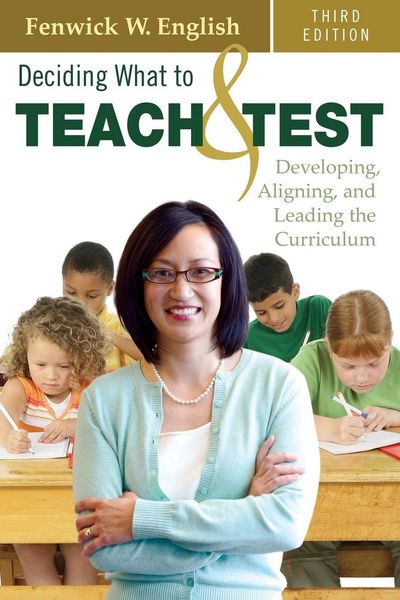
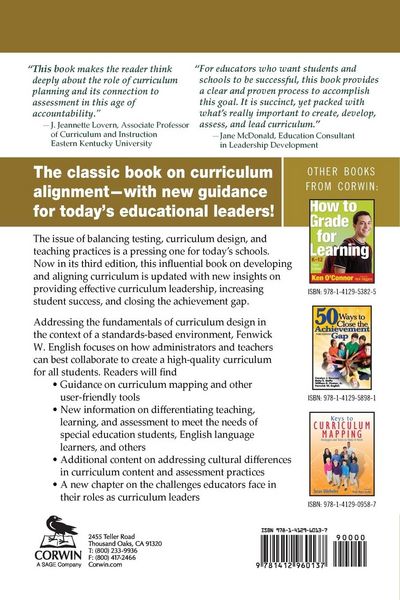
• Produktbild: Deciding What to Teach and Test
  • Produktbild: Deciding What to Teach and Test

Deciding What to Teach and Test Developing, Aligning, and Leading the Curriculum

45,99 €

inkl. gesetzl. MwSt., Versandkostenfrei


Beschreibung

Produktdetails

ISBN

978-1-4129-6013-7

Auflage

3., überarbeitete Auflage

Erscheinungsdatum

07.06.2010

Einband

Taschenbuch

Verlag

Sage Publications

Seitenzahl

168

Maße (L/B/H)

22,9/15,2/0,9 cm

Gewicht

254 g

Sprache

Englisch

Beschreibung

Produktdetails

ISBN

978-1-4129-6013-7

Auflage

3., überarbeitete Auflage

Erscheinungsdatum

07.06.2010

Einband

Taschenbuch

Verlag

Sage Publications

Seitenzahl

168

Maße (L/B/H)

22,9/15,2/0,9 cm

Gewicht

254 g

Sprache

Englisch

Herstelleradresse

Libri GmbH
Europaallee 1
36244 Bad Hersfeld
DE

Email: gpsr@libri.de

Kundinnen und Kunden meinen

0 Bewertungen

Informationen zu Bewertungen

Zur Abgabe einer Bewertung ist eine Anmeldung im Konto notwendig. Die Authentizität der Bewertungen wird von uns nicht überprüft. Wir behalten uns vor, Bewertungstexte, die unseren Richtlinien widersprechen, entsprechend zu kürzen oder zu löschen.

Die Bewertungen sind nach Format, Anzahl Sterne und Datum sortiert.

Verfassen Sie die erste Bewertung zu diesem Artikel

Helfen Sie anderen Kund*innen durch Ihre Meinung

Kundinnen und Kunden meinen

0 Bewertungen filtern

Weitere Artikel finden Sie in

  • Produktbild: Deciding What to Teach and Test
  • Produktbild: Deciding What to Teach and Test
  • Preface: America's Continuing Educational Canterbury Tales
    Acknowledgments
    About the Author
    Introduction to the Third Edition
    1. The Function of Curriculum in Schools
    1.1 What Is Curriculum?
    1.2 Curriculum Design and Delivery
    1.3 Curriculum Coordination and Articulation
    1.4 Combining Design and Delivery Issues in Schools
    1.5 Formal, Informal, and the Hidden Curriculum
    1.6 Curriculum and the Cultural Arbitrary
    1.7 Conventional Practices and Complaints About Curriculum
    1.8 The Necessary Requirements of an Imperfect Curriculum
    1.9 A Clarifying Model of the Critical Curricular Relationships and Terms
    2. A Template for Curriculum Construction
    2.1 The Traditional View of Developing Curriculum
    2.2 Using a Needs Assessment to Develop a Curricular Framework
    2.3 Constructing Curriculum With Gap Data
    2.4 Constructing "User Friendly" Curriculum Work Plans
    2.5 Moving From Curriculum Content to Work Tasks
    2.6 Constructing "User Friendly" Curriculum Guides
    2.7 Essential Elements in Curriculum Guides
    2.8 Setting Content Priorities and Expressing Time Values
    2.9 A Word About Sequence and Stress
    2.10 A Recommended Curriculum Guide Format
    3. Aligning the Curriculum
    3.1 The Process of Alignment by Frontloading
    3.2 The Process of Alignment via Backloading
    3.3 How to Do Alignment
    3.4 Other Issues in the Alignment Procedure
    4. The Challenge of Curriculum Leadership in the Teaching and Testing Nexus
    4.1 Considering The Full Responsibility for Curriculum Leadership
    4.2 Who Benefits From the Perpetuation of the Cultural Capital Embraced by State Imposed Accountability Models?
    4.3 Avoiding Deficit Mindsets, Models, and Cultural Marginalization of Others
    4.4 Not All Data Are Valuable or Relevant
    4.5 Avoiding Outmoded Management Models
    4.6 Understanding the Drawbacks of Top-Down Supervisory Approaches
    4.7 The Nexus of Curriculum Leadership
    4.8 Some Concluding Thoughts
    Glossary of Terms
    References
    Index