
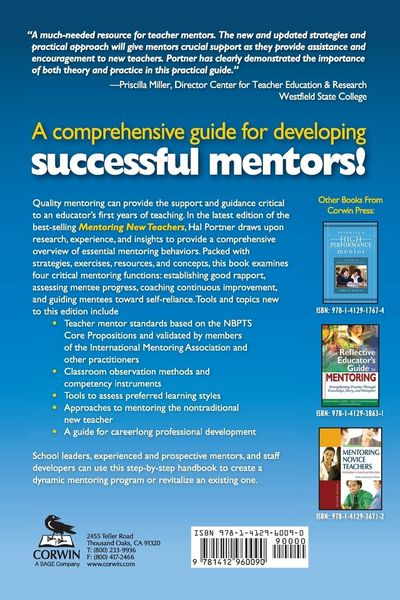
• Produktbild: Mentoring New Teachers
  • Produktbild: Mentoring New Teachers

Mentoring New Teachers

45,99 €

inkl. gesetzl. MwSt., Versandkostenfrei


Beschreibung

Produktdetails

ISBN

978-1-4129-6009-0

Auflage

3., überarbeitete Auflage

Erscheinungsdatum

25.04.2008

Einband

Taschenbuch

Verlag

Sage Publications

Seitenzahl

170

Maße (L/B/H)

22,9/15,2/0,9 cm

Gewicht

256 g

Sprache

Englisch

Beschreibung

Produktdetails

ISBN

978-1-4129-6009-0

Auflage

3., überarbeitete Auflage

Erscheinungsdatum

25.04.2008

Einband

Taschenbuch

Verlag

Sage Publications

Seitenzahl

170

Maße (L/B/H)

22,9/15,2/0,9 cm

Gewicht

256 g

Sprache

Englisch

Herstelleradresse

Libri GmbH
Europaallee 1
36244 Bad Hersfeld
DE

Email: gpsr@libri.de

Noch keine Bewertungen vorhanden

Verfassen Sie die erste Bewertung zu diesem Artikel

Helfen Sie anderen Kundinnen und Kunden durch Ihre Meinung.

Kundinnen und Kunden meinen

Bewertungen (0)

Weitere Artikel finden Sie in

  • Produktbild: Mentoring New Teachers
  • Produktbild: Mentoring New Teachers
  • Foreword by Gerald N. Tirozzi
    Preface to the Third Edition
    Who Should Read This Book
    Overview of the Contents
    Acknowledgments
    About the Author
    Introduction
    Support for Mentoring
    Effective Mentors Are Made, Not Born
    Mentoring Is Not Evaluating
    Mentoring's Role in Induction
    The Mentor's Primary Role
    What Mentors Do: The Four Mentoring Functions
    Teacher Mentor Standards
    1. Relating
    Establishing Trust
    Paying Attention to Thoughts and Feelings
    Confidentiality
    The Student Teacher Dilemma
    Communicating Nonverbally
    A Checklist of Relating Behaviors
    A Mentoring Relationship Is a Serving Relationship
    2. Assessing
    The Nontraditional New Teacher
    Generic Needs of New Teachers
    Specific Needs of Your Mentee
    Gathering Resources
    Your Mentee's Learning Preferences
    Modes of Communication
    Summary
    3. Coaching
    Coaching Assumptions
    The Coaching Cycle
    The Preobservation Conference
    The Initial Classroom Visit
    Focused Classroom Observations: When and How
    Some Observation Considerations
    The Postobservation Conference
    When to Show and Tell
    Coaching Adults
    Feedback
    4. Guiding
    Guiding Your Mentee's Journey: A Decision-Making Process
    Identifying Your Mentee's Problems
    Guiding Principles
    The Unwilling and Unable Mentee
    The Moderately Willing and Somewhat Able Mentee
    The Competent and Confident Mentee
    The All-of-the-Above Mentee
    From Mentor-Mentee to Peer-Peer
    5. Mentoring's Legacy: Career-Long Professional Development
    Teacher's Inquiry Process
    From TIP to MIP
    6. Tips and Observations
    Set Ground Rules Early
    Help Change Happen
    Avoid Information Overload
    Share Decision Making
    Know When to Intervene
    Mentoring, Remediating, and Peer Review
    Maintain the Relationship
    Don't Forget Content
    What Is Your Mentee Asking For?
    Know When to Wean
    Find Time to Mentor
    Earn Points Toward Teacher Recertification
    Reflect on Your Mentoring
    Consider Multiple Mentors
    Build a Mentoring Community
    Find Networking Opportunities
    Remember, Student Learning Is the Goal
    Pass the Torch
    Resource A. Teacher Mentor Standards
    Core Propositions
    Teacher Mentor Standards
    Resource B. Learning Style Inventory: Discovering How You Learn Best
    Resource C. Mentor's Inquiry Process for Experienced Mentors
    Focus
    What Will It Be Like?
    Activities
    What Are Your Chances Of Completing the Activities?
    When Do You Want It?
    Costs
    Does It Represent a Worthwhile Challenge?
    Resource D. The Connecticut Competency Instrument
    Management of the Classroom Environment
    Instruction
    Assessment of Student Progress
    Resource E. Annotated Bibliography
    References