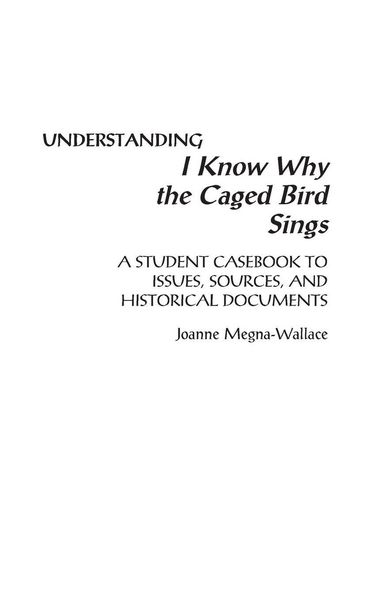
Understanding I Know Why the Caged Bird Sings A Student Casebook to Issues, Sources, and Historical Documents
79,99 €
inkl. gesetzl. MwSt.,
Beschreibung
Produktdetails
ISBN
978-0-313-30229-9
Erscheinungsdatum
25.06.1998
Bundesländer
Baden-Württemberg + weitere
Unterrichtsfächer
Deutsch + weitere
Klassenstufen
11. Klasse + weitere
Schulformen
Gesamtschule + weitere
Einband
Gebundene Ausgabe
Verlag
BloomsburySeitenzahl
208
Maße (L/B/H)
24/16,1/1,6 cm
Gewicht
482 g
Sprache
Englisch
Maya Angelou's autobiography I Know Why the Caged Bird Sings was nominated for a National Book Award, yet in 1995 it topped the list of books most frequently challenged in schools and libraries. This interdisciplinary collection of documents and commentary explores the historical and social context, as well as the contemporary issues and controversies raised by Angelou's autobiography. A rich resource for teachers and students, it will help to enhance the reader's understanding of the historical and social forces that shaped Maya Angelou's experience-race relations in the pre-civil rights South, segregated schools, the African American church, and the African American family. It also examines the issue of childhood sexual abuse, the inclusion of which has been the basis of most of the challenges to the autobiography, and the issue of the work's censorship since its publication. This rich resource begins with a literary analysis of the structure and dramatic elements of Angelou's autobiography, as well as discussion of the genre of autobiography. Subsequent chapters include introductions and documents that provide insight into the topics of race relations, lynchings, and racial etiquette; the education of African Americans in the South in the 1930s (particularly county training schools like the one Angelou attended); the otherworldliness, emotion, and music of the African American church; African American women as nurturers, and the effect of frequent migration on children such as Angelou; information from the National Center on Child Abuse and Neglect which puts the sexual abuse Angelou experiences in a broader context; and many news stories regarding censorship attempts on I Know Why the Caged Bird Sings. Documents in the work include newspaper articles, interviews and first-person narratives, government documents, excerpts from books and journals, and legal statutes. Study questions, ideas for project topics, and suggested readings conclude each chapter and further enhance the usefulness of this interdisciplinary research tool for students and teachers.
Dazu passende Produkte
-
STABILO Druckbleistift EASYergo 3.15 von
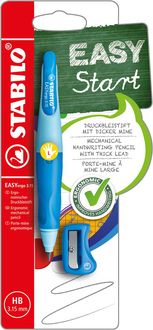 STABILO Druckbleistift EASYergo 3.15
Bürobedarf
8,79 €
-
satch Trinkflasche Edelstahl Olive von
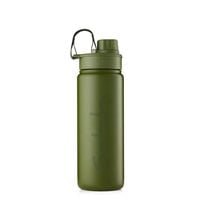 satch Trinkflasche Edelstahl Olive
Bürobedarf
24,99 €
-
Rucksack City Leopard von
 Rucksack City Leopard
Bürobedarf
98,99 €
-
Textmarker Job pastel 4er Etui sortiert, 3+1 Aktion von
 Textmarker Job pastel 4er Etui sortiert, 3+1 Aktion
Bürobedarf
3,99 €
-
VON Schnellhefter Karton schwarz von
 VON Schnellhefter Karton schwarz
Bürobedarf
3,99 €
-
Schlampermäppchen Black Coal von
 Schlampermäppchen Black Coal
Bürobedarf
24,99 €
-
Kugelschreiber Candy Pink von
 Kugelschreiber Candy Pink
Bürobedarf
12,99 €
-
STABILO Pen 68 violett von
 STABILO Pen 68 violett
Bürobedarf
3,99 €
-
Taschenrechner, 11 x 14 cm von
 Taschenrechner, 11 x 14 cm
Bürobedarf
14,99 €
-
Lineal 15 cm von
 Lineal 15 cm
Bürobedarf
2,99 €
Noch keine Bewertungen vorhanden
Verfassen Sie die erste Bewertung zu diesem Artikel
Helfen Sie anderen Kundinnen und Kunden durch Ihre Meinung.
Kurze Frage zu unserer Seite
Vielen Dank für Ihr Feedback
Wir nutzen Ihr Feedback, um unsere Produktseiten zu verbessern. Bitte haben Sie Verständnis, dass wir Ihnen keine Rückmeldung geben können. Falls Sie Kontakt mit uns aufnehmen möchten, können Sie sich aber gerne an unseren Kund*innenservice wenden.
zum Kundenservice