
• Produktbild: What Counts as a Good Job in Teaching?
  • Produktbild: What Counts as a Good Job in Teaching?

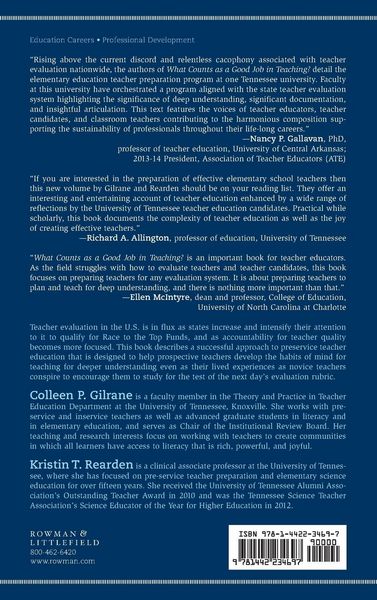
What Counts as a Good Job in Teaching? Becoming a Teacher as We Race to the Top

135,99 €

inkl. gesetzl. MwSt., Versandkostenfrei


Beschreibung

Produktdetails

ISBN

978-1-4422-3469-7

Erscheinungsdatum

18.06.2015

Einband

Gebundene Ausgabe

Verlag

Rowman & Littlefield

Seitenzahl

182

Maße (L/B/H)

23,5/15,7/1,5 cm

Gewicht

423 g

Sprache

Englisch

Beschreibung

Produktdetails

ISBN

978-1-4422-3469-7

Erscheinungsdatum

18.06.2015

Einband

Gebundene Ausgabe

Verlag

Rowman & Littlefield

Seitenzahl

182

Maße (L/B/H)

23,5/15,7/1,5 cm

Gewicht

423 g

Sprache

Englisch

Herstelleradresse

Libri GmbH
Europaallee 1
36244 Bad Hersfeld
DE

Email: gpsr@libri.de

Noch keine Bewertungen vorhanden

Verfassen Sie die erste Bewertung zu diesem Artikel

Helfen Sie anderen Kundinnen und Kunden durch Ihre Meinung.

Kundinnen und Kunden meinen

Bewertungen (0)

Weitere Artikel finden Sie in

  • Produktbild: What Counts as a Good Job in Teaching?
  • Produktbild: What Counts as a Good Job in Teaching?
  • Prelude:The Current State of U. S. Teacher Evaluation
    Situating Preservice Teacher Education in the Chaos
    Part I:The Undergraduate Pre-Internship Minor
    Colleen P. Gilrane
    Chapter 1:Overview
    The Spring Block: Practicum and Teaching Methods
    Planning the New and Improved Spring Block
    Getting Feedback and Fine-Tuning
    Did the Four Essential Questions Fit the Rubrics?
    Course Design
    Implementing the Plan
    Course Organization
    Models of Effective Teaching (2 weeks)
    Who Are My Students? What Do I Want Them to Learn? (2 weeks)
    Assessment: What Would Count as a Good Job? (2 weeks)
    What Resources Are Available to Me? How Do I Organize Them to Support Learning? (3 weeks)
    Designing Your Learning Plans (5 weeks of Workshop Time)
    Final Evaluation Conferences
    Chapter 2:Question #1: Who Are My Students?
    Who Are My Students: Candidates as Colleen's Kids
    What Do My Candidates Care About?
    What Kinds of Help Do My Candidates Need?
    Classroom/Course Structures
    Specific Strategies
    Responses My Candidates Need From Me
    How Do My Candidates Want/Need to Assessed? To Be Taught?
    Who Are My Students: Candidates Watching Their Kids
    Addressing Diversity in our Friday Classes
    Conferences Addressing Diversity During Workshop Time
    Class Session Addressing Diversity as a Stand-Alone Topic
    Who Are My Students: What Did Candidates Learn?
    List of Readings Used for Diversity Class Session
    Chapter 3:Question #2: What Do I Want Them to Learn?
    Specific Supports for Thinking About Content
    Class Session Addressing Content as a Stand-Alone Topic
    The Understanding by Design Framework
    What Do I Want Them to Learn: What Did Candidates Learn?
    Connecting Students to Content
    The Process of Identifying Content Worth Learning
    The Importance of Depth Over Coverage
    Chapter 4:Question #3: What Would Count as Evidence of Learning?
    Learning About Assessment by Being Assessed
    Formative Assessment of My Candidates
    Summative Assessment of My Candidates
    Grades for the Friday portion of 422
    Friday Class Sessions Devoted to Assessment as a Stand-Alone Topic
    Performance Assessment
    Formative Assessment
    Designing Assessments for Learning Plans
    What Would Count As Evidence: What Did Candidates Learn?
    Assessment Beyond Worksheets and Tests
    Bringing a Critical Lens to Current Practice
    Bringing Student Experiences to Bear on Designing Assessments as Teachers
    Chapter 5:Question #4: How Do I Get There?
    Selecting Instructional Materials
    Selecting Personnel Resources and Instructional Strategies
    Making Decisions About Time, Space, Environment, and Pulling It All Together
    How Do I Get There: What Did Candidates Learn?
    Expanded Awareness of Resources
    Time as a Resource
    Personnel as Resources
    Interlude: Voices of Candidates
    Chapter 6:Hannah's Reflection
    Hannah Louderback
    Transitioning to Internship
    First Year Teaching After Internship
    Teaching Science: Erosion Unit
    Teaching Math: Problems with Missing or Extra Information
    Final Reflections
    Chapter 7:Jessica's Reflection
    Jessica Covington
    "Understanding" Across Differing Teaching Contexts
    Using Knowledge of Students to Set Goals and Evaluate Learning
    Setting Learning Goals
    Evaluating Learning
    What Worked for Me: The W.H.E.R.E.T.O. Strategy
    Where
    Hook
    Equip
    Rethink and Revise
    self-Evaluation
    Tailor
    Organize
    Final Reflections
    Part II:The Graduate Internship Year
    Kristin T. Rearden
    Chapter 8:Getting Started: Orienting and Building Relationships
    Preparing for the Field Experience: Setting up the Seminar Class
    Physical Design of the Seminar Classroom
    The Opening Class Session
    Preparing to Enter the Schools: First Impressions
    The Field Experience
    The Spectrum of Classroom Environments
    Focal Point One: School Culture
    Focal Point Two: The Classroom Environment
    Focal Point Three: The Planning Process
    Focal Point Four: Instructional Strategies
    Focal Point Five: Assessment
    Final Reflections
    Chapter 9:Fall Semester: Overlaying Good Teaching with TEAM Rubrics
    Initial Weeks of the Internship
    Physical Space Considerations
    Establishing a Presence
    Assuming Responsibility for Planning, Teaching and Assessing
    Developing Planning Skills
    Lesson Plans: Novice and Veteran Approaches
    Questions: At the Heart of Learning to Plan
    Preparing for Formal Evaluations
    The "Dry Run" Evaluation
    The Lesson Plan: Intended Versus Implemented
    Areas to Improve and Areas of Strength
    Assessment Data
    Analyzing the Lesson with Evaluation Rubrics
    The Initial Evaluation for State Licensure
    Chapter 10: Spring Semester: Overlaying Good Teaching with edTPA Rubrics
    Growing into their Roles as Teachers
    Leading, Not Soloing
    Viewing Themselves as Teachers
    Recognizing Beliefs About the Importance of Education
    Theory into Practice: Action Research and Problem-Based Research Review
    Blending the edTPA into Our Teacher Preparation Program
    Supporting the Interns During the edTPA Process
    Changes to the Program
    Evidence of Success
    Coda:The Importance of an Inquiry-Based Approach
    How Did Candidates Respond?
    TEAM Results
    edTPA Results
    Task 1 Planning
    Task 2 Instruction
    Task 3 Assessment
    edTPA Total Score and Cutoff
    Candidates' Reflections
    Discussion