Produktbild: Differentiated Reading Instruction

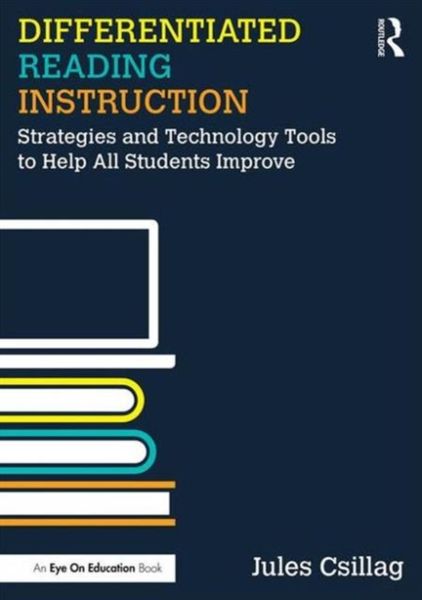
Differentiated Reading Instruction Strategies and Technology Tools to Help All Students Improve

49,99 €

inkl. gesetzl. MwSt., Versandkostenfrei


Beschreibung

Produktdetails

ISBN

978-1-138-64122-8

Erscheinungsdatum

10.05.2016

Einband

Taschenbuch

Verlag

Taylor and Francis

Seitenzahl

170

Maße (L/B/H)

24,4/17,3/1,3 cm

Gewicht

318 g

Sprache

Englisch

Beschreibung

Produktdetails

ISBN

978-1-138-64122-8

Erscheinungsdatum

10.05.2016

Einband

Taschenbuch

Verlag

Taylor and Francis

Seitenzahl

170

Maße (L/B/H)

24,4/17,3/1,3 cm

Gewicht

318 g

Sprache

Englisch

Herstelleradresse

Libri GmbH
Europaallee 1
36244 Bad Hersfeld
DE

Email: gpsr@libri.de

Kundinnen und Kunden meinen

0 Bewertungen

Informationen zu Bewertungen

Zur Abgabe einer Bewertung ist eine Anmeldung im Konto notwendig. Die Authentizität der Bewertungen wird von uns nicht überprüft. Wir behalten uns vor, Bewertungstexte, die unseren Richtlinien widersprechen, entsprechend zu kürzen oder zu löschen.

Die Bewertungen sind nach Format, Anzahl Sterne und Datum sortiert.

Verfassen Sie die erste Bewertung zu diesem Artikel

Helfen Sie anderen Kund*innen durch Ihre Meinung

Kundinnen und Kunden meinen

0 Bewertungen filtern

Weitere Artikel finden Sie in

  • Produktbild: Differentiated Reading Instruction
  • Meet the Author

    Introduction: What is Reading, and How Can I Help?

    • What is reading?
      • From Decoding to Higher Level Thinking, and Everything in Between
      • Language Comprehension and Reading Comprehension
      • Reading and the Brain

    • Teachers' Changing Roles
    • How Technology and Reading are an Ideal Match
    • How to Use this Book
    • A Note about the Technology in this Book
    • Chapter 1: What Do You Mean by "Differentiation"?

      • Long Ago and Far Away, the Greeks Warned Us
      • Differentiation vs Tracking
      • Types of Differentiation
        • Differentiation by Interest
        • Differentiation by "Learning Style"
        • Differentiation by Readiness

      • Universal Design for Learning (UDL) and Differentiation: Two Sides of the Same Coin
        • Differentiation by UDL Categories
        • Group Names, Group Members, and Group Selection

      • Differentiation and the Law
      • Frameworks for Differentiation
      • Reflection
      • Chapter 2: What Do Your Students Know? Formative Assessments for Differentiation

        • Growth Mindset
        • How it Works and How Technology can Help
        • Formative Assessment via Forms & Quizzes
          • Google Forms and Sheets
          • Other Options for Collecting Formative Assessments via Forms & Quizzes (LMS & more)

        • Formative Assessment via Audio and Video Recordings
          • Create a Screen recording, Voice recording, and/or Video recording

        • Formative Assessment via Sorting Activities
        • Reflection
        • Chapter 3: What Does This Say? Differentiating for Decoding and Reading Fluency

          • Why Decoding and Fluency Matter
          • What to Expect: Typical Decoding and Fluency Development
          • With Great Power Comes Great Responsibility
          • How Technology Can Help (and How it Can't)
          • Text-to-Speech Tools
            • Built-in Tools
            • Text-to-Speech Tools with Additional Features
            • Turning Images into Text: Optical Character Recognition (OCR)
            • Podcasts for Some, or Podcasts for All
            • eBooks & Audiobooks
            • Closed Captioning for Videos

          • Providing Audio Instructions and Feedback for Students
          • Student-Generated Voice and Audio Recordings to Enhance Fluency
          • Reflection
          • Chapter 4: What Does This Mean? Part 1: Differentiating Vocabulary Instruction

            • Two approaches to Instruction: Direct and Contextual
            • Tools for Direct Instruction
            • Tools for Contextual Instruction
            • Tools that can be used for either approach (& how)
            • Reflection

            Chapter 5: What Does This Mean? Part 2: Differentiating During the Research Process and Reading Nonfiction

            • Why Reading Nonfiction Matters
            • What Reading Nonfiction Entails
              • Digital Literacy

            • Videos
              • Creating a YouTube Playlist

            • Creating Custom Search Engines
            • Annotation Tools
              • Using DocentEDU
              • Annotating Multiple Sources

            • Differentiated Complexity
            • Summaries
            • Reflection
            • Chapter 6: What Does This Mean? Part 3: Differentiating During Fiction Reading

              • Why Fiction Matters
              • What Reading Fiction Entails
              • Visualization Tools
              • Explicit Text Structure Instruction & Inferences
              • Interactive Units
                • Exemplars of Interactive Units
                • Make Your Own!

              • Summaries
              • Reflection
              • Chapter 7: Can You Tell Me About It? Differentiating Writing (to Help Reading Comprehension)

                • Why Writing Matters for Reading
                • What Writing (to Read) Entails
                • Speech-to-Text
                  • Built-in Tools
                  • Other Dictation Software

                • Word Prediction
                • Scaffolds: Cloze Tasks, Mnemonics, and Questions
                • Reflection
                • Chapter 8: How Much Do You Know? Differentiating Summative Assessments

                  • Putting it all Together
                  • Quiz-creation (Review)
                  • Slideshow creation tools (Review & Some New Ideas)
                  • Rubrics
                  • Infographic Generators
                  • Reflection