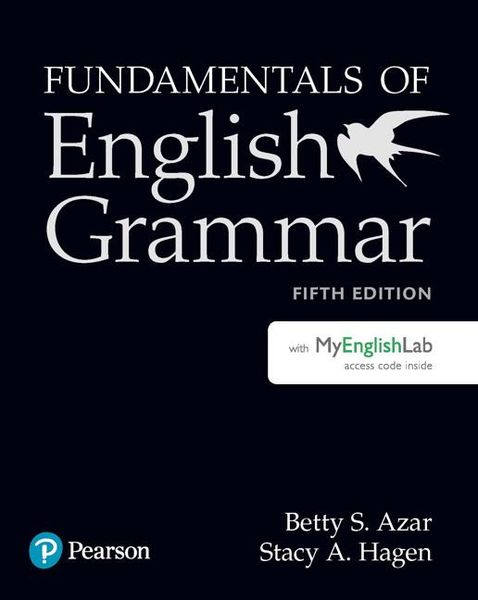
Produktbild: Fundamentals of English Grammar Student Book with Mylab English, 5e
Grammatik

Fundamentals of English Grammar Student Book with Mylab English, 5e

102,99 €

inkl. gesetzl. MwSt., Versandkostenfrei


Beschreibung

Produktdetails

ISBN

978-0-13-499882-4

Auflage

5th edition

Erscheinungsdatum

19.09.2019

Einband

Taschenbuch

Verlag

Pearson ELT

Seitenzahl

480

Maße (L/B/H)

25/19,9/1,6 cm

Gewicht

748 g

Sprache

Englisch

Beschreibung

Produktdetails

ISBN

978-0-13-499882-4

Auflage

5th edition

Erscheinungsdatum

19.09.2019

Einband

Taschenbuch

Verlag

Pearson ELT

Seitenzahl

480

Maße (L/B/H)

25/19,9/1,6 cm

Gewicht

748 g

Sprache

Englisch

Herstelleradresse

Libri GmbH
Europaallee 1
36244 Bad Hersfeld
DE

Email: gpsr@libri.de

Kundinnen und Kunden meinen

0 Bewertungen

Informationen zu Bewertungen

Zur Abgabe einer Bewertung ist eine Anmeldung im Konto notwendig. Die Authentizität der Bewertungen wird von uns nicht überprüft. Wir behalten uns vor, Bewertungstexte, die unseren Richtlinien widersprechen, entsprechend zu kürzen oder zu löschen.

Die Bewertungen sind nach Format, Anzahl Sterne und Datum sortiert.

Verfassen Sie die erste Bewertung zu diesem Artikel

Helfen Sie anderen Kund*innen durch Ihre Meinung

Kundinnen und Kunden meinen

0 Bewertungen filtern

Weitere Artikel finden Sie in

  • Produktbild: Fundamentals of English Grammar Student Book with Mylab English, 5e

  • Chapter 1 PRESENT TIME


    1-1 Simple Present and Present Progressive


    1-2 Forms of the Simple Present and the Present Progressive


    1-3 Singular/Plural


    1-4 Spelling of Simple Present Verbs: Final -s/-es 


    1-5 Frequency Adverbs


    1-6 Verbs Not Usually Used in the Progressive 


    1-7 Present Verbs: Short Answers to Yes/No Questions


    Chapter 2 PAST TIME


    2-1 The Simple Past: Regular Verbs


    2-2 Expressing Past Time: The Simple Past, Irregular Verbs


    2-3 Common Irregular Verbs: A Reference List


    2-4 Recognizing Verb Endings and Questions with Did


    2-5 Spelling of -ing and -ed Forms


    2-6 The Past Progressive


    2-7 Simple Past vs. Past Progressive


    2-8 Expressing Past Time: Using Time Clauses


    2-9 Expressing Past Habit: Used To


    Chapter 3 FUTURE TIME


    3-1 Expressing Future Time: Be Going To and Will


    3-2 Forms with Be Going To


    3-3 Forms with Will


    3-4 Be Going To and Will in Spoken English 


    3-5 Be Going To vs. Will


    3-6 Certainty About the Future


    3-7 Expressing the Future in Time Clauses and If-Clauses 


    3-8 Using the Present Progressive to Express Future Time 


    3-9 Using the Simple Present to Express Future Time


    3-10 Immediate Future: Using Be About To


    3-11 Parallel Verbs


    Chapter 4 PRESENT PERFECT AND PAST PERFECT


    4-1 Past Participle


    4-2 Introduction to the Present Perfect: Unspecified Time with Ever and Never


    4-3 The Present Perfect with Unspecified Time: Already, Yet, Just, Recently


    4-4 Present Perfect with Since and For


    4-5 Simple Past vs. Present Perfect 


    4-6 Present Perfect Progressive 


    4-7 Present Perfect Progressive vs. Present Perfect


    4-8 Past Perfect


    Chapter 5 ASKING QUESTIONS


    5-1 Yes/No Questions and Short Answers


    5-2 Where, Why, When, What Time, How Come, What … For


    5-3 Questions With Who, Whom, and What


    5-4 Using What + a Form of Do


    5-5 Which vs. What and What Kind Of 


    5-6 Using How


    5-7 Using How Often / How Many Times


    5-8 Talking About Distance


    5-9 Length of Time: It + Take and How Long; How Many


    5-10 Spoken and Written Contractions with Question Words


    5-11 More Questions with How


    5-12 Using How About and What About


    5-13 Tag Questions


    Chapter 6 NOUNS AND PRONOUNS


    6-1 Plural Forms of Nouns


    6-2 Pronunciation of Final -s/-es


    6-3 Subjects, Verbs, and Objects 


    6-4 Objects of Prepositions


    6-5 Prepositions of Time


    6-6 Word Order: Place and Time


    6-7 Subject-Verb Agreement


    6-8 Using Adjectives to Describe Nouns


    6-9 Using Nouns as Adjectives


    6-10 Personal Pronouns: Subjects and Objects


    6-11 Possessive Nouns


    6-12 Using Whose


    6-13 Possessive Pronouns and Adjectives


    6-14 Reflexive Pronouns


    6-15 Singular Forms of Other: Another vs. The Other


    6-16 Plural Forms of Other: Other(s) vs. The Other(s)


    6-17 Summary: Forms of Other


    Chapter 7 MODAL AUXILIARIES, THE IMPERATIVE, MAKING SUGGESTIONS,


    STATING PREFERENCES 


    7-1 Introduction to Modal Auxiliaries


    7-2 Expressing Ability: Can, Could, Be Able To


    7-3 Expressing Possibility: May, Might, and Maybe; Expressing


    Permission: May and Can


    7-4 Using Could to Express Possibility


    7-5 Polite Requests with I: May, Could, Can


    7-6 Polite Requests with You: Would, Could, Will, Can


    7-7 Expressing Advice: Should and Ought To


    7-8 Expressing Advice: Had Better


    7-9 Expressing Necessity: Have To, Have Got To, Must


    7-10 Expressing Lack Of Necessity: Do Not Have To; Expressing Prohibition:


    Must Not


    7-11 Making Logical Conclusions: Must


    7-12 Tag Questions with Modal Auxiliaries


    7-13 Imperative Sentences: Giving Instructions


    7-14 Making Suggestions: Let’s and Why Don’t


    7-15 Stating Preferences: Prefer, Like … Better, Would Rather


    7-16 Summary: Modal Auxiliaries Taught in Chapter 7


    Chapter 8 CONNECTING IDEAS: PUNCTUATION AND MEANING


    8-1 Connecting Ideas with And


    8-2 Connecting Ideas with But and Or


    8-3 Connecting Ideas with So


    8-4 Using Auxiliary Verbs After But


    8-5 Using And + Too, So, Either, Neither


    8-6 Connecting Ideas with Because


    8-7 Connecting Ideas with Even Though/Although


    Chapter 9 COMPARISONS


    9-1 Introduction to Comparative Forms of Adjectives 


    9-2 Introduction to Superlative Forms of Adjectives 


    9-3 Completing Comparatives and Superlatives


    9-4 Making Comparisons with Adverbs


    9-5 Repeating a Comparative; Using Double Comparatives 4


    9-6 Modifying Comparatives with Adjectives and Adverbs 


    9-7 Negative Comparisons


    9-8 Using As … As to Make Comparisons 


    9-9 Using Less … Than and Not As … As


    9-10 Using More with Nouns


    9-11 Using The Same, Similar, Different, Like, Alike


    Chapter 10 THE PASSIVE


    10-1 Active and Passive Sentences


    10-2 Forming the Passive


    10-3 Progressive Forms of the Passive


    10-4 Transitive and Intransitive Verbs 


    10-5 Using the by-Phrase


    10-6 Passive Modal Auxiliaries 


    10-7 Past Participles as Adjectives (Stative or Non-Progressive Passive)


    10-8 Participial Adjectives: -ed vs. -ing


    10-9 Get + Adjective; Get + Past Participle


    10-10 Using Be Used/Accustomed To and Get Used/Accustomed To


    10-11 Used To vs. Be Used To 


    10-12 Using Be Supposed To


    Chapter 11 COUNT/NONCOUNT NOUNS AND ARTICLES


    11-1 A vs. An


    11-2 Count and Noncount Nouns


    11-3 Noncount Nouns 


    11-4 More Noncount Nouns


    11-5 Using A Lot Of, Some, Several, Many/Much, and A Few/A Little


    11-6 Nouns That Can Be Count or Noncount


    11-7 Using Units of Measure with Noncount Nouns


    11-8 Articles with Count and Noncount Nouns: A/An, The, Ø


    11-9 More About Articles


    11-10 Using The or Ø with People and Places


    11-11 Capitalization 


    Chapter 12 ADJECTIVE CLAUSES


    12-1 Adjective Clauses: Introduction


    12-2 Using Who and That in Adjective Clauses to Describe People


    12-3 Using Object Pronouns in Adjective Clauses to Describe People


    12-4 Using Pronouns in Adjective Clauses to Describe Things


    12-5 Singular and Plural Verbs in Adjective Clauses


    12-6 Using Prepositions in Adjective Clauses


    12-7 Using Whose in Adjective Clauses


    Chapter 13 GERUNDS AND INFINITIVES


    13-1 Verb + Gerund


    13-2 Go + -ing


    13-3 Verb + Infinitive


    13-4 Verb + Gerund or Infinitive


    13-5 Preposition + Gerund


    13-6 Using By and With to Express How Something Is Done


    13-7 Using Gerunds as Subjects; Using It + Infinitive


    13-8 It + Infinitive: Using For (Someone)


    13-9 Expressing Purpose with In Order To and For


    13-10 Using Infinitives with Too and Enough


    Chapter 14 NOUN CLAUSES


    14-1 Noun Clauses: Introduction 


    14-2 Noun Clauses That Begin with a Question Word


    14-3 Noun Clauses That Begin with If or Whether


    14-4 Noun Clauses That Begin with That


    14-5 Other Uses of That-Clauses


    14-6 Substituting So for a That-Clause in Conversational Responses


    14-7 Quoted Speech


    14-8 Quoted Speech vs. Reported Speech


    14-9 Verb Forms in Reported Speech


    14-10 Common Reporting Verbs: Tell, Ask, Answer/Reply


    Appendix SUPPLEMENTARY GRAMMAR CHARTS


    Unit A: A-1 The Principal Parts of a Verb


    A-2 Common Irregular Verbs: A Reference List


    A-3 The Present Perfect vs. The Past Perfect 


    A-4 The Past Progressive vs. The Past Perfect 


    A-5 Regular Verbs: Pronunciation of -ed Endings


    A-6 Pronunciation of Final -s/-es for Verbs and Nouns


    A-7 Review: Subject and Object Pronouns, Possessive Pronouns and


    Possessive Adjectives 


    A-8 Comparison of Yes/No and Information Question Forms 


    Unit B: B-1 Phrasal Verbs


    B-2 Phrasal Verbs: A Reference List


    Unit C: C-1 Preposition Combinations: Introduction


    C-2 Preposition Combinations: A Reference List


    Listening Script


    Trivia Answers


    Index


    Credits