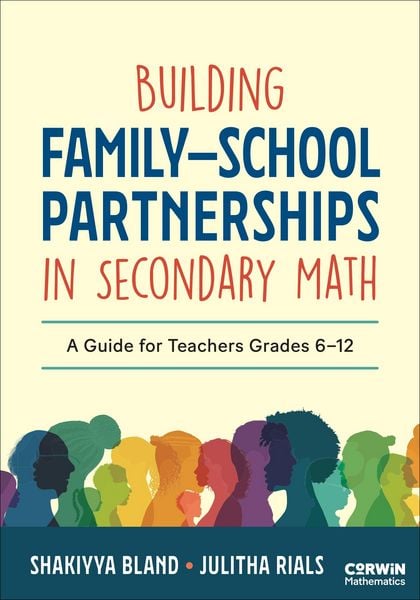
Produktbild: Building Family-School Partnerships in Secondary Math

Building Family-School Partnerships in Secondary Math A Guide for Teachers Grades 6-12

36,99 €

inkl. gesetzl. MwSt., Versandkostenfrei


Beschreibung

Produktdetails

ISBN

978-1-07-198178-8

Erscheinungsdatum

24.04.2026

Einband

Taschenbuch

Verlag

Sage Publications

Seitenzahl

168

Maße (L/B/H)

17,8/25,3/1,2 cm

Gewicht

364 g

Sprache

Englisch

Beschreibung

Rezension

Building Family School Partnerships in Secondary Math is a must-have for all secondary math educators! Engaging secondary students families in math education has been a challenge for educators for years. Using entertaining vignettes and multifaceted home learning activities with real-world contexts, Bland and Rials provide practical, research-aligned strategies to help educators actively engage families in supporting students growth in mathematics. Latrenda Knighten Baton Rouge, LA

Produktdetails

ISBN

978-1-07-198178-8

Erscheinungsdatum

24.04.2026

Einband

Taschenbuch

Verlag

Sage Publications

Seitenzahl

168

Maße (L/B/H)

17,8/25,3/1,2 cm

Gewicht

364 g

Sprache

Englisch

EU-Ansprechpartner

Kolibri 360 GmbH
Ettore-Bugatti-Straße 6-14
51149 Köln
DE
produktsicherheit@kolibri360.de

Herstelleradresse

SAGE Publications
1 Oliver's Yard 55 City Road
EC1Y 1SP London
GB
orders@sagepub.co.uk

Noch keine Bewertungen vorhanden

Verfassen Sie die erste Bewertung zu diesem Artikel

Helfen Sie anderen Kundinnen und Kunden durch Ihre Meinung.

Kundinnen und Kunden meinen

Bewertungen (0)

  • Produktbild: Building Family-School Partnerships in Secondary Math
  • Preface
    Acknowledgments
    About the Authors
    Chapter 1: The Importance of Family Engagement in Secondary Math Education
    The Foundations
    Research on How Family Engagement Impacts Students
    Building a Collaborative Relationship Between Educators and Families
    Effective Communication Strategies
    Creating Inclusive Learning Environments
    Empowering Families to Support Math Learning at Home
    1. Interactive Math Activities for Home Practice
    2. Recommendations for Math-Focused Books, Games, and Apps
    Offering Guidance Without Overwhelming Families
    1. Focus on Everyday Moments for Math Learning
    2. Clear and Concise Instructions
    High Expectations for All Students
    Vision for a Supportive and Inclusive Approach to Family Engagement
    Conclusion: Recap of Key Points
    Reflection on Practice
    Self-Reflection Prompts
    Reflection Questions Educators Can Share with Caregivers
    Chapter 2: Mathematical Identity and Funds of Knowledge: Enhancing Engagement and Achievement
    The Foundations
    Understanding Mathematical Identity
    Perception of Self in Mathematical Identity
    Key Components of Mathematical Identity
    The Impact on Engagement and Achievement
    Cultural Funds of Knowledge
    Definition and Importance of Funds of Knowledge in Education
    Key Aspects of Funds of Knowledge in Education
    Recognition of Cultural Capital
    Teacher Professional Development
    Impact on Student Outcomes
    Connection to Mathematics
    Implementing Culturally Responsive Teaching
    Examples of Culturally Relevant Activities
    Conclusion: Recap of Key Points
    Reflection on Practice
    Self-Reflection Prompts
    Reflection Questions Educators Can Share with Caregivers
    Chapter 3: Engaging Families with the Standards for Mathematical Practice
    The Foundations
    Unpacking the Eight Standards for Mathematical Practice
    Linking SMPs to Real-World Learning
    Family Engagement Using the SMPs
    Cultivating Collaborative Learning Environments
    Family Math Engagement Activity Framework and Prompts (Algebra)
    Prompts for Family Conversations
    Building Bridges Beyond the Classroom: Family and Community Collaboration for Inclusive Math Learning
    Strategies to Strengthen Family Engagement in Math
    Removing Language Barriers for Multilingual Families
    Building Partnerships Through Community Resources
    Leveraging the Right Tools for Effective Problem Solving
    Virtual Engagement Opportunities to Increase Accessibility
    Gathering Insights to Improve Future Math Engagement Strategies
    Building a Culture of Feedback in Schools
    Conclusion: Recap of Key Points
    Reflection on Practice
    Self-Reflection Prompts
    Reflection Questions Educators Can Share with Caregivers
    Chapter 4: Mathematical Language Routines: Amplifying Family Engagement and Language Development in Mathematics
    The Foundations
    Understanding MLRs
    What Are MLRs?
    Unpacking the Eight MLRs
    Benefits of MLRs
    Fostering Mathematical Reasoning and Discourse
    Supporting Language Development
    Adaptability and Classroom Culture
    Integrating MLRs In Classroom Instruction
    Ways High School Math Teachers Can Integrate MLRs
    Modeling MLRs with Families
    Creating Collaborative Learning Opportunities
    Fostering Relationships Among Stakeholders
    Ensure All Families Can Access Multilingual-Related Materials and Support
    Conclusion: Recap of Key Insights
    Reflection on Practice
    Self-Reflection Prompts
    Reflection Questions for Educators to Share with Caregivers
    Chapter 5: Navigating Transitions: Pivotal Decisions in Secondary Mathematics Education
    The Foundations
    Understanding Pivotal Grade-Level Transition Phases
    The Nature of the Grade-Level Transition
    Elementary School
    Middle School
    High School
    Emotional Changes During Grade Transitions
    Key Decisions During Grade-Level Transitions
    Factors Influencing Course Placement
    Implications for Academic Trajectories
    Three Examples of Middle and High School Mathematics Pathways
    Why Examine High School Math Pathways?
    Example: Georgia's High School Math Sequences
    Example: Washington State's High School Math Sequences
    Automatic Enrollment and Clear Communication
    Role of Counselors and Educators
    Example: Ohio's High School Math Sequences
    Questions Families May Ask
    The Role of Effective Communication Among Stakeholders During Transitions
    Navigating the Transition Together
    Preparing Stakeholders for Informed Decisions
    Collaborate with Stakeholders and Provide Resources
    Advocate for Professional Development
    Share and Gather Feedback
    Conclusion: Recap of Key Points
    Reflection on Practice
    Self-Reflection Prompts
    Reflection Questions Educators Can Share with Caregivers
    References
    Index