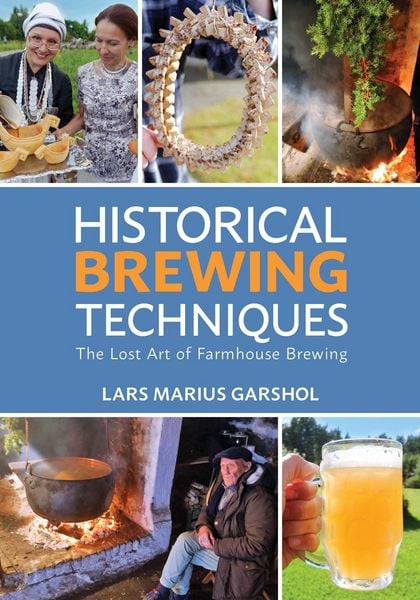
Produktbild: Historical Brewing Techniques

Historical Brewing Techniques The Lost Art of Farmhouse Brewing

24,99 €

inkl. gesetzl. MwSt., Versandkostenfrei


Beschreibung

Produktdetails

Verkaufsrang

46016

Einband

Taschenbuch

Erscheinungsdatum

30.04.2020

Verlag

Brewers Publications

Maße (L/B/H)

17,7/24,6/1,7 cm

Gewicht

1024 g

Sprache

Englisch

ISBN

978-1-938469-55-8

Beschreibung

Produktdetails

Verkaufsrang

46016

Einband

Taschenbuch

Erscheinungsdatum

30.04.2020

Verlag

Brewers Publications

Maße (L/B/H)

17,7/24,6/1,7 cm

Gewicht

1024 g

Sprache

Englisch

ISBN

978-1-938469-55-8

Herstelleradresse

Libri GmbH
Europaallee 1
36244 Bad Hersfeld
DE

Email: gpsr@libri.de

Ein neues Kapitel für Ihre Bücher

Ein neues Kapitel für Ihre Bücher

Schenken Sie Ihren alten Schätzen ein zweites Leben: Einfach Barcode scannen, Versandetikett ausdrucken, Bücher verschicken und Thalia Geschenkkarte erhalten.

Jetzt verkaufen
Jetzt verkaufen

Kundinnen und Kunden meinen

0 Bewertungen

Informationen zu Bewertungen

Zur Abgabe einer Bewertung ist eine Anmeldung im Konto notwendig. Die Authentizität der Bewertungen wird von uns nicht überprüft. Wir behalten uns vor, Bewertungstexte, die unseren Richtlinien widersprechen, entsprechend zu kürzen oder zu löschen.

Die Bewertungen sind nach Format, Anzahl Sterne und Datum sortiert.

Verfassen Sie die erste Bewertung zu diesem Artikel

Helfen Sie anderen Kund*innen durch Ihre Meinung

Kundinnen und Kunden meinen

0 Bewertungen filtern

Weitere Artikel finden Sie in

Die Leseprobe wird geladen.
  • Produktbild: Historical Brewing Techniques
  • Table of Contents

    1 Understanding farmhouse ale

    1.1 The world of yesterday

    1.2 Kaupanger: First meeting with the tradition

    2 History 35

    3 Malt 47

    3.1 Stjørdal: malt-making hot spot

    3.2 The types of grain

    3.3 Barley varieties

    3.4 Maskin, portrait of a barley variety

    3.5 How the grain was grown

    3.6 Steeping and sprouting

    3.7 Drying methods

    3.7.1 Very pale, unsmoked malts

    3.7.2 Lightly smoked, hot-dried malts

    3.7.3 Heavily smoked malts

    3.7.4 Caramel malts

    3.7.5 Strong, uneven heat

    3.7.6 Undried malts

    4 Yeast 95

    4.1 Voss: Discovering kveik

    4.2 First lab analysis

    4.3 Yeast, wild and domesticated

    4.4 The yeast revolution

    4.5 Yeast on the farms

    4.6 Origins of the yeast

    4.7 Yeast species

    4.8 The family tree of yeast

    4.9 Kveik, what we know

    4.10 The non-kveik farmhouse yeasts

    4.11 Bread yeast

    4.12 Dying out

    4.13 Kveik renaissance

    4.14 The word “kveik”

    5 Brewing process 155

    5.1 Hornindal, Norway

    5.2 Stone beer

    5.3 Raw ale

    5.4 Boiled ale

    5.5 The mash boiled

    5.6 Complex mashes

    5.7 Keptinis

    5.8 The great stove

    5.9 Vsekhsvyatskoye, Russia

    5.10 Understanding oven-based beers

    5.11 The mash fermented

    5.12 The evolution of brewing processes

    6 Beer in the life on the farm 217

    6.1 Harvest ale

    6.2 Ritual beer

    6.3 Superstition

    6.4 Brewers or brewsters?

    6.5 Equipment

    6.6 Preparations

    6.7 Grinding

    6.8 Water

    6.9 Carbonation

    6.10 Oppskåke

    6.11 Cellaring

    6.12 Drinking vessels

    6.13 Serving beer

    6.14 Beer flaws

    7 Spices and adjuncts 277

    7.1 Hops

    7.2 Juniper

    7.3 Sweet gale

    7.4 Grand wormwood

    7.5 Caraway

    7.6 St John’s Wort

    7.7 Bitter orange peel

    7.8 Yarrow

    7.9 Tansy

    7.10 Bay laurel

    7.11 Wild rosemary

    7.12 Heather

    7.13 Others

    7.14 Adjuncts

    7.14.1 Potatoes

    7.14.2 Bran

    7.14.3 Carrots

    7.14.4 Peas

    7.14.5 Honey

    7.14.6 Other adjuncts

    7.15 Filter materials

    7.15.1 Straw

    7.15.2 Alder sticks

    7.15.3 Other

    8 The drink problem

    8.1 Small beer

    8.2 Rostdrikke

    8.3 Kvass

    8.4 Birch sap beer

    8.5 Juniper berry beer

    8.6 Mead

    8.7 Sugar beer

    9 Brewing like a farmer

    9.1 Carbonation

    9.2 Working with kveik

    9.3 Working with farmhouse yeast

    9.4 Brewing with juniper

    9.5 Making your own malts

    10 Styles and how to brew them

    10.1 What is farmhouse ale?

    10.2 Recipes

    10.3 Raw ales

    10.3.1 Brewing raw ales

    10.3.2 Kornøl

    10.3.3 Sahti

    10.3.4 Island koduõlu

    10.3.5 Kaimiškas

    10.3.6 Danish landøl

    10.4 Dark, smoky ales

    10.4.1 Stjørdalsøl

    10.4.2 Gotlandsdricke

    10.4.3 Landøl from south Funen

    10.5 Brown boiled beers

    10.5.1 Heimabrygg

    10.5.2 Telemark, Norway

    10.5.3 Hallingdal

    10.5.4 Swedish farmhouse ale: Öxabäck

    10.6 Oven beers

    10.6.1 Seto koduõlu

    10.6.2 Oven-mashed Russian farmhouse ale

    10.6.3 Chuvashian farmhouse ale

    10.6.4 Sur

    10.6.5 Keptinis

    10.7 Fermented mash

    10.7.1 Luumäki-style

    10.7.2 Vanylven-style

    10.8 Stone beer

    10.9 Other regions

    10.9.1 Corn ale

    10.9.2 English farmhouse ale

    10.9.3 Welsh farmhouse ale

    10.9.4 Westphalian farmhouse ale

    10.9.5 Aludi

    10.9.6 Oat beer

    11 Today and tomorrow

    11.1 Baltic time capsule

    11.2 The Baltics today

    11.3 Status in the west

    11.4 Farmhouse ale in the 21st century

    11.5 Into the future

    12 Acknowledgements

    13 Bibliography

    13.1 Archive sources

    13.2 The database

    13.3 Published sources

    13.4 Unpublished sources

    13.5 Interview sources