• Produktbild: Estrogen — Mystery Drug for the Brain?
  • Produktbild: Estrogen — Mystery Drug for the Brain?
- 12%

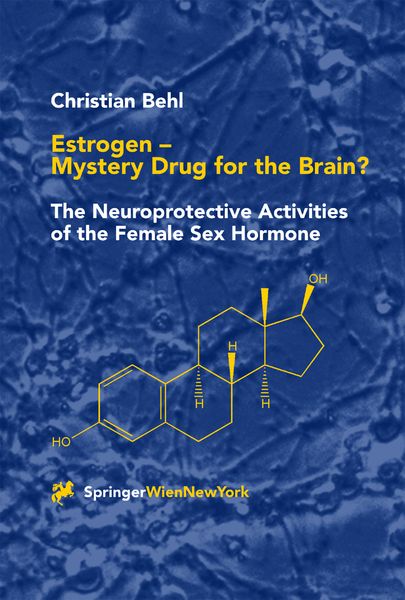
Estrogen — Mystery Drug for the Brain? The Neuroprotective Activities of the Female Sex Hormone

12% sparen

93,99 € UVP 106,99 €

inkl. gesetzl. MwSt., Versandkostenfrei


Beschreibung

Produktdetails

Einband

Gebundene Ausgabe

Erscheinungsdatum

22.06.2001

Abbildungen

XV, 231 p.

Verlag

Springer Wien

Seitenzahl

231

Maße (L/B/H)

24,1/16/1,9 cm

Gewicht

547 g

Auflage

2001

Sprache

Englisch

ISBN

978-3-211-83539-5

Beschreibung

Produktdetails

Einband

Gebundene Ausgabe

Erscheinungsdatum

22.06.2001

Abbildungen

XV, 231 p.

Verlag

Springer Wien

Seitenzahl

231

Maße (L/B/H)

24,1/16/1,9 cm

Gewicht

547 g

Auflage

2001

Sprache

Englisch

ISBN

978-3-211-83539-5

Herstelleradresse

Springer Wien
Prinz-Eugen-Str. 8-10
1040 Wien
AT
buchhandel-buch@springer.com

Ein neues Kapitel für Ihre Bücher

Ein neues Kapitel für Ihre Bücher

Schenken Sie Ihren alten Schätzen ein zweites Leben und erhalten dafür eine Thalia Geschenkkarte.

Jetzt verkaufen
Jetzt verkaufen

Noch keine Bewertungen vorhanden

Verfassen Sie die erste Bewertung zu diesem Artikel

Helfen Sie anderen Kundinnen und Kunden durch Ihre Meinung.

Kundinnen und Kunden meinen

Bewertungen (0)

  • Produktbild: Estrogen — Mystery Drug for the Brain?
  • Produktbild: Estrogen — Mystery Drug for the Brain?
  • General abbreviations.- 1. Introduction.- Estrogen — more than “just” a female sex hormone.- Estrogen is a hormone: but what are hormones, anyway?.- A little history.- How do hormones act?.- Estrogen — THE sex hormone and more.- 2. Estrogen is a steroid.- Production of sex hormones in the gonadal glands.- Biosynthesis of sex hormones.- 3. Estrogen acts via receptors.- “Estrogen’s classics” — the genomic pathway of estrogen action.- Modulation of the estrogen receptor function.- To be or not to be? Are there membrane ERs?.- 4. “Non-classical” activities of estrogen.- Rapid non-genomic effects compared to slow genomic effects of steroid hormones: what makes the difference?.- Rapid effects of estrogen.- Structure-dependent effects: estradiol as antioxidant.- Reactive oxygen species (ROS): normal byproducts of life under oxygen.- Antioxidant defense lines of the cell.- Estradiol is an antioxidant similar to ?-tocopherol (vitamin E).- Dietary phenols and the blood-brain-barrier.- 5. General physiological activities of estrogen.- Lessons from the ERKO-mice.- 6. Estrogen’s actions in the brain.- Estrogen receptors in the brain.- Neuroactivities of estrogens in brain areas outside the hypothalamus: the effect of sex differences.- Effects of estrogen on the cholinergic system.- Effects of estrogen on the serotonergic and catecholaminergic system.- Activities of estrogen on glial cells.- Are there gender differences in brain function?.- Sexual differentiation and gross gender differences in brain structure and function.- Sex differences in the function of the hippocampus.- “Non-classical” activities of estrogen in the brain.- Estrogen as “neuroactive steroid” and estradiol’s non-genomic effects at neuronal membranes 79 Estrogen’s“cross-talks” with the intracellular signaling in neurons.- Estrogen and MAP kinase signaling.- Estrogen’s “cross-talk” with other signal pathways in neurons.- Estrogen is a phenolic antioxidant.- The pathogenetic role of oxidative stress in the CNS.- The brain is particularly sensitive to oxidative stress.- 7. Protection of the brain by estrogen.- Estrogen as drug for the brain?.- Menopause, and estrogen replacement therapy (ERT).- Estrogen and human diseases: general beneficial effects of estrogen.- Estrogen as a drug for the treatment and prevention of brain diseases?.- Estrogen in neuropsychiatric disorders.- 8. Nerve cell protection by estrogen: molecular mechanisms.- Life is difficult, at the cellular and molecular level, too.- Protective effect of estrogen in cultured neuronal cells.- Mechanisms of nerve cell death.- The two main routes to cell death: apoptosis and necrosis.- Executioners of apoptosis: caspases.- How to detect apoptosis?.- Is there apoptosis in Alzheimer’s Disease?.- Apoptosis in post-mortem AD brain tissue.- Apoptosis and necrosis of nerve cells in culture (in vitro).- AD genetics and apoptosis.- Investigations of estrogen’s neuroprotective activities in vitro.- Intracellular molecular mechanisms of neuroprotection by estrogen.- Direct ER-dependent neuroprotection: induction of neuroprotective genes.- “Cross-Talks” of estradiol with neuroprotective signaling.- MAP-kinase signaling.- Phosphatidylinositol 3 (PI3)-kinase.- NF-?B.- NF-?B is an oxidative stress-responsive transcription factor.- NF-?B has anti-apoptotic and pro-apoptotic activities.- Cyclic AMP/CREB-signaling.- Intracellular Cat2+levels and electrophysiology.- Estradiol is a neuroprotective antioxidant: ER-independent effects.- Oxidative stress as a generaltrigger of nerve cell death.- Oxidative stress in neurodegeneration.- Estradiol is a neuroprotective antioxidant.- 9. Outlook.- Estrogen’s neuroprotective target genes and estrogen’s effects on neuronal stem cells.- Estrogen and stem cells.- 10. References.