
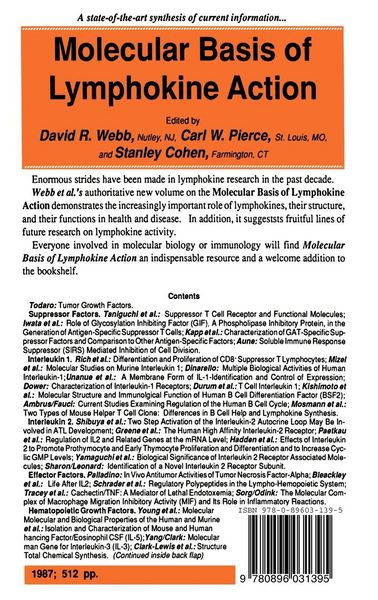
• Produktbild: Molecular Basis of Lymphokine Action
  • Produktbild: Molecular Basis of Lymphokine Action
Band 18

Molecular Basis of Lymphokine Action

182,99 €

inkl. gesetzl. MwSt., Versandkostenfrei


Beschreibung

Produktdetails

ISBN

978-0-333-80420-9

Auflage

1987 edition

Erscheinungsdatum

09.12.1987

Einband

Gebundene Ausgabe

Verlag

Palgrave Macmillan UK

Seitenzahl

482

Maße (L/B/H)

23,4/15,6/2,9 cm

Gewicht

920 g

Sprache

Englisch

Beschreibung

Produktdetails

ISBN

978-0-333-80420-9

Auflage

1987 edition

Erscheinungsdatum

09.12.1987

Einband

Gebundene Ausgabe

Verlag

Palgrave Macmillan UK

Seitenzahl

482

Maße (L/B/H)

23,4/15,6/2,9 cm

Gewicht

920 g

Sprache

Englisch

Herstelleradresse

Libri GmbH
Europaallee 1
36244 Bad Hersfeld
DE

Email: gpsr@libri.de

Ein neues Kapitel für Ihre Bücher

Ein neues Kapitel für Ihre Bücher

Schenken Sie Ihren alten Schätzen ein zweites Leben: Einfach Barcode scannen, Versandetikett ausdrucken, Bücher verschicken und Thalia Geschenkkarte erhalten.

Jetzt verkaufen
Jetzt verkaufen

Noch keine Bewertungen vorhanden

Verfassen Sie die erste Bewertung zu diesem Artikel

Helfen Sie anderen Kundinnen und Kunden durch Ihre Meinung.

Kundinnen und Kunden meinen

Bewertungen (0)

  • Produktbild: Molecular Basis of Lymphokine Action
  • Produktbild: Molecular Basis of Lymphokine Action
  • Keynote Address.- Tumor Growth Factors.- Suppressor Factors.- Suppressor T Cell Receptor and Functional Molecules.- Role of Glycosylation Inhibiting Factor (GIF), A Phospholipase Inhibitory Protein, In the Generation of Antigen-Specific Suppressor T Cells.- Characterization of GAT-Specific Suppressor Factors and Comparison to Other Antigen-Specific Factors.- Soluble Immune Response Suppressor (SIRS) Mediated Inhibition of Cell Division.- Differentiation and Proliferation of CD8+ Suppressor T Lymphocytes.- Interleukin 1.- Molecular Studies on Murine Interleukin 1.- Multiple Biological Activities of Human Interleukin-1.- A Membrane Form of IL-1-Identification and Control of Expression.- Characterization of Interleukin-1 Receptors.- T Cell Interleukin 1.- B Cell Growth and Differentiation Factors.- Molecular Structure and Immunological Function of Human B Cell Differentiation Factor (BSF2).- Current Studies Examining Regulation of the Human B Cell Cycle.- Two Types of Mouse Helper T Cell Clone: Differences in B Cell Help and Lymphokine Synthesis.- Interleukin 2.- Two Step Activation of the Interleukin-2 Autocrine Loop May Be Involved in ATL Development.- The Human High Affinity Interleukin-2 Receptor.- Regulation of IL2 and Related Genes at the mRNA Level.- Effects of Interleukin-2 to Promote Prothymocyte and Early Thymocyte Proliferation and Differentiation and to Increase Cyclic GMP Levels.- Biological Significance of Interleukin-2 Receptor-Associated Molecules.- Identification of a Novel Interleukin-2 Receptor Subunit.- Effector Factors.- In Vivo Antitumor Activities of Tumor Necrosis Factor-Alpha.- Life After IL2.- Regulatory Polypeptides in the Lympho-Hemopoietic System.- Cachectin/TNF: A Mediator of Lethal Endotoxemia.- The Molecular Complex of Macrophage Migration Inhibitory Activity (MIF) and Its Role in Inflammatory Reactions.- Hematopoietic Growth Factors.- Molecular Biology of Interleukin-3.- The Molecular and Biological Properties of the Human and Murine Members of the CSF-1 Family.- Isolation and Characterization of Mouse and Human cDNA Clones Encoding IL-4 and IgA-Enhancing Factor/Eosinophil CSF (IL-5).- Molecular Cloning and Characterization of the Human Gene for Interleukin-3 (IL-3).- Structure-Function Studies of Lymphokines by Total Chemical Synthesis.- Clincal Uses of Lymphokines.- Cytokines in Metabolic Bone Disease.- Lymphokine Production in Autoimmunity: Usefulness of mRNA Assays.- Interleukin-2 Receptor Directed Immunosuppressive Therapy.- An Improved Method for the Generation of Human Activated Killer Cells.- Growth and Differentiation Factors for Human Metachromatically Staining Cells.- Banquet Address.- Lymphokine Research and the Biology of Immunologic Diseases.- Workshop Summaries.- Interleukin 1.- Hemtapoietic Growth Factors.- Suppressor/Effector Factors.- Clinical Uses of Lymphokines.- Interleukin 2.- Lymphokines Activating Cells for Killer Functions.- B Cell Growth Factors.