• Produktbild: Ancient China and Its Enemies
  • Produktbild: Ancient China and Its Enemies

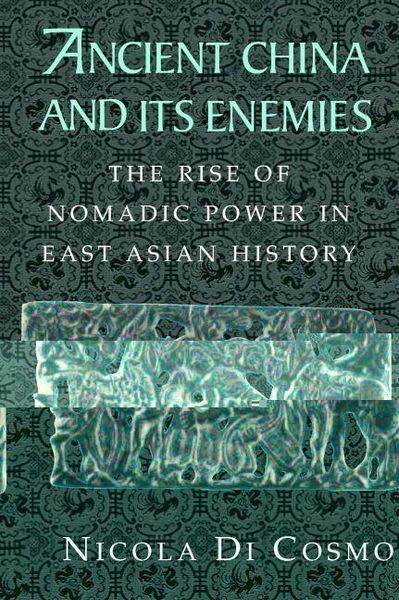
Ancient China and Its Enemies The Rise of Nomadic Power in East Asian History

49,99 €

inkl. gesetzl. MwSt., Versandkostenfrei


Beschreibung

Produktdetails

Einband

Taschenbuch

Erscheinungsdatum

17.11.2010

Verlag

Cambridge University Press

Seitenzahl

380

Maße (L/B/H)

22,9/15,2/2,3 cm

Gewicht

616 g

Sprache

Englisch

ISBN

978-0-521-54382-8

Beschreibung

Produktdetails

Einband

Taschenbuch

Erscheinungsdatum

17.11.2010

Verlag

Cambridge University Press

Seitenzahl

380

Maße (L/B/H)

22,9/15,2/2,3 cm

Gewicht

616 g

Sprache

Englisch

ISBN

978-0-521-54382-8

Herstelleradresse

Libri GmbH
Europaallee 1
36244 Bad Hersfeld
DE

Email: gpsr@libri.de

Ein neues Kapitel für Ihre Bücher

Ein neues Kapitel für Ihre Bücher

Schenken Sie Ihren alten Schätzen ein zweites Leben und erhalten dafür eine Thalia Geschenkkarte.

Jetzt verkaufen
Jetzt verkaufen

Noch keine Bewertungen vorhanden

Verfassen Sie die erste Bewertung zu diesem Artikel

Helfen Sie anderen Kundinnen und Kunden durch Ihre Meinung.

Kundinnen und Kunden meinen

Bewertungen (0)

  • Produktbild: Ancient China and Its Enemies
  • Produktbild: Ancient China and Its Enemies
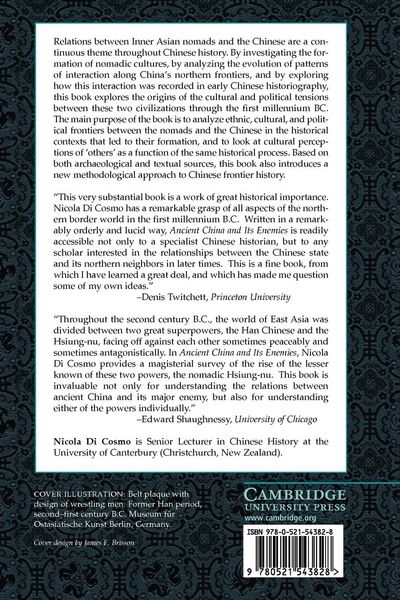
  • Introduction; Part I: 1. The Steppe Highway: the rise of pastoral nomadism as a Eurasian phenomenon; 2. Bronze, iron and gold: the evolution of nomadic cultures on the northern frontier of China; Part II: 3. Beasts and birds: the historical context of early Chinese perceptions of northern peoples; 4. Walls and horses: the beginning of historical contacts between horse-riding Nomads and Chinese states; Part III: 5. Those who draw the bow: the rise of the Hsiung-nu Nomadic Empire and the political unification of the Nomads; 6. From peace to war: China's shift from appeasement to military engagement; Part IV: 7. In search of grass and water: ethnography and history of the North in the Historian's Records; 8. Taming the North: the rationalization of the nomads in Ssu-ma Ch'ien's historical thought; Conclusion.