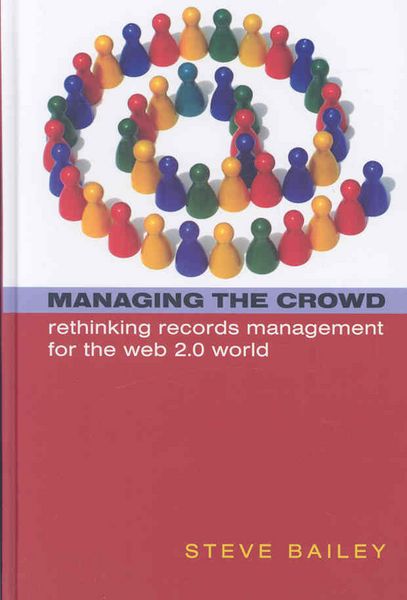
Managing the Crowd Rethinking Records Management for the Web 2.0 World
98,99 €
inkl. gesetzl. MwSt.,
Beschreibung
Produktdetails
Einband
Gebundene Ausgabe
Erscheinungsdatum
20.06.2008
Verlag
Taylor and FrancisSeitenzahl
224
Maße (L/B/H)
25/16,4/1,8 cm
Gewicht
200 g
Sprache
Englisch
ISBN
978-1-85604-641-1
Readership: This is a thought-provoking book which questions received wisdom and suggests radical new solutions to the very real issues RM faces. Every records manager needs to read this challenging book, and those that do may never think about their profession in quite the same way again.
|Imagine a records management (RM) future where the user community collectively describes the value and properties of a record using the wisdom of the crowd; where records retention, description and purpose are determined by their users, within general boundaries defined by the records manager. It may sound far-fetched, but could represent a way forward for managing records.
It has never been more apparent that RM as traditionally practised will soon no longer be fit for purpose. With the increasing plurality of information sources and systems within an organization, as the deluge of content increases, so the percentage of the organization's holdings that can be formally classed as records declines.
In the Web 2.0 world new technology is continually changing the way users create and use information. RM must change its approach fundamentally if it is to have a role to play in this new world. This provocative new book challenges records managers to find time amidst the daily operational pressures to debate the larger issues thrown up by the new technological paradigm we are now entering, and the threat it poses to established theory and practice.
A range of stimulating ideas are put up for discussion: why not, for instance, embrace folksonomies rather than classification schemes and metadata schemas as the main means of resource discovery for unstructured data? Adopt a ranking system that encourages users to rate how useful they found content as part of the appraisal process? Let the content creator decide whether there should be any access restrictions on the content they have created?
Ein neues Kapitel für Ihre Bücher
Ein neues Kapitel für Ihre Bücher
Schenken Sie Ihren alten Schätzen ein zweites Leben: Einfach Barcode scannen, Versandetikett ausdrucken, Bücher verschicken und Thalia Geschenkkarte erhalten.
Jetzt verkaufenNoch keine Bewertungen vorhanden
Verfassen Sie die erste Bewertung zu diesem Artikel
Helfen Sie anderen Kundinnen und Kunden durch Ihre Meinung.
Kurze Frage zu unserer Seite
Vielen Dank für Ihr Feedback
Wir nutzen Ihr Feedback, um unsere Produktseiten zu verbessern. Bitte haben Sie Verständnis, dass wir Ihnen keine Rückmeldung geben können. Falls Sie Kontakt mit uns aufnehmen möchten, können Sie sich aber gerne an unseren Kund*innenservice wenden.
zum Kundenservice