Beschreibung
Produktdetails
Einband
Taschenbuch
Erscheinungsdatum
30.05.2008
Verlag
University of Minnesota PressSeitenzahl
296
Maße (L/B/H)
20,3/12,7/1,6 cm
Gewicht
322 g
Sprache
Englisch
ISBN
978-0-8166-3486-6
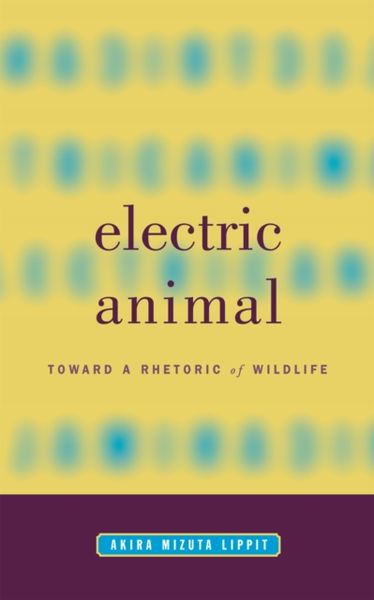
A fascinating exploration of the symbolic place animals hold within our culture.
Differentiation from animals helped to establish the notion of a human being, but the disappearance of animals now threatens that identity. This is the argument underlying Electric Animal, a probing exploration of the figure of the animal in modern culture. Akira Mizuta Lippit shows us the animal as a crucial figure in the definition of modernity-essential to developments in the natural sciences and technology, radical transformations in modern philosophy and literature, and the advent of psychoanalysis and the cinema.
Moving beyond the dialectical framework that has traditionally bound animal and human being, Electric Animal raises a series of questions regarding the idea of animality in Western thought. Can animals communicate? Do they have consciousness? Are they aware of death? By tracing questions such as these through a wide range of texts by writers ranging from Friedrich Nietzsche to Jacques Derrida, Sigmund Freud to Vicki Hearne, Lewis Carroll to Franz Kafka, and Sergei Eisenstein to Gilles Deleuze, Lippit arrives at a remarkable thesis, revealing an extraordinary logical consensus in Western thought: animals do not have language and hence cannot die. The animal has, accordingly, haunted thought as a form of spectral and undead being. Lippit demonstrates how, in the late nineteenth century, this phantasmic concept of animal being reached the proportions of an epistemological crisis, engendering the disciplines and media of psychoanalysis, modern literature, and cinema, among others. Against the prohibitive logic of Western philosophy, these fields opened a space for rethinking animality. Technology, usually thought of in opposition to nature, came to serve as the repository for an unmournable animality-a kind of vast wildlife museum.A highly original work that charts new territory in current debates over language and mortality, subjectivity and technology, Electric Animal brings to light fundamental questions about the status of representation-of the animal and of ourselves-in the age of biomechanical reproduction.Ein neues Kapitel für Ihre Bücher
Ein neues Kapitel für Ihre Bücher
Schenken Sie Ihren alten Schätzen ein zweites Leben und erhalten dafür eine Thalia Geschenkkarte.
Noch keine Bewertungen vorhanden
Verfassen Sie die erste Bewertung zu diesem Artikel
Helfen Sie anderen Kundinnen und Kunden durch Ihre Meinung.
Kurze Frage zu unserer Seite
Vielen Dank für Ihr Feedback
Wir nutzen Ihr Feedback, um unsere Produktseiten zu verbessern. Bitte haben Sie Verständnis, dass wir Ihnen keine Rückmeldung geben können. Falls Sie Kontakt mit uns aufnehmen möchten, können Sie sich aber gerne an unseren Kund*innenservice wenden.
zum Kundenservice