
Gutscheinbedingungen

Gültig bis 19.08.2026 | Gültig für Spielzeug, Filme, Musik, Software, Games, Elektronik, Geschenke & Trends, Schreibwaren, Hörbücher und Hörbuch-Downloads (außer Abo & Shelfies), gebrauchte Bücher, nicht preisgebundene Bücher und Kalender | Einlösbar unter thalia.de und in der Thalia App | Click & Collect nur mit Online-Zahlung (Paypal/Kreditkarte) vorab | Einzelne Artikel können ausgeschlossen sein | Nicht kombinierbar mit anderen Gutscheinen oder Preisaktionen | Nur einmal pro Einkauf einlösbar | Gutschein wird auf max. 500€ Bestellwert angerechnet | Keine Barauszahlung | Digitale Hörbücher nur für Android  | Nicht gültig für preisgebundene Artikel (aufgrund der Buchpreisbindung sind Gutscheine nicht auf Bücher, eBooks, Presse einlösbar), tolino eReader & Zubehör, Abonnements & Flatrates, Geschenkkarten, Versandkosten und Services

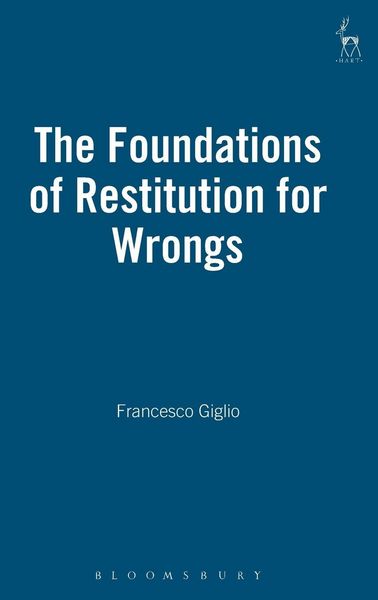
  • Produktbild: The Foundations of Restitution for Wrongs
  • Produktbild: The Foundations of Restitution for Wrongs

The Foundations of Restitution for Wrongs

125,99 €

inkl. gesetzl. MwSt., Versandkostenfrei


Beschreibung

Produktdetails

Einband

Gebundene Ausgabe

Erscheinungsdatum

06.03.2007

Verlag

Bloomsbury Academic

Seitenzahl

264

Maße (L/B/H)

23,4/15,6/1,6 cm

Gewicht

548 g

Sprache

Englisch

ISBN

978-1-84113-647-9

Beschreibung

Produktdetails

Einband

Gebundene Ausgabe

Erscheinungsdatum

06.03.2007

Verlag

Bloomsbury Academic

Seitenzahl

264

Maße (L/B/H)

23,4/15,6/1,6 cm

Gewicht

548 g

Sprache

Englisch

ISBN

978-1-84113-647-9

Ein neues Kapitel für Ihre Bücher

Ein neues Kapitel für Ihre Bücher

Schenken Sie Ihren alten Schätzen ein zweites Leben und erhalten dafür eine Thalia Geschenkkarte.

Jetzt verkaufen
Jetzt verkaufen

Noch keine Bewertungen vorhanden

Verfassen Sie die erste Bewertung zu diesem Artikel

Helfen Sie anderen Kundinnen und Kunden durch Ihre Meinung.

Kundinnen und Kunden meinen

Bewertungen (0)

  • Produktbild: The Foundations of Restitution for Wrongs
  • Produktbild: The Foundations of Restitution for Wrongs
  • Introduction
    1 Terminology and Introduction to the Concept of Restitution for Wrongs
    I First Things First
    II Restitution
    III Wrong
    IV Setting the Terminological Premises
    2 Restitution in the Context of the Law of Obligations
    I Legal Analysis
    II Some Remarks
    3 Comparative Analysis: Proprietary and Intellectual Property Wrongs
    I Organisation of the Analysis
    II Proprietary Wrongs
    III Intellectual Property Wrongs
    4 Comparative Analysis: Breach of Contract
    I English Law
    II German Law
    III Italian Law
    5 Comparative Analysis: Other Wrongs and Concluding Observations
    I Other Wrongs
    II Concluding Observations
    6 The Roman Law of Damages
    I The Role of Non-Compensatory Responses
    II Legal Responses to Wrongs
    III The Punitive Character of the Roman Law of Delict
    IV Penal and Compensatory Actions
    VI Evolution of the Law of Damages in the Post-Classical Period
    VII The Law of Damages in the Ius Commune
    VIII Some Reflections
    7 The Law of Damages in the Tradition of Aristotelian Philosophy
    I Introduction
    II The Aristotelian Approach to Responses to Wrongdoing
    III Aristotelian Theory and Law of Damages
    IV The Influence of Philosophical Analysis over Legal Interpretation
    8 Modern Aristotelian Approaches to Restitution for Wrongs
    I Introduction
    II German Legal Theory and Aristotelian Justice
    III A Moral Instrumentalist Theory on the Law of Damages
    IV A Moral Formalist Theory on the Law of Damages
    V Corrective Justice and Restitution for Wrongs
    9 Wrongs and Restitution
    I Introduction
    II Birks' Three Tests
    III Protection of Facilitative Institutions
    IV General Acceptance
    V Position of the Law Commission
    VI Restitution Disgorgement and Deterrence
    VII The Requirements of the Claim
    VIII The Object of the Restitutionary Claim
    IX Election between Compensation and Restitution
    X The Neutrality of Restitution for Wrongs
    XI The A Fortiori Argument
    XII Conclusions
    10 Final Observations
    I The Outcome of the Research
    II The Chosen Avenue
    III Law of Obligations and Restitution for Wrongs
    IV The Comparative Perspective
    V The Historical Perspective
    VI The Philosophical Perspective