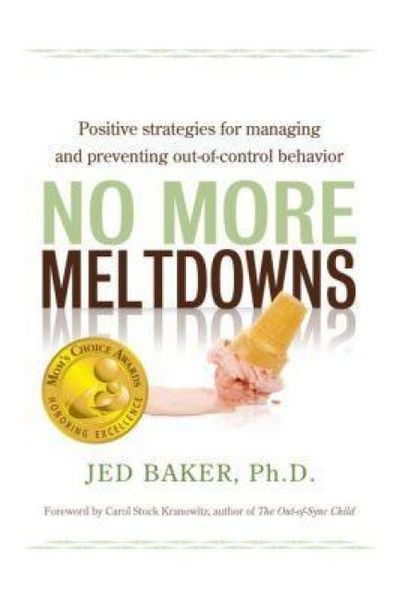
No More Meltdowns Positive Strategies for Dealing with and Preventing Out-Of-Control Behavior
-
- Taschenbuch ausgewählt
- eBook
-
Sprache:Englisch
-
Verlag:Future Horizons
23,99 €
inkl. gesetzl. MwSt.,
Beschreibung
Produktdetails
Einband
Taschenbuch
Erscheinungsdatum
01.04.2008
Verlag
Future HorizonsSeitenzahl
168
Maße (L/B/H)
23,4/15,4/1,3 cm
Gewicht
232 g
Sprache
Englisch
ISBN
978-1-932565-62-1
It could happen at the grocery store. At a restaurant. At school. At home. Meltdowns are stressful for both child and adult, but Dr. Baker can help! Author of the award-winning Social Skills Picture Book series, Dr. Jed Baker offers parents and teachers strategies for preventing and managing meltdowns. His 20+ years of experience working with children on the autism spectrum, combined with his personal experiences raising his own children, have yielded time-tested strategies, and results! Dr. Baker offers an easy-to-follow, 4-step model that will improve your everyday relationships with the children in your life: 1) Managing your own emotions by adjusting your expectations, 2) Learning strategies to calm a meltdown in the moment, 3) Understanding why a meltdown occurs, and 4) Creating plans to prevent future meltdowns.
Ein neues Kapitel für Ihre Bücher
Ein neues Kapitel für Ihre Bücher
Schenken Sie Ihren alten Schätzen ein zweites Leben und erhalten dafür eine Thalia Geschenkkarte.
Noch keine Bewertungen vorhanden
Verfassen Sie die erste Bewertung zu diesem Artikel
Helfen Sie anderen Kundinnen und Kunden durch Ihre Meinung.
Kurze Frage zu unserer Seite
Vielen Dank für Ihr Feedback
Wir nutzen Ihr Feedback, um unsere Produktseiten zu verbessern. Bitte haben Sie Verständnis, dass wir Ihnen keine Rückmeldung geben können. Falls Sie Kontakt mit uns aufnehmen möchten, können Sie sich aber gerne an unseren Kund*innenservice wenden.
zum Kundenservice