Beschreibung
Produktdetails
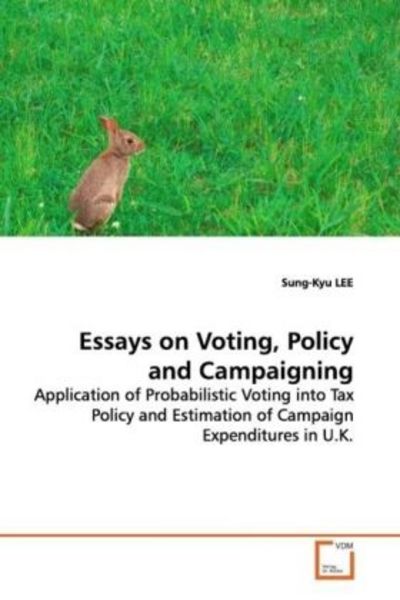
This book deals with 'the voting, policy and
campaigning , comprising two related parts. The
first part attempts to examine the theoretical
relationship between probabilistic voting and
policy, and the second focuses on the empirical
relationship between voting and campaigning.
Tax policy in democratic societies can best be
understood as the equilibrium outcome of a political
process that trades off economic and political
forces within a given set of institutions. The
essential facts of observed tax systems can be seen
as the outcome of optimising economic and political
behaviours. Among available models, the
probabilistic voting model appears well suited to
deal with tax structure in a democratic setting. The
probabilistic voting is a theory of electoral
competition in which political parties or
politicians offer policy platforms to the voters,
and vote-maximising candidates are uncertain about
the mapping from policy to aggregate voting
behaviour. Application of the probabilistic voting
model to tax policy has been a topic of interest in
taxation theory.
campaigning , comprising two related parts. The
first part attempts to examine the theoretical
relationship between probabilistic voting and
policy, and the second focuses on the empirical
relationship between voting and campaigning.
Tax policy in democratic societies can best be
understood as the equilibrium outcome of a political
process that trades off economic and political
forces within a given set of institutions. The
essential facts of observed tax systems can be seen
as the outcome of optimising economic and political
behaviours. Among available models, the
probabilistic voting model appears well suited to
deal with tax structure in a democratic setting. The
probabilistic voting is a theory of electoral
competition in which political parties or
politicians offer policy platforms to the voters,
and vote-maximising candidates are uncertain about
the mapping from policy to aggregate voting
behaviour. Application of the probabilistic voting
model to tax policy has been a topic of interest in
taxation theory.
Ein neues Kapitel für Ihre Bücher
Ein neues Kapitel für Ihre Bücher
Schenken Sie Ihren alten Schätzen ein zweites Leben: Einfach Barcode scannen, Versandetikett ausdrucken, Bücher verschicken und Thalia Geschenkkarte erhalten.
Jetzt verkaufenKundinnen und Kunden meinen
Verfassen Sie die erste Bewertung zu diesem Artikel
Helfen Sie anderen Kund*innen durch Ihre Meinung
Kurze Frage zu unserer Seite
Vielen Dank für Ihr Feedback
Wir nutzen Ihr Feedback, um unsere Produktseiten zu verbessern. Bitte haben Sie Verständnis, dass wir Ihnen keine Rückmeldung geben können. Falls Sie Kontakt mit uns aufnehmen möchten, können Sie sich aber gerne an unseren Kund*innenservice wenden.
zum Kundenservice