Beschreibung
Produktdetails
Einband
Taschenbuch
Erscheinungsdatum
28.05.2009
Verlag
VDMSeitenzahl
144
Maße (L/B/H)
22/15/0,9 cm
Gewicht
204 g
Sprache
Englisch
ISBN
978-3-639-15045-2
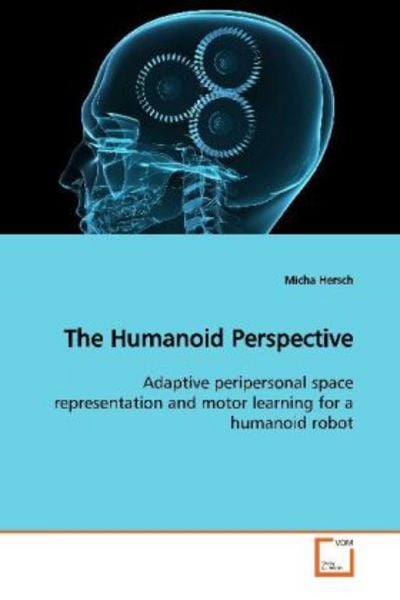
In recent years, humanoid robotics have been the
object of growing interest and investments in the
academic and industrial worlds. And indeed,
autonomous robots are announced to imminently enter
our households. However, beyond the boastful
declarations, many challenges still remain to be met
on this way. This book focuses on one of the most
fundamental ones, the question of action-oriented
space representation and motor learning. Highlighting
the main difficulties encountered by researchers, it
shows how taking inspiration from the human space
representation and motor control can lead to original
robotics solutions. It suggests a way to enable a
humanoid to learn how to control its limbs and to
learn simple tasks from human demonstrations.
In doing so, the book explores a fruitful but
difficult dialogue between engineering and cognitive
sciences, illustrating its potential benefits and
pitfalls. This book is intended to people wishing to
have a more precise idea of current advances in
humanoid space representation and motor learning, as
well as for scientists who may find it a useful
source of inspiration for their own research.
object of growing interest and investments in the
academic and industrial worlds. And indeed,
autonomous robots are announced to imminently enter
our households. However, beyond the boastful
declarations, many challenges still remain to be met
on this way. This book focuses on one of the most
fundamental ones, the question of action-oriented
space representation and motor learning. Highlighting
the main difficulties encountered by researchers, it
shows how taking inspiration from the human space
representation and motor control can lead to original
robotics solutions. It suggests a way to enable a
humanoid to learn how to control its limbs and to
learn simple tasks from human demonstrations.
In doing so, the book explores a fruitful but
difficult dialogue between engineering and cognitive
sciences, illustrating its potential benefits and
pitfalls. This book is intended to people wishing to
have a more precise idea of current advances in
humanoid space representation and motor learning, as
well as for scientists who may find it a useful
source of inspiration for their own research.
Ein neues Kapitel für Ihre Bücher
Ein neues Kapitel für Ihre Bücher
Schenken Sie Ihren alten Schätzen ein zweites Leben: Einfach Barcode scannen, Versandetikett ausdrucken, Bücher verschicken und Thalia Geschenkkarte erhalten.
Jetzt verkaufenKundinnen und Kunden meinen
Verfassen Sie die erste Bewertung zu diesem Artikel
Helfen Sie anderen Kund*innen durch Ihre Meinung
Kurze Frage zu unserer Seite
Vielen Dank für Ihr Feedback
Wir nutzen Ihr Feedback, um unsere Produktseiten zu verbessern. Bitte haben Sie Verständnis, dass wir Ihnen keine Rückmeldung geben können. Falls Sie Kontakt mit uns aufnehmen möchten, können Sie sich aber gerne an unseren Kund*innenservice wenden.
zum Kundenservice