
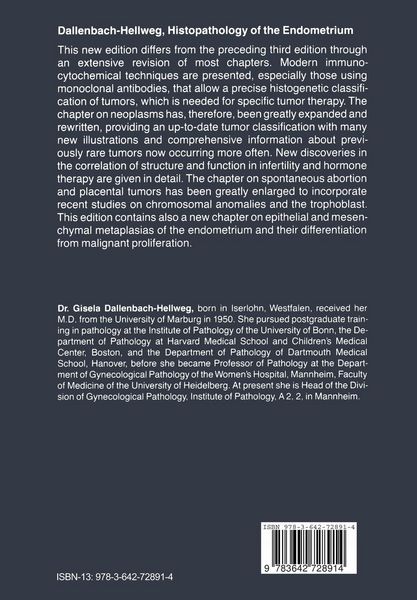
• Produktbild: Histopathology of the Endometrium
  • Produktbild: Histopathology of the Endometrium
- 10%

Histopathology of the Endometrium

10% sparen

95,99 € UVP 106,99 €

inkl. gesetzl. MwSt., Versandkostenfrei


Beschreibung

Produktdetails

Einband

Taschenbuch

Erscheinungsdatum

11.01.2012

Verlag

Springer Berlin

Seitenzahl

416

Maße (L/B/H)

24,4/17/2,4 cm

Gewicht

748 g

Auflage

Fourth Edition 1987

Übersetzt von

D. Dallenbach Frederick

Sprache

Englisch

ISBN

978-3-642-72891-4

Beschreibung

Produktdetails

Einband

Taschenbuch

Erscheinungsdatum

11.01.2012

Verlag

Springer Berlin

Seitenzahl

416

Maße (L/B/H)

24,4/17/2,4 cm

Gewicht

748 g

Auflage

Fourth Edition 1987

Übersetzt von

D. Dallenbach Frederick

Sprache

Englisch

ISBN

978-3-642-72891-4

Herstelleradresse

Springer-Verlag KG
Sachsenplatz 4-6
1201 Wien
AT

Email: GPSR Kontakt

Ein neues Kapitel für Ihre Bücher

Ein neues Kapitel für Ihre Bücher

Schenken Sie Ihren alten Schätzen ein zweites Leben: Einfach Barcode scannen, Versandetikett ausdrucken, Bücher verschicken und Thalia Geschenkkarte erhalten.

Jetzt verkaufen
Jetzt verkaufen

Noch keine Bewertungen vorhanden

Verfassen Sie die erste Bewertung zu diesem Artikel

Helfen Sie anderen Kundinnen und Kunden durch Ihre Meinung.

Kundinnen und Kunden meinen

Bewertungen (0)

  • Produktbild: Histopathology of the Endometrium
  • Produktbild: Histopathology of the Endometrium
  • A. Methods of Obtaining, Preparing, and Interpreting the Endometrium.- 1. Indications for Curettage.- 2. Selection of the Proper Time for Curettage.- 3. Procedures for Obtaining Endometrial Tissue.- 4. Preparation of the Endometrial Specimen.- a) Fixation.- b) Embedding.- c) Orientation.- d) Staining.- e) Immunocytochemistry with Monoclonal Antibodies.- f) Quantitative and Experimental Methods.- 5. Components of Curettings and Their Diagnostic Value.- 6. Statistical Analysis of the Histological Results.- B. The Normal Histology of the Endometrium.- 1. The Individual Structures.- a) The Glandular Epithelium.- b) The Superficial Epithelium.- c) The Stromal Cells.- d) The Reticulum Fibers.- e) The Ground Substance.- f) The Vessels.- g) The Nerves.- 2. Histochemical Localization of Enzymes; the Reciprocal Action Between Enzymes and Hormones.- 3. Structural Changes Induced in the Endometrium by the Physiological Action of the Ovarian Hormones.- a) Molecular Biology of Steroid Hormones.- b) Endometrial Steroid Receptors.- c) Estrogen.- d) Progesterone.- e) Relaxin.- 4. Changes in Structures in the Endometrium During Nidation.- 5. The Endometrium Before Puberty.- 6. The Normal Menstrual Cycle and Its Possible Variations.- a) The Normal Proliferative Phase.- b) The Normal Secretory Phase.- c) Menstruation.- d) Regeneration.- e) Possible Variations in the Endometrium During the Normal Cycle.- 7. The Endometrium in the Climacterium and After the Menopause.- C. The Histopathology of the Endometrium.- 1. Morphological Effects of Circulatory and Coagulation Disturbances.- a) Edema.- b) Chronic Passive Hyperemia; Hemorrhage Caused by Extragenital Diseases.- 2. Functional Endogenous (Hormonal) Disturbances.- a) Atrophic Endometrium from Non-Functioning Ovaries.- b) Resting Endometrium Resulting from Inadequate Ovarian Function (Ovarian Insufficiency, Hypofolliculinism).- c) The Endometrium Associated with a Persistent Follicle.- ?) The Anovulatory Cycle.- ?) Glandular-Cystic Hyperplasia.- ?) Adenomatous Hyperplasia.- ?) Special Forms of Hyperplasia (Focal Hyperplasia, Polyps, Glandular, and Stromal Hyperplasias).- d) The Deficient Secretory Phase Associated with Deficiency or Premature Regression of the Corpus Luteum.- e) The Endometrium Associated with a Persistent Corpus Luteum.- ?) Irregular Shedding.- ?) Dysmenorrhea Membranacea.- ?) Secretory Hypertrophy.- f) The Endometrium Associated with Infertility.- g) Functional Disturbances During the Climacteric.- h) The Effect of Hormone-Producing Ovarian Tumors on the Endometrium.- i) The Functional Disturbances of the Endocervical Mucosa.- 3. Exogenous (latrogenic) Changes of the Endometrium.- a) After Hormonal Therapy.- ?) Estrogens.- ?) Gestagens.- ?) Both Hormones.- ?) Oral Contraceptive Agents.- ?) Gonadotropins.- ?) Clomiphene.- b) After Intrauterine Contraceptive Device.- c) After Intrauterine Instillation.- d) Regeneration after Curettage.- e) With In Vitro Fertilization.- 4. Endometritis.- a) Acute Endometritis.- b) Chronic Non-Specific Endometritis.- c) Tuberculous Endometritis.- d) Specific Endometritis Caused by Rare Microorganisms.- e) The Foreign Body Granuloma.- f) Endocervicitis.- 5. Metaplasias and Related Changes.- a) Epithelial Metaplasia.- ?) Squamous Metaplasia, Morules, and Ichthyosis.- ?) Mucinous (Endocervical) Metaplasia.- ?) Serous Papillary Metaplasia.- ?) Ciliated Cell Change.- ?) Clear Cell Change.- b) Stromal Metaplasia.- 6. Neoplasms.- a) Benign Tumors.- b) Carcinoma of the Endometrium.- ?) Carcinomas with Endometrial Differentiation.- ?) Carcinomas Which Originate from Pluripotent Müllerian Epithelium.- ?) Histochemical Results.- ?) Precursors of Endometrial Carcinoma.- ?) Etiological Concepts.- ?) Progesterone Treatment of Endometrial Carcinoma.- c) Sarcoma of the Endometrium.- d) Malignant Mixed Mesodermal Tumors.- e) Metastatic Tumors.- f) Primary Carcinomas of the Ecto- and Endocervix as Components of Curettings.- D. The Diagnosis of Normal and Pathologic Pregnancy from Curettings.- 1. The Early Intrauterine Pregnancy and Its Disturbances.- a) Therapeutic Abortion (Induced Abortion).- b) Spontaneous Abortion.- ?) Causes.- ?) Microscopic Changes.- c) Partial Hydatidiform Mole.- d) Complete Hydatidiform Mole, Invasive Mole, and Choriocarcinoma.- e) Placental Site Trophoblastic Tumor.- f) Late Endometrial Changes Following Intrauterine Abortion.- 2. The Endometrium Associated with Extrauterine Pregnancy.- 3. The Postpartum Endometrium.- References.