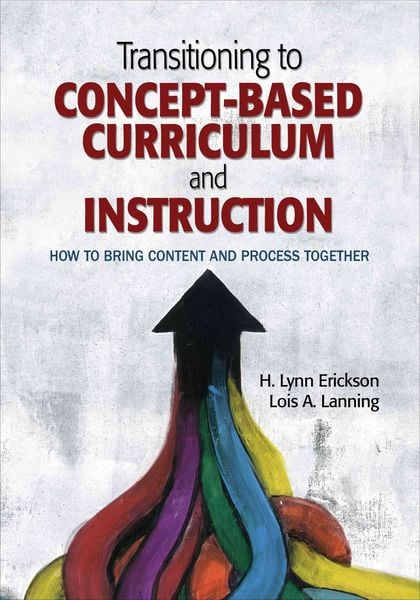
Transitioning to Concept-Based Curriculum and Instruction How to Bring Content and Process Together
-
- Englisch ausgewählt
35,99 €
inkl. gesetzl. MwSt.,
Beschreibung
Produktdetails
ISBN
978-1-4522-9019-5
Erscheinungsdatum
27.12.2013
Einband
Taschenbuch
Verlag
Sage PublicationsSeitenzahl
224
Maße (L/B/H)
25,4/17,8/1,2 cm
Gewicht
431 g
Sprache
Englisch
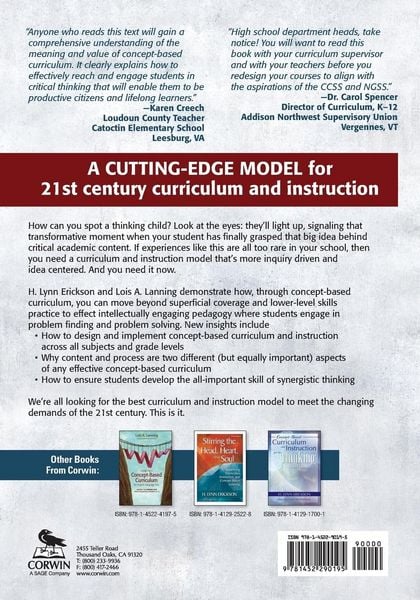
A cutting-edge model for 21st century curriculum and instruction
How can you spot a thinking child? Look at the eyes: they ll light up, signaling that transformative moment when your student has finally grasped that big idea behind critical academic content. If experiences like this are all too rare in your school, then you need a curriculum and instruction model that s more inquiry-driven and idea-centered. Now.
H. Lynn Erickson and Lois Lanning demonstrate how, through concept-based curriculum, you can move beyond superficial coverage and lower-level skills practice to effect intellectually engaging pedagogy, where students engage in problem finding and problem solving. New insights include:
- How to design and implement concept-based curriculum and instruction across all subjects and grade levels.
- Why content and process are two different (but equally important) aspects of any effective concept-based curriculum.
- How to ensure students develop the all-important skill of synergistic thinking.
We re all looking for the best curriculum and instruction model to meet the changing demands of the 21st century. This is it.
"With the onset of the Common Core and new national content standards, concept-based learning is now more crucial than ever. Erickson and Lanning are 'ahead of the curve' in providing teachers and curriculum leaders with rich instructional strategies to meet these challenging standards. This is an essential book for planning tomorrow s curricula today."
Douglas Llewellyn, Educational Consultant and Author of Inquire Within, Third Edition
"Powerful teaching engages minds with powerful ideas. At its core, such transformative teaching is neither transmission of information nor practice with inert skills. Rather it is a careful choreography between a mind and an idea such that the mind comes to own the idea in a form that is true to the discipline and expansive for the learner. Erickson and Lanning teach teachers to be choreographers of learning understanding both what makes content worth knowing and how to engage young minds with that content in ways that extend their capacities to understand it at a deeper level, use it, transfer it, and ultimately create with it."
Carol Ann Tomlinson, Ed.D., Chair of Educational Leadership, Foundations, and Policy
Curry School of Education, University of Virginia
Ein neues Kapitel für Ihre Bücher
Ein neues Kapitel für Ihre Bücher
Schenken Sie Ihren alten Schätzen ein zweites Leben und erhalten dafür eine Thalia Geschenkkarte.
Noch keine Bewertungen vorhanden
Verfassen Sie die erste Bewertung zu diesem Artikel
Helfen Sie anderen Kundinnen und Kunden durch Ihre Meinung.
Kurze Frage zu unserer Seite
Vielen Dank für Ihr Feedback
Wir nutzen Ihr Feedback, um unsere Produktseiten zu verbessern. Bitte haben Sie Verständnis, dass wir Ihnen keine Rückmeldung geben können. Falls Sie Kontakt mit uns aufnehmen möchten, können Sie sich aber gerne an unseren Kund*innenservice wenden.
zum Kundenservice