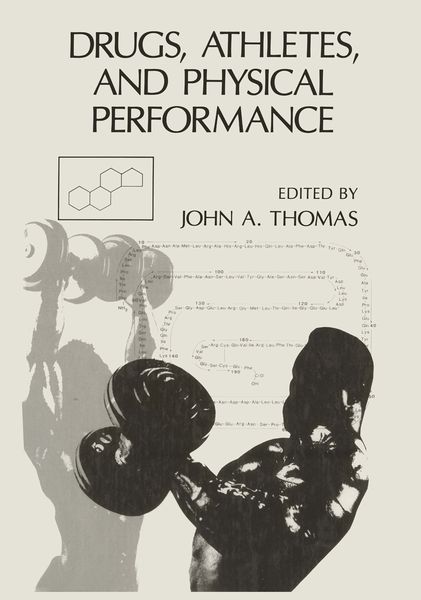

• Produktbild: Drugs, Athletes, and Physical Performance
  • Produktbild: Drugs, Athletes, and Physical Performance
- 13%

Drugs, Athletes, and Physical Performance

13% sparen

92,99 € UVP 106,99 €

inkl. gesetzl. MwSt., Versandkostenfrei


Beschreibung

Produktdetails

Einband

Taschenbuch

Erscheinungsdatum

08.03.2012

Herausgeber

John A. Thomas

Verlag

Springer Us

Seitenzahl

254

Maße (L/B/H)

25,4/17,8/1,5 cm

Gewicht

489 g

Auflage

Softcover reprint of the original 1st ed. 1988

Sprache

Englisch

ISBN

978-1-4684-5501-4

Beschreibung

Produktdetails

Einband

Taschenbuch

Erscheinungsdatum

08.03.2012

Herausgeber

John A. Thomas

Verlag

Springer Us

Seitenzahl

254

Maße (L/B/H)

25,4/17,8/1,5 cm

Gewicht

489 g

Auflage

Softcover reprint of the original 1st ed. 1988

Sprache

Englisch

ISBN

978-1-4684-5501-4

Herstelleradresse

Libri GmbH
Europaallee 1
36244 Bad Hersfeld
DE

Email: GPSR Kontakt

Ein neues Kapitel für Ihre Bücher

Ein neues Kapitel für Ihre Bücher

Schenken Sie Ihren alten Schätzen ein zweites Leben und erhalten dafür eine Thalia Geschenkkarte.

Jetzt verkaufen
Jetzt verkaufen

Noch keine Bewertungen vorhanden

Verfassen Sie die erste Bewertung zu diesem Artikel

Helfen Sie anderen Kundinnen und Kunden durch Ihre Meinung.

Kundinnen und Kunden meinen

Bewertungen (0)

  • Produktbild: Drugs, Athletes, and Physical Performance
  • Produktbild: Drugs, Athletes, and Physical Performance
  • 1. Vitamins and Athletes.- 1. Physiological Function.- 1.1. Water-Soluble Vitamins.- 1.2. Fat-Soluble Vitamins.- 2. Metabolism, Exercise, and Vitamins.- 3. Vitamin Supplementation and Enhanced Athletic Performance.- 4. Toxicity of Hypervitaminosis.- 4.1. Vitamin B Complex.- 4.2. Vitamin A.- 4.3. Vitamin D.- 5. Conclusion.- References.- 2. Fate of Anabolic Steroids in the Body.- 1. Introduction.- 2. Physiology of Androgenic Hormones.- 2.1. Structures and Names.- 2.2. Sites and Pathways of Androgen Production.- 2.3. Circulation of Androgens in the Blood.- 2.4. Regulation of Testosterone Synthesis and Secretion by the Testes.- 2.5. Actions and Mechanism of Action of Testosterone.- 2.6. Elimination of Androgens from the Body.- 3. Synthetic Anabolic Steroids.- 3.1. Uses of Anabolic Steroids.- 3.2. Contraindications for the Use of Synthetic Anabolic Steroids.- 3.3. Adverse Effects of Synthetic Anabolic Steroids.- 3.4. Structural Features of Synthetic Anabolic Steroids.- 4. Conclusions.- References.- 3. Nutrition, Fluid Balance, and Physical Performance.- 1. Introduction and History.- 1.1. Development of an Understanding of the Importance of Nutrition and Fluid Balance to Physical Performance.- 1.2. Present Practices in Athletics in Nutrition and Fluid Balance.- 2. Nutrition and Fluid Requirements during Physical Performance.- 2.1. Energy Requirements.- 2.2. Protein Requirements.- 2.3. Vitamin Requirements.- 2.4. Mineral and Trace Element Requirements.- 2.5. Fluid Balance, Thermoregulation, and Nutrition.- 3. Nutrition and Fluid Balance for Improved Physical Performance.- 3.1. Carbohydrate Loading.- 3.2. Fats.- 3.3. Proteins.- 3.4. Vitamins.- 3.5. Minerals and Trace Elements.- 3.6. Fluids.- 4. Conclusion.- References.- 4. Analgesics and Sports Medicine Charles.- 1. Introduction and a Discussion of Pain.- 2. Analgesic Drugs.- 2.1. Narcotic Analgesics.- 2.2. Non-narcotic Analgesics.- References.- 5. Calcium.- 1. Dietary Calcium Requirements.- 2. Relationship of Exercise to Calcium Needs.- 3. Changes in Calcium Requirements Secondary to Other Dietary Components.- 4. Changes in Calcium Requirements Secondary to Drugs Used by Athletes.- 5. Changes in Calcium Requirements Secondary to Major Physiological Changes.- 6. Dietary Sources of Calcium.- 7. Calcium Supplements.- 8. Toxicity of Excess Calcium Intake.- References.- 6. Muscle Relaxants.- 1. Neuroregulation of Skeletal Muscle.- 1.1. Alpha Motoneurons and Neuromuscular Transmission.- 1.2. Neuromuscular Junction.- 1.3. Spinal Reflexes.- 1.4. Regulation of Skeletal Muscle by the Brain.- 1.5. Skeletal Muscle Spasm.- 2. General Mechanisms of Muscle Relaxants.- 3. Drugs Acting at the Neuromuscular Junction.- 3.1. Competitive, Nondepolarizing Neuromuscular Blockers.- 3.2. Succinylcholine.- 3.3. Clinical Uses of the Neuromuscular Blocking Drugs.- 4. Centrally Acting Skeletal Muscle Relaxants.- 4.1. Diazepam.- 4.2. Chemical Congeners of Mephenesin.- 4.3. Chlorzoxazone.- 4.4. Cyclobenzaprine.- 4.5. Orphenadrine.- 4.6. Carisoprodol.- 4.7. Clinical Use of Centrally Acting Muscle Relaxants.- References.- 7. Anabolic and Androgenic Steroids.- 1. Physiology of the Androgens.- 2. Physiological Actions of the Androgens.- 3. Androgenic and Anabolic Steroid Drugs.- 4. Pharmacological Actions of the Androgens.- 4.1. Androgenic Steroid Drugs.- 4.2. Anabolic Steroid Drugs.- 4.3. Side Effects of Androgen Therapy.- Suggested Readings.- 8. Anti-inflammatory Agents.- 1. The Inflammatory Response.- 1.1. Vasodilatation and Hyperemia.- 1.2. Increased Permeability.- 1.3. Leukocyte Infiltration.- 1.4. Tissue Damage.- 2. Mediators of the Inflammatory Response.- 2.1. Mediators from Plasma.- 2.2. Mediators from Cells.- 3. Pharmacology of Anti-inflammatory Drugs.- 3.1. Carboxylic Acids.- 3.2. Oxicams.- 3.3. Pyrazoles.- Suggested Readings.- 9. Effect of Exercise on Fuel Utilization and Insulin Requirements.- 1. Fuel Utilization.- 2. Substrate Turnover Rates.- 3. Hormonal Control of Fuel Regulation during Exercise.- 3.1. Hormonal Control of Glucose Regulation.- 3.2. Hormonal Control of Free Fatty Acid Regulation.- 4. Adrenergic Control of Fuel Regulation During Exercise.- 4.1. Brief History.- 4.2. Adrenergic Control of Glucose Regulation.- 4.3. Adrenergic Control of Pancreatic Endocrine Secretions.- 4.4. Adrenergic Control of Free Fatty Acid Regulation.- 5. Mechanisms of Hormonal and Adrenergic Control of Fuel Regulation.- 6. Other Fuel Regulatory Factors.- 6.1. Cholinergic Control.- 6.2. Glucose Autoregulation.- 6.3. Dopamine.- 7. Clinical Considerations.- 7.1. Fuel Utilization in Diabetes.- 7.2. Exercise Effects on Insulin Requirements.- 7.3. Recommendations for Clinical Practice.- References.- 10. Drug Abuse in Athletes.- 1. Introduction.- 1.1. Why Do Athletes Abuse Drugs?.- 1.2. Definition of the Problem.- 1.3. Breadth of the Problem.- 1.4. Drug Research on Agents of Abuse.- 2. Blood Doping.- 3. Bicarbonate Ingestion.- 4. Growth Hormone.- 5. Anabolic Steroids.- 6. Anti-inflammatory agents.- 6.1. Steroid Anti-inflammatory Agents.- 6.2. Nonsteroidal Anti-inflammatory and Analgesic Agents.- 7. Psychomotor Stimulants.- 7.1. Amphetamines.- 7.2. Caffeine.- 7.3. Summary.- 8. Sympathomimetic Amines and Drugs Used to Treat Asthma.- 9. Recreational Drugs.- 9.1. Introduction.- 9.2. Alcohol.- 9.3. Marijuana.- 9.4. Cocaine.- 10. Conclusions.- References.- 11. Exercise and Immunity.- 1. Introduction.- 2. The Immune System.- 3. Exercise Effects on the Immune System.- 3.1. Acute Exercise-Induced Leukocytosis.- 3.2. Effects of Chronic Training on Leukocytes.- 3.3. Effects of Exercise on Humoral Immune Factors.- 4. Exercise-Induced Asthma.- 5. Conclusion.- References.- 12. Reproductive Consequences of Athletic Training in Women.- 1. Women and Exercise-Modern Trends.- 2. Background.- 2.1. Physiology of the Menstrual Cycle.- 2.2. Pathophysiology of the Menstrual Cycle.- 3. Hormonal Modulation in Exercise.- 3.1. Acute Response of Gonadotropins, Prolactin, and Steroids to Exercise.- 3.2. Long-Term Effects of Athletic Training on Hypothalamic-Pituitary-Gonadal Function.- 3.3. Risks of Athletic Amenorrhea.- 4. Exercise and Pregnancy.- 4.1. Limitation of Available Studies.- 4.2. Physiological Alterations of Normal Pregnancy.- 4.3. Effect of Pregnancy on Exercise Performance.- 4.4. Exercise Effects on the Fetus.- 4.5. Conclusions: Exercise and Pregnancy.- References.- 13. Human Growth Hormone.- 1. Introduction.- 2. Regulation of Growth Hormone Secretion.- 3. Chemistry.- 4. Physiological and Metabolic Effects of Growth Hormone.- 5. Growth Hormone Receptor and Intracellular Changes.- 6. The Interaction of Growth Hormone and Somatomedins.- 7. Clinical Features of Abnormal Growth Hormone Production.- 8. Pathology of Growth Hormone Production.- 8.1. Growth Hormone Deficiency.- 8.2. Growth Hormone Hypersecretion.- 9. Assessment of Growth Hormone Production.- 10. Growth Hormone Therapy.- 11. Summary.- References.- 14. CNS Stimulants and Athletic Performance.- 1. Introduction.- 1.1. General Pharmacology.- 1.2. Abuse, Tolerance, and Physical Dependence.- 2. The Magnitude of Drug Effects on Athletic Performance.- 3. Effects of Caffeine on Endurance and Physical Performance.- 3.1. Studies Showing Positive Effects with Caffeine.- 3.2. Studies Showing No Effect of Caffeine.- 3.3. Conclusions and Possible Mechanisms for the Effects of Caffeine on Endurance and Physical Performance.- 4. Effects of Amphetamines on Endurance and Physical Performance.- 4.1. Studies Showing Positive Effects with Amphetamines.- 4.2. Studies Showing No Effect of Amphetamines.- 4.3. Conclusions and Possible Mechanisms for the Effects of Amphetamines on Endurance and Physical Performance.- 5. Effects of Cocaine on Endurance and Physical Performance.- 6. Summary.- References.