• Produktbild: Gravity Field, Seismicity and Tectonics of the Indian Peninsula and the Himalayas
  • Produktbild: Gravity Field, Seismicity and Tectonics of the Indian Peninsula and the Himalayas
Band 3 - 13%

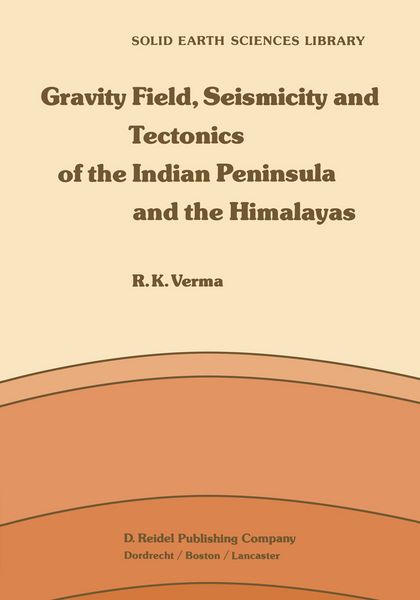
Gravity Field, Seismicity and Tectonics of the Indian Peninsula and the Himalayas

13% sparen

138,99 € UVP 160,49 €

inkl. gesetzl. MwSt., Versandkostenfrei


Beschreibung

Produktdetails

Einband

Taschenbuch

Erscheinungsdatum

26.09.2011

Verlag

Springer Netherland

Seitenzahl

228

Maße (L/B/H)

25,4/17,8/1,3 cm

Auflage

Softcover reprint of the original 1st ed. 1985

Sprache

Englisch

ISBN

978-94-010-8822-0

Beschreibung

Produktdetails

Einband

Taschenbuch

Erscheinungsdatum

26.09.2011

Verlag

Springer Netherland

Seitenzahl

228

Maße (L/B/H)

25,4/17,8/1,3 cm

Auflage

Softcover reprint of the original 1st ed. 1985

Sprache

Englisch

ISBN

978-94-010-8822-0

Herstelleradresse

Springer-Verlag KG
Sachsenplatz 4-6
1201 Wien
AT

Email: GPSR Kontakt

Ein neues Kapitel für Ihre Bücher

Ein neues Kapitel für Ihre Bücher

Schenken Sie Ihren alten Schätzen ein zweites Leben: Einfach Barcode scannen, Versandetikett ausdrucken, Bücher verschicken und Thalia Geschenkkarte erhalten.

Jetzt verkaufen
Jetzt verkaufen

Noch keine Bewertungen vorhanden

Verfassen Sie die erste Bewertung zu diesem Artikel

Helfen Sie anderen Kundinnen und Kunden durch Ihre Meinung.

Kundinnen und Kunden meinen

Bewertungen (0)

  • Produktbild: Gravity Field, Seismicity and Tectonics of the Indian Peninsula and the Himalayas
  • Produktbild: Gravity Field, Seismicity and Tectonics of the Indian Peninsula and the Himalayas
  • 1. Measurement of Gravity for Study of Figure of the Earth.- 1.1. Basic Concepts.- 1.2. Reduction of Gravity Data.- 1.2.1. Free-air Correction.- 1.2.2. Bouguer Correction.- 1.2.3. Terrain Correction.- 1.2.4. Curvature Correction.- 1.2.5. Geologic Correction.- 1.3. General Remarks.- 2. Geology and Tectonics of Indian Peninsula.- 2.1. Introduction.- 2.2. Precambrians of Southern Peninsula.- 2.3. Eastern Ghats.- 2.4. Cuddapah Basin.- 2.5. Singhbhum in Bihar and Orissa.- 2.6. Satpura Orogenic Belt.- 2.7. Aravallis and Vindhyans.- 2.8. Precambrian of Madhya Pradesh.- 2.9. Gondwanas of Peninsular India.- 2.10. Earth Movements During Cretaceous and Eocene Times.- 2.11. Deccan Lavas.- 2.12. Formation of Indo-Gangetic Basin.- 2.13. Mountain Ranges and Plateaus of Peninsular India.- 2.13.1. The Western Ghats.- 2.13.2. The Eastern Ghats.- 2.13.3. Satpura and Vindhyan Mountains.- 2.13.4. The Aravalli Mountains.- 3. Description of Bouguer and Free-Air Anomaly Maps of Peninsular India.- 3.1. Bouguer Anomaly Map.- 3.2. Major Trends on Bouguer Anomaly Map.- 3.2.1. Eastern Ghats High.- 3.2.2. Trends Associated with Dharwars, Cuddapahs and Gneisses.- 3.2.2.1. East Cuddapah (L-1).- 3.2.2.2. Oottacamund-Chittoor High (H-2).- 3.2.2.3. Dhawar-Mercara (L-2).- 3.2.2.4. Deccan Trap Low (L-3).- 3.2.3. Trends Associated with Godavari, Mahanadi and Damodar Valleys.- 3.2.4. Trends Associated with Satpura and Vindhyan Mountains.- 3.2.4.1. Satpura Mountain High (H-5).- 3.2.4.2. Central India Low (L-6).- 3.2.4.3. Vindhyan High (H-6).- 3.2.4.4. Bundelkhand Granite Low (L-7).- 3.2.4.5. NW Vindhyans Low (L-8).- 3.2.5. Trends Associated with Aravallis and Western India.- 3.2.6. Trends in Eastern India.- 3.2.7. Trends Associated with Himalaya.- 3.2.7.1. Great Himalaya Foredeep Low (L-13).- 3.3. Free-air Anomalies in Peninsular India.- 3.4. Inter-Relationship of Various Anomalies.- 3.4.1. Profile AA’.- 3.4.2. Profile BB’.- 4. Gravity Field and Tectonics of Gondwana Basins of Peninsular India.- 4.1. Introduction.- 4.2. Gravity Anomalies and Gondwana Tectonics.- 4.3. Geology of Gondwana Basins — General Remarks.- 4.4. Density of Gondwana Sediments.- 4.5. Godavari and Narmada — Son Valleys.- 4.6. Mahanadi Valley.- 4.6.1. Bouguer Anomaly Map.- 4.7. Damodar Valley Coalfields.- 4.7.1 Raniganj Coalfield.- 4.7.2. Jharia Coalfield.- 4.7.3. Bokaro Coalfield.- 5. Gravity Field and its Relationship to Structures in Dharwar and Bastar Provinces of India.- 5.1. Introduction.- 5.2. Physiography.- 5.3. Geology of Dharwar Province.- 5.4. Gravity Field of Dharwar.- 5.4.1. Profiles Across Shimoga and Chitradurga Belts.- 5.4.1.1. Profile AA’.- 5.4.1.2. Profile CC’.- 5.4.2. Sandur Belt and the Adjoining Areas.- 5.4.3. Profile Across Closepet Granite.- 5.5. Geological Implications of the Models.- 5.6. Gravity Field over Bastar Province.- 5.6.1. Geology of the Area.- 5.6.2. Bouguer Anomaly Map of Bastar Area.- 5.7. Nature of Upper Crust in the Archaean Terrain of South India.- 6. Gravity Field in the Eastern Ghats Belt.- 6.1. Geology of the Area.- 6.2. Gravity Field over Southern Granulite Terrain.- 6.2.1. Prominent Highs and Lows.- 6.2.1.1. Nilgiri Hills and Surroundings.- 6.2.1.2. Palni-Cardamom Hills.- 6.2.1.3. Other Gravity Highs and Lows.- 6.3. Gravity Field over the Coastal Granulite Terrain.- 6.3.1. Gravity Highs and Lows.- 6.3.2. Summary of Results.- 6.4. Nature of the Boundary Between Eastern Ghats and Dharwar/Bastar Provinces.- 6.4.1. Evidence from Gravity Anomalies.- 7. Analysis of Gravity Field Over Singhbhum and Adjoining Areas.- 7.1 Introduction.- 7.2. Geology of the Area.- 7.2.1. Older Metamorphic Group (OMG).- 7.2.2. Iron Ore Group.- 7.2.3. Singhbhum Granite Batholith.- 7.2.4. Singhbhum Group of Rocks.- 7.2.5. Kolhan, Dhanjori and Simlipal Basins.- 7.2.6. Jagannathpur Lavas.- 7.2.7. Gangpur Group.- 7.2.8. Ultramafic Intrusions.- 7.2.9. Mayurbhanj and other Granites.- 7.2.10. Newer Dolerites.- 7.2.11. Singhbhum Thrust Zone.- 7.3. Observed Bouguer Anomaly Map.- 7.3.1. Gravity Highs.- 7.3.1.1. Koira-Jamda High, H1.- 7.3.1.2. Dalma High, H2.- 7.3.1.3. Gorumahisani High, H3.- 7.3.1.4. Simlipalgarh High, H4.- 7.3.1.5. South Simlipal High, H5.- 7.3.2. Gravity Lows.- 7.3.2.1. Bonaigarh Low, L1.- 7.3.2.2. Nuakot Low, L2.- 7.3.2.3. Hatgamaria Low, L3.- 7.3.2.4. Central Singhbhum Lows, L4, L5, L6.- 7.3.2.5. Baripada Low, L7.- 7.3.2.6. Bangriposi Low, L8.- 7.3.2.7. Chakulia-Ghatsila Lows, L9, L10.- 7.3.3. Density Values of Various Rock Formations in the Area.- 7.4. Interpretation of Major Anomalies in Terms of Two/Three Dimensional Models.- 7.4.1. Profile AA? A?.- 7.4.2. Profile BB?.- 7.4.3. Profile CC?.- 7.4.4. Profile DD?.- 7.4.5. Profile EE?.- 7.5. Significance of Results in Terms of Geologic History of Singhbhum.- 8. Isostasy in Indian Peninsula.- 8.1. Historical Development of Isostasy in India.- 8.2. Various Schemes of Isostatic Compensation.- 8.2.1. Airy Scheme of Compensation.- 8.2.2. Pratt-Hayford Scheme of Compensation.- 8.2.3. Vening Meinesz Regional Isostatic System.- 8.3. Method of Computing Isostatic Anomaly.- 8.4. Isostatic Anomaly Map of Peninsular India.- 8.4.1. Profiles Across Southern Hill Masses.- 8.4.1.1. Profile AA? A?.- 8.4.1.2. Profile BB’.- 8.4.1.3. Profile CC’.- 8.5. Depth of Compensation.- 9. Gravity Field and Isostasy in the Himalayas.- 9.1. Geology and Tectonics of the Himalaya.- 9.2. Geodetic Evidence for Prevalence of Isostasy.- 9.3. Gravity Field in the Himalaya.- 9.4. Gravity Traverses Across the Himalaya.- 9.4.1. Jammu to Kargil via Srinagar.- 9.4.2. Ropar to Leh via Kulu.- 9.4.3. Rishikesh to Geldung.- 9.4.4. Tanakpur to Kalapani.- 9.4.5. Kathmandu to Mount Everest.- 9.5. Analysis of Results.- 9.6. Models for Isostatic Compensation.- 9.7. DSS Profile Across NW Himalaya.- 10. Satellite Gravity Field Over India and the Surrounding Regions.- 10.1. Introduction.- 10.2. Theoretical Background.- 10.3. Geoid Over India and the Surrounding Regions.- 10.4. Free-air Anomaly over India and the Surrounding Regions.- 10.5. General Remarks.- 11. Gravity Field and Seismicity in Northeastern India and Northern Burma.- 11.1. Introduction.- 11.2. Regional Geology and Tectonics.- 11.2.1. The Mishmi Block.- 11.2.2. Naga Hills.- 11.2.3. The Assam Valley.- 11.2.4. Shillong Plateau and Mikir Hills.- 11.2.5. Arakan-Yoma Folded Belt.- 11.2.6. Bengal Basin.- 11.3. Bouguer Anomaly Map of Northeastern India.- 11.3.1. Profile AA?.- 11.3.2. Profile BB?.- 11.4. Pratt-Hayford Isostatic Anomaly Map of Northeastern India.- 11.4.1 Significance of Isostatic Anomalies.- 11.5. Seismicity of NE India and N. Burma.- 11.6. Relationship Between Seismicity and Gravity Field in NE India and N. Burma.- 11.7. Plate Tectonics Model for Northeast India and N. Burma.- 12. Seismicity of the Himalayas and Plate Tectonics.- 12.1. Introduction.- 12.2. Geology and Tectonics of the Himalayas.- 12.3. Seismicity and its Relationship to Faults.- 12.3.1. Northwestern Himalaya.- 12.3.2. Central Himalaya.- 12.3.3. Eastern Himalaya.- 12.4. Quantitative Seismicity.- 12.5. Focal Mechanism Solutions for the Himalayas.- 12.5.1. Introduction.- 12.5.2. Discussion of Focal Mechanism Solutions.- 12.5.2.1. Northwest Himalaya.- 12.5.2.2. Central Himalaya.- 12.5.2.3. Eastern Himalaya and Northern Burma.- 12.6. Orientation of P Axes.- 12.7. Models for the Evolution of the Himalayas.- Author Index.