• Produktbild: Research Advances in Alcohol and Drug Problems
  • Produktbild: Research Advances in Alcohol and Drug Problems
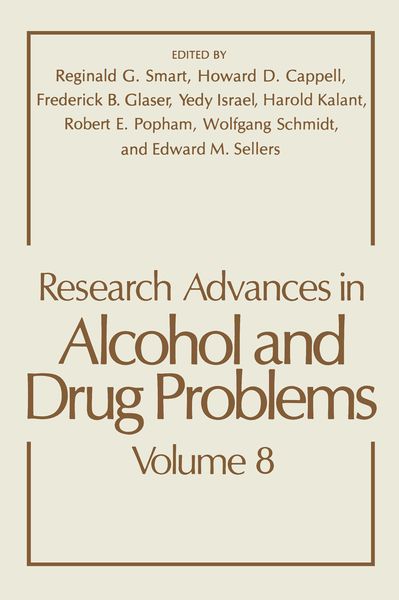
Band 8

Research Advances in Alcohol and Drug Problems

49,99 €

inkl. gesetzl. MwSt., Versandkostenfrei


Beschreibung

Produktdetails

Einband

Taschenbuch

Erscheinungsdatum

04.11.2011

Herausgeber

Reginald G. Smart + weitere

Verlag

Springer Us

Seitenzahl

333

Maße (L/B/H)

22,9/15,2/2 cm

Gewicht

510 g

Auflage

Softcover reprint of the original 1st ed. 1984

Sprache

Englisch

ISBN

978-1-4612-9687-4

Beschreibung

Produktdetails

Einband

Taschenbuch

Erscheinungsdatum

04.11.2011

Herausgeber

Verlag

Springer Us

Seitenzahl

333

Maße (L/B/H)

22,9/15,2/2 cm

Gewicht

510 g

Auflage

Softcover reprint of the original 1st ed. 1984

Sprache

Englisch

ISBN

978-1-4612-9687-4

Herstelleradresse

Springer-Verlag KG
Sachsenplatz 4-6
1201 Wien
AT

Email: GPSR Kontakt

Ein neues Kapitel für Ihre Bücher

Ein neues Kapitel für Ihre Bücher

Schenken Sie Ihren alten Schätzen ein zweites Leben: Einfach Barcode scannen, Versandetikett ausdrucken, Bücher verschicken und Thalia Geschenkkarte erhalten.

Jetzt verkaufen
Jetzt verkaufen

Noch keine Bewertungen vorhanden

Verfassen Sie die erste Bewertung zu diesem Artikel

Helfen Sie anderen Kundinnen und Kunden durch Ihre Meinung.

Kundinnen und Kunden meinen

Bewertungen (0)

  • Produktbild: Research Advances in Alcohol and Drug Problems
  • Produktbild: Research Advances in Alcohol and Drug Problems
  • 1. Opiate Tolerance and Dependence: Roles of Receptors and Endorphins.- 1. Introduction.- 2. Receptors.- 3. Effects of Chronic Opiate Treatment on Endorphin Levels.- 4. Homeostatic Regulation of Endorphin Systems.- 5. Outlook.- References.- 2. Alcohol Self-Administration by Experimental Animals.- 1. Introduction.- 2. Methods Used to Study Alcohol Intake.- 3. Factors Affecting Alcohol Intake.- 4. Animal Models of Alcoholism.- 5. Concluding Remarks.- References.- 3. Genetics of Alcoholism and Alcohol Actions.- 1. Introduction.- 2. Human Studies on Alcoholism.- 3. Animal Studies.- References.- 4. Alcohol Consumption and Ischemic Heart Disease: The Epidemiologic Evidence.- 1. Introduction.- 2. Studies of General Populations.- 3. Studies of Alcoholics and Problem Drinkers.- 4. Etiologic Significance of the Epidemiologic Findings.- 5. Conclusion.- References.- 5. Heavy Alcohol Consumption and Physical Health Problems: A Review of the Epidemiologic Evidence.- 1. Introduction.- 2. General Mortality.- 3. Hazardous Consumption Levels.- 4. Mortality by Cause.- 5. Mortality Rate Variation in General Populations.- 6. General Conclusion.- References.- 6. Assessing Alcohol Use by Patients in Treatment.- 1. Introduction.- 2. Defining Alcohol Abuse.- 3. Retrospective Methods.- 4. Self-Monitoring.- 5. Objective Methods.- 6. Recommended Strategy.- 7. Conclusion.- References.- 7. An Overview of Techniques and Problems in the Measurement of Alcohol Consumption.- 1. Introduction.- 2. The Drinking Process.- 3. Evaluation of Existing Measurement Techniques.- 4. Alcohol Consumption Measurements as Variables.- 5. Conclusion.- References.- 8. Studies of Driver Impairment and Alcohol-Related Collisions: A Methodologic Analysis.- 1. Introduction.- 2. Methodology of Studies on Driver Impairment and Collisions.- 3. Current Knowledge about Driving Impairment and Alcohol-Related Collisions.- 4. Summary and Conclusions.- References.- 9. The Contribution of Prospective Studies to the Understanding of Etiologic Factors in Alcoholism.- 1. Introduction.- 2. Preferential Recollection.- 3. Selection Bias and Enduring Myths.- 4. Elucidating “Cart and Horse” Relationships.- 5. The Problem of Evolving Symptoms.- 6. Etiology and Prognosis.- 7. Summary.- References.- 10. Treatment of Nonopiate Dependency: Issues and Outcomes.- 1. Effectiveness of Traditional Modalities.- 2. Alternative Treatment Settings.- 3. Innovative Treatment Components.- 4. Drug-Specific Treatment Strategies.- 5. Summary and Conclusions.- References.- 11. Less-Hazardous Tobacco Use as A Treatment for the “Smoking and Health” Problem.- 1. Introduction.- 2. Background.- 3. Arguments and Evidence, Not Facts and Proof.- 4. Arguments against Advocating Less-Hazardous Tobacco Use.- 5. Arguments for Advocating Less-Hazardous Tobacco Use.- 6. The Limits of Less-Hazardous Tobacco Use.- 7. Legitimizing the Topic and the Need for Research.- References.