Beschreibung
Produktdetails
Einband
Gebundene Ausgabe
Erscheinungsdatum
17.04.2017
Verlag
John Wiley & Sons IncSeitenzahl
640
Maße (L/B/H)
25,7/18,3/3,3 cm
Gewicht
1238 g
Auflage
1. Auflage
Sprache
Englisch
ISBN
978-1-119-04126-9
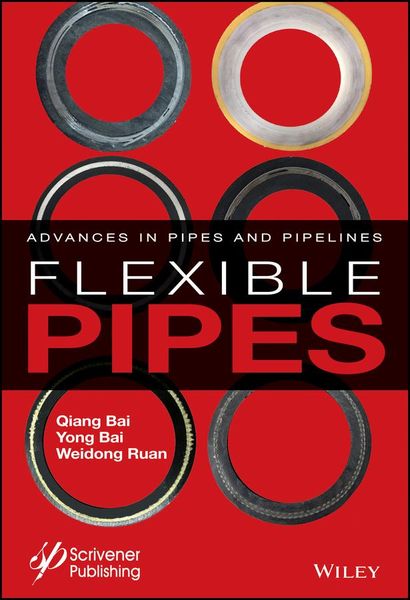
Recent changes in the codes for building pipelines has led to a boom in the production of new materials that can be used in flexible pipes. With the use of polymers, steel, and other new materials and variations on existing materials, the construction and, therefore, the installation and operation of flexible pipes is changing and being improved upon all over the world. The authors of this work have written numerous books and papers on these subjects and are some of the most influential authors on flexible pipes in the world, contributing much of the literature on this subject to the industry. This new volume is a presentation of some of the most cutting-edge technological advances in technical publishing.
This is the most comprehensive and in-depth book on this subject, covering not just the various materials and their aspects that make them different, but every process that goes into their installation, operation, and design. The thirty-six chapters, divided up into four different parts, have had not just the authors of this text but literally dozens of other engineers who are some of the world's leading scientists in this area contribute to the work. This is the future of pipelines, and it is an important breakthrough. A must-have for the veteran engineer and student alike, this volume is an important new advancement in the energy industry, a strong link in the chain of the world's energy production.
This is the most comprehensive and in-depth book on this subject, covering not just the various materials and their aspects that make them different, but every process that goes into their installation, operation, and design. The thirty-six chapters, divided up into four different parts, have had not just the authors of this text but literally dozens of other engineers who are some of the world's leading scientists in this area contribute to the work. This is the future of pipelines, and it is an important breakthrough. A must-have for the veteran engineer and student alike, this volume is an important new advancement in the energy industry, a strong link in the chain of the world's energy production.
Ein neues Kapitel für Ihre Bücher
Ein neues Kapitel für Ihre Bücher
Schenken Sie Ihren alten Schätzen ein zweites Leben und erhalten dafür eine Thalia Geschenkkarte.
Noch keine Bewertungen vorhanden
Verfassen Sie die erste Bewertung zu diesem Artikel
Helfen Sie anderen Kundinnen und Kunden durch Ihre Meinung.
Kurze Frage zu unserer Seite
Vielen Dank für Ihr Feedback
Wir nutzen Ihr Feedback, um unsere Produktseiten zu verbessern. Bitte haben Sie Verständnis, dass wir Ihnen keine Rückmeldung geben können. Falls Sie Kontakt mit uns aufnehmen möchten, können Sie sich aber gerne an unseren Kund*innenservice wenden.
zum Kundenservice