• Produktbild: The Transatlantic Hispanic Baroque
  • Produktbild: The Transatlantic Hispanic Baroque

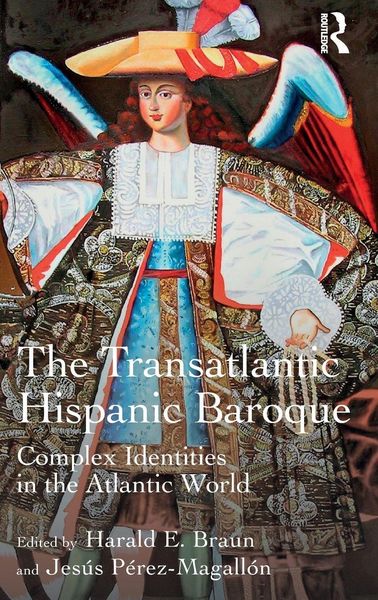
The Transatlantic Hispanic Baroque Complex Identities in the Atlantic World

233,99 €

inkl. gesetzl. MwSt., Versandkostenfrei


Beschreibung

Produktdetails

Einband

Gebundene Ausgabe

Erscheinungsdatum

28.11.2014

Verlag

Taylor and Francis

Seitenzahl

330

Maße (L/B/H)

24/16,1/2,3 cm

Gewicht

748 g

Sprache

Englisch

ISBN

978-1-4724-2750-2

Beschreibung

Produktdetails

Einband

Gebundene Ausgabe

Erscheinungsdatum

28.11.2014

Verlag

Taylor and Francis

Seitenzahl

330

Maße (L/B/H)

24/16,1/2,3 cm

Gewicht

748 g

Sprache

Englisch

ISBN

978-1-4724-2750-2

Herstelleradresse

Libri GmbH
Europaallee 1
36244 Bad Hersfeld
DE

Email: gpsr@libri.de

Ein neues Kapitel für Ihre Bücher

Ein neues Kapitel für Ihre Bücher

Schenken Sie Ihren alten Schätzen ein zweites Leben: Einfach Barcode scannen, Versandetikett ausdrucken, Bücher verschicken und Thalia Geschenkkarte erhalten.

Jetzt verkaufen
Jetzt verkaufen

Noch keine Bewertungen vorhanden

Verfassen Sie die erste Bewertung zu diesem Artikel

Helfen Sie anderen Kundinnen und Kunden durch Ihre Meinung.

Kundinnen und Kunden meinen

Bewertungen (0)

Die Leseprobe wird geladen.
  • Produktbild: The Transatlantic Hispanic Baroque
  • Produktbild: The Transatlantic Hispanic Baroque
  • Introduction, Harald E. Braun and Jesús Pérez-Magallón. Part I The Constitution of Identities in the Hispanic Baroque: Person and individual: Baroque identities in theology and law, Bartolomé Clavero; Towards a constructionist essentialism: critical race studies and the Baroque, Ruth Hill; Higher education, ‘soft power,’ and Catholic identity: a case study from early modern Salamanca, Harald E. Braun; ‘The people of the King’: autonomy and collective identity in Coyaima, Renée Soulodre-La France. Part II Hispanic Baroque: Religion, Politics, Society: Baroque religion in Spain: Spanish or European?, Henry Kamen; The Baroque and the influence of the Spanish monarchy in Europe (1580-1648), José Javier Ruiz Ibáñez; Rethinking identity: crisis of rule and reconstruction of identity in the monarchy of Spain, Pablo Fernández Albaladejo; The preacher feeds and the sermon soothes: body and metaphor in Jesuit preaching, Carlos-Urani Montiel and Shiddarta Vásquez Córdoba. Part III The Urban World and the Hispanic Baroque: The Creole metropolis, Manuel Lucena Giraldo; Foreign communities in the cities of the Catholic monarchy: a comparative perspective between the overseas dominions and the Crown of Castile, Manuel Herrero Sánchez; Writing Madrid, writing identity: a spatial dialogue between the 17th and 18th centuries, Jesús Pérez-Magallón; The city and the phoenix: earthquakes, royal obsequies, and urban rivalries in mid-18th-century Peru, José R. Jouve Martín; The imagery of Jerusalem in the colonial city, Patricia Saldarriaga. Part IV Neo-Baroque Approaches to Identity: Elegies for a homeland: a Baroque chronicle, a Marxist critique, and conflicting identities in colonial Guatemala, W. George Lovell; Neo-Baroque Catholic evangelism in post-secular Mexico, Kristin Norget; La Fiesta de Santo Tomás as a technology of culture: memory, carnival, and syncretism in the modern Guatemalan identity, Anabel Quan-Haase and Kim Martin. Index.