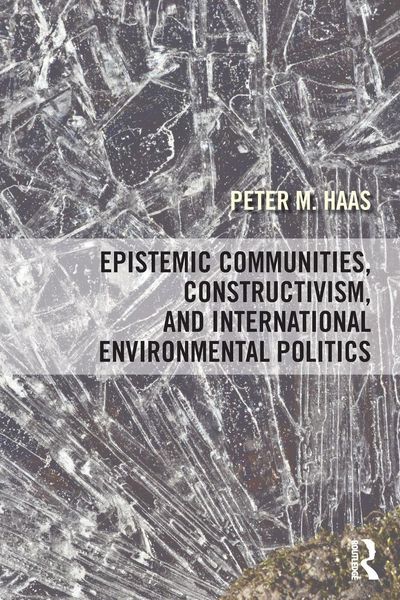
Epistemic Communities, Constructivism, and International Environmental Politics
-
- Hardcover
- Taschenbuch ausgewählt
- eBook
-
Sprache:Englisch
59,99 €
UVP
77,70 €
inkl. gesetzl. MwSt.,
Beschreibung
Produktdetails
Einband
Taschenbuch
Erscheinungsdatum
17.08.2015
Abbildungen
8 SW-Abb., 8 SW-Zeichn., 35 Tabellen
Verlag
Taylor & FrancisSeitenzahl
422
Maße (L/B/H)
23,4/15,6/2,3 cm
Gewicht
638 g
Sprache
Englisch
ISBN
978-1-138-85855-8
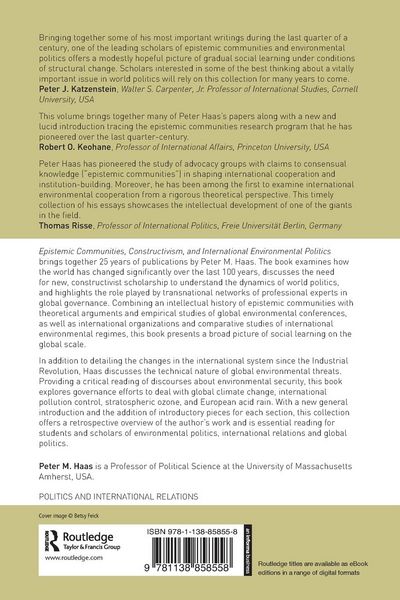
Epistemic Communities, Constructivism and International Environmental Politics brings together 25 years of publications by Peter M. Haas. The book examines how the world has changed significantly over the last 100 years, discusses the need for new, constructivist scholarship to understand the dynamics of world politics, and highlights the role played by transnational networks of professional experts in global governance. Combining an intellectual history of epistemic communities with theoretical arguments and empirical studies of global environmental conferences, as well as international organizations and comparative studies of international environmental regimes, this book presents a broad picture of social learning on the global scale.
In addition to detailing the changes in the international system since the Industrial Revolution, Haas discusses the technical nature of global environmental threats. Providing a critical reading of discourses about environmental security, this book explores governance efforts to deal with global climate change, international pollution control, stratospheric ozone, and European acid rain. With a new general introduction and the addition of introductory pieces for each section, this collection offers a retrospective overview of the author's work and is essential reading for students and scholars of environmental politics, international relations and global politics.
Ein neues Kapitel für Ihre Bücher
Ein neues Kapitel für Ihre Bücher
Schenken Sie Ihren alten Schätzen ein zweites Leben: Einfach Barcode scannen, Versandetikett ausdrucken, Bücher verschicken und Thalia Geschenkkarte erhalten.
Jetzt verkaufenNoch keine Bewertungen vorhanden
Verfassen Sie die erste Bewertung zu diesem Artikel
Helfen Sie anderen Kundinnen und Kunden durch Ihre Meinung.
Kurze Frage zu unserer Seite
Vielen Dank für Ihr Feedback
Wir nutzen Ihr Feedback, um unsere Produktseiten zu verbessern. Bitte haben Sie Verständnis, dass wir Ihnen keine Rückmeldung geben können. Falls Sie Kontakt mit uns aufnehmen möchten, können Sie sich aber gerne an unseren Kund*innenservice wenden.
zum Kundenservice