Gutscheinbedingungen

Gültig bis 19.08.2026 | Gültig für Spielzeug, Filme, Musik, Software, Games, Elektronik, Geschenke & Trends, Schreibwaren, Hörbücher und Hörbuch-Downloads (außer Abo & Shelfies), gebrauchte Bücher, nicht preisgebundene Bücher und Kalender | Einlösbar unter thalia.de und in der Thalia App | Click & Collect nur mit Online-Zahlung (Paypal/Kreditkarte) vorab | Einzelne Artikel können ausgeschlossen sein | Nicht kombinierbar mit anderen Gutscheinen oder Preisaktionen | Nur einmal pro Einkauf einlösbar | Gutschein wird auf max. 500€ Bestellwert angerechnet | Keine Barauszahlung | Digitale Hörbücher nur für Android  | Nicht gültig für preisgebundene Artikel (aufgrund der Buchpreisbindung sind Gutscheine nicht auf Bücher, eBooks, Presse einlösbar), tolino eReader & Zubehör, Abonnements & Flatrates, Geschenkkarten, Versandkosten und Services

  • Produktbild: Salt Stress in Plants
  • Produktbild: Salt Stress in Plants
- 13%

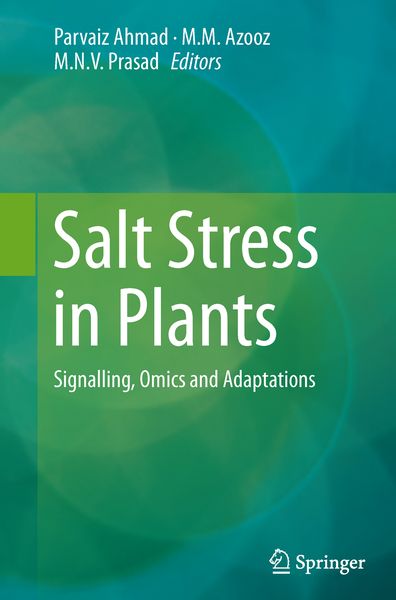
Salt Stress in Plants Signalling, Omics and Adaptations

13% sparen

185,99 € UVP 213,99 €

inkl. gesetzl. MwSt., Versandkostenfrei


Beschreibung

Produktdetails

Einband

Taschenbuch

Erscheinungsdatum

06.03.2015

Abbildungen

XV, 509 p. 46 illus., 25 illus. in color.

Herausgeber

Parvaiz Ahmad + weitere

Verlag

Springer Us

Seitenzahl

509

Maße (L/B/H)

23,5/15,5/2,9 cm

Gewicht

791 g

Auflage

2013

Sprache

Englisch

ISBN

978-1-4899-8829-4

Beschreibung

Portrait

Dr. Parvaiz Ahmad (Editor)


Dr. Parvaiz is Assistant professor in Botany at A.S. College, Srinagar, Jammu and Kashmir, India. He has completed his post-graduation in Botany in 2000 from Jamia Hamdard New Delhi India. After his Ph.D from Indian Institute of Technology (IIT) Delhi, India in 2007 he joined International Centre for Genetic Engineering and Biotechnology, New Delhi, India. His main research area is stress physiology and molecular biology. He has published more than 30 research papers in peer reviewed journals and 16 book chapters. He has also edited three volume 2 with Springer NY USA and 1 with Studium Press Pvt. India Ltd., New Delhi, India. He have received Junior Research Fellowship and Senior Research Fellowship by CSIR, New Delhi, India, during his Ph.D. Dr. Parvaiz has been awarded Young Scientist Award under Fast Track scheme in 2007, by Department of Science and Technology, Govt. of India, New Delhi, India. Dr. parvaiz is actively engaged in studying the molecular and physio-biochemical responses of different agricultural and horticultural plants under environmental stress.


Prof. Mohamed M. Azooz (Co-editor)

Pro.Dr. M.M. Azooz is a Professor of Plant Physiology in department of Botany, Faculty of Science, South Valley University, Qena, Egypt. He received the B.Sc in 1984 and M. Sc. in 1990 from Assiut University, Egypt; and Ph.D in 1997 from South Valley University, Qena, Egypt in collaboration with Tübingen University, Germany.  He has published more than 70 research articles in peer reviewed journals and 5 book chapters in international books. He has supervised many M.Sc. students and Ph.D. scholars till date and many are in progress. He is a member of editorial board and reviewer of many international journals. Prof. Azooz has been included in Marquis Who’s in the World (Biography, 28 th Edition, 2011), and in the “Top 100 Scientists” list, International BiographicalCentre, Cambridge-UK, 2011. Major focus of his research has been on the physiological, biochemical and molecular responses of plants against various biotic and abiotic stresses and the mechanisms of tolerance.


Prof. MNV Prasad (Co-editor)

Prof. MNV Prasad is a Professor in Department of Plant Sciences at the University of Hyderabad, India. He received the B.Sc. (1973) and M.Sc. (1975) degrees from Andhra University, India, and the Ph.D. degree (1979) in botany from the University of Lucknow, India. Prasad had published 138 articles in peer reviewed journals and 84 book chapters and conference proceedings in the broad area of environmental botany and heavy metal stress in plants. He is the author, co-author, editor, or co-editor for twelve books (John Wiley and Sons Inc. New  York; CRC Press, Boca Raton; Springer-Verlag Heidelberg; Narosa Publishing House, New Delhi; Kluwer Academic Publishers, Dordrecht; Marcel Dekker, New York, Fizmatlit Publishers. Moscow, Ministry of Environment and Forests, Govt. of India). He is the receipeint of  Pitamber Pant National Environment Fellowship  of  2007 awarded by the Ministry of Environment and Forests, Government of India. He has served as visiting professor/guest researcher in many universities in different parts of the world viz., Australia, Belgium, Canada, Finland, Kazakhstan, Poland, Portugal and Sweden.
Produktdetails

Einband

Taschenbuch

Erscheinungsdatum

06.03.2015

Abbildungen

XV, 509 p. 46 illus., 25 illus. in color.

Herausgeber

Verlag

Springer Us

Seitenzahl

509

Maße (L/B/H)

23,5/15,5/2,9 cm

Gewicht

791 g

Auflage

2013

Sprache

Englisch

ISBN

978-1-4899-8829-4

Herstelleradresse

Springer-Verlag KG
Sachsenplatz 4-6
1201 Wien
AT

Email: GPSR Kontakt

Ein neues Kapitel für Ihre Bücher

Ein neues Kapitel für Ihre Bücher

Schenken Sie Ihren alten Schätzen ein zweites Leben und erhalten dafür eine Thalia Geschenkkarte.

Jetzt verkaufen
Jetzt verkaufen

Noch keine Bewertungen vorhanden

Verfassen Sie die erste Bewertung zu diesem Artikel

Helfen Sie anderen Kundinnen und Kunden durch Ihre Meinung.

Kundinnen und Kunden meinen

Bewertungen (0)

  • Produktbild: Salt Stress in Plants
  • Produktbild: Salt Stress in Plants
  • Chapter 1: Recent Advances of Metabolomics to Reveal Plant Response During Salt Stress.- Chapter 2: MicroRNAs and Their Role in Salt Stress Response in Plants.- Chapter 3: Unravelling Salt Stress in Plants Through Proteomics.- Chapter 4: Genetic Approaches to Improve Salinity Tolerance in Plants.- Chapter 5: LEA Proteins in Salt Stress Tolerance.- Chapter 6: Enhancing Plant Productivity Under Salt Stress – Relevance of Poly-omics.- Chapter 7: Salt Stress and MAPK Signaling in Plants.- Chapter 8: ABA: Role in Plant Signaling Under Salt Stress.- Chapter 9: Calcium Signaling and Its Significance in Alleviating Salt Stress in Plants.- Chapter 10: Improving Salt Tolerance in Rice: Looking Beyond the Conventional.- Chapter 11: Approaches to Improving Salt Tolerance in Maize.- Chapter 12: The Role of Phytochromes in Stress Tolerance.- Chapter 13: Role of Arbuscular Mycorrhiza in Amelioration of Salinity.- Chapter 14: Breeding Salinity Tolerance in Citrus Using Rootstocks.- Chapter 15: Effects of Salt Stress on Photosynthesis Under Ambient and Elevated Atmospheric CO2 Concentration.- Chapter 16: Nitrogen-Use-Efficiency (NUE) in Plants Under NaCl Stress.- Chapter 17: The Responses of Salt-Affected Plants to Cadmium.- Chapter 18: Plant Tissue Culture: A Useful Measure for the Screening of Salt Tolerance in Plants.