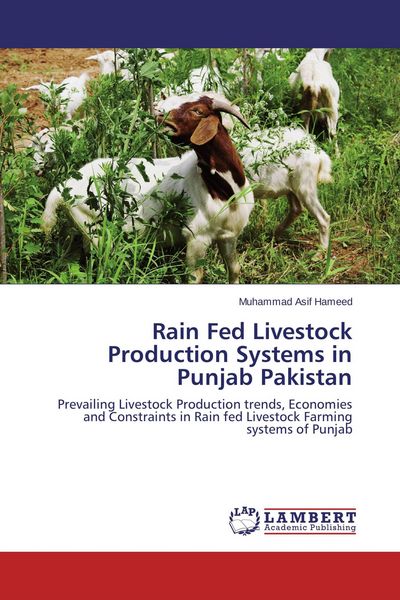
Rain Fed Livestock Production Systems in Punjab Pakistan Prevailing Livestock Production trends, Economies and Constraints in Rain fed Livestock Farming systems of Punjab
-
- Englisch ausgewählt
35,99 €
inkl. gesetzl. MwSt.,
Beschreibung
Produktdetails
Einband
Taschenbuch
Erscheinungsdatum
01.09.2015
Verlag
LAP LAMBERT Academic PublishingSeitenzahl
68
Maße (L/B/H)
22/15/0,5 cm
Gewicht
119 g
Sprache
Englisch
ISBN
978-3-659-71139-8
Livestock is an important sub-sector of the agriculture mix of Pakistan. It holds much value in the rural socioeconomic system. More than eight million rural small and landless farmers raise livestock, making it an ideal sector for attacking rural poverty in the country. Livestock makes up almost 55.9% of the agriculture value added and contributes up to 11.9 % of the GDP thus the future high growth in agriculture is expected to be led by the livestock sector. About 49% of livestock population is inhabited in rain fed areas and is dominated by small and landless farmers. The income of the rain fed Farmers is insufficient to maintain the family due to low farm income from crops on account of small land holdings, degraded soil, impaired soil fertility and erratic rainfall. This study attempts to describe the importance of the livestock in development of rain fed livestock farming system keeping the view of climate change and highlights issues in the sector that hinder its upward growth and also devise suggestions, recommendation for future options to ensure sustainable rearing of livestock by small farmers
Ein neues Kapitel für Ihre Bücher
Ein neues Kapitel für Ihre Bücher
Schenken Sie Ihren alten Schätzen ein zweites Leben und erhalten dafür eine Thalia Geschenkkarte.
Noch keine Bewertungen vorhanden
Verfassen Sie die erste Bewertung zu diesem Artikel
Helfen Sie anderen Kundinnen und Kunden durch Ihre Meinung.
Kurze Frage zu unserer Seite
Vielen Dank für Ihr Feedback
Wir nutzen Ihr Feedback, um unsere Produktseiten zu verbessern. Bitte haben Sie Verständnis, dass wir Ihnen keine Rückmeldung geben können. Falls Sie Kontakt mit uns aufnehmen möchten, können Sie sich aber gerne an unseren Kund*innenservice wenden.
zum Kundenservice