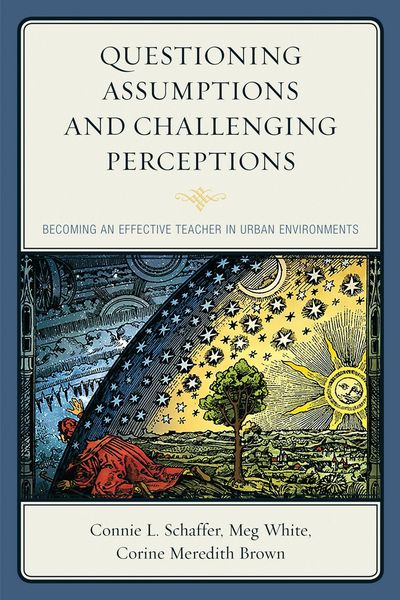
• Produktbild: Questioning Assumptions and Challenging Perceptions
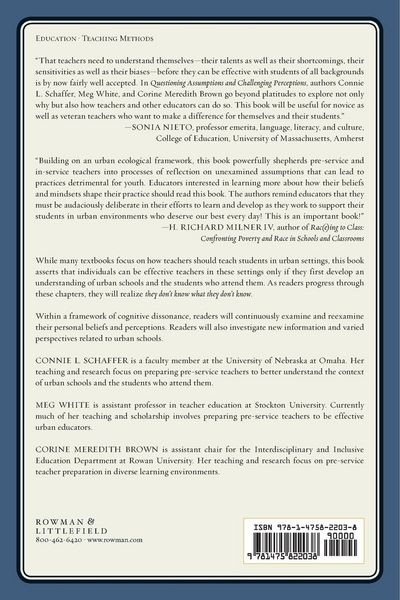
  • Produktbild: Questioning Assumptions and Challenging Perceptions

Questioning Assumptions and Challenging Perceptions Becoming an Effective Teacher in Urban Environments

39,99 €

inkl. gesetzl. MwSt., Versandkostenfrei


Beschreibung

Produktdetails

Einband

Taschenbuch

Erscheinungsdatum

15.01.2016

Verlag

Rowman & Littlefield

Seitenzahl

112

Maße (L/B/H)

22,9/15,2/0,6 cm

Gewicht

175 g

Sprache

Englisch

ISBN

978-1-4758-2203-8

Beschreibung

Produktdetails

Einband

Taschenbuch

Erscheinungsdatum

15.01.2016

Verlag

Rowman & Littlefield

Seitenzahl

112

Maße (L/B/H)

22,9/15,2/0,6 cm

Gewicht

175 g

Sprache

Englisch

ISBN

978-1-4758-2203-8

Herstelleradresse

Libri GmbH
Europaallee 1
36244 Bad Hersfeld
DE

Email: gpsr@libri.de

Ein neues Kapitel für Ihre Bücher

Ein neues Kapitel für Ihre Bücher

Schenken Sie Ihren alten Schätzen ein zweites Leben und erhalten dafür eine Thalia Geschenkkarte.

Jetzt verkaufen
Jetzt verkaufen

Noch keine Bewertungen vorhanden

Verfassen Sie die erste Bewertung zu diesem Artikel

Helfen Sie anderen Kundinnen und Kunden durch Ihre Meinung.

Kundinnen und Kunden meinen

Bewertungen (0)

Die Leseprobe wird geladen.
  • Produktbild: Questioning Assumptions and Challenging Perceptions
  • Produktbild: Questioning Assumptions and Challenging Perceptions
  • About the cover ART
    FOREWORD-jack McKay
    Acknowledgements
    Introduction

    CHAPTER ONE: Personal exploration
    How do you define yourself culturally?
    establishing a frame of reference
    ABC's of cultural understanding and communication

    chapter two: creating a definition of urban
    graffiti wall
    sphere of influence within the social context
    definitions of urban based on population
    definitions of urban based on social context
    broadening the definition of urban
    moving beyond a single story of urban schools

    chapter three: the social context of children and families in urban environments
    case study 3.1: the story of amie
    maslow's identification of human needs
    poverty mural
    the complexities of poverty
    case study 3.2: the bank street school

    CHAPTER four: stages of cognitive dissonance: Internal reflections
    stages of cognitive dissonance related to urban schools
    creating the felt need
    a kwl chart on urban schools
    shifting from apprehension to appreciation
    culture walks
    moving beyond the deficit approach
    common scenarios

    CHAPTER five: stages of cognitive dissonance: external implications
    value line part one
    closing the gaps
    value line part two
    teaching for social justice
    teaching for social justice gallery walk

    CHAPTER six: transforming knowledge into action
    teachers as activists
    imagining a socially just classroom
    personal sphere of influence model
    identifying elements in your personal sphere of influence

    CHAPTER seven: translating theory into action
    case study 7.1: Ruby bridges

    INDEX
    about the authors