• Produktbild: Principles of Public Finance
  • Produktbild: Principles of Public Finance
- 17%

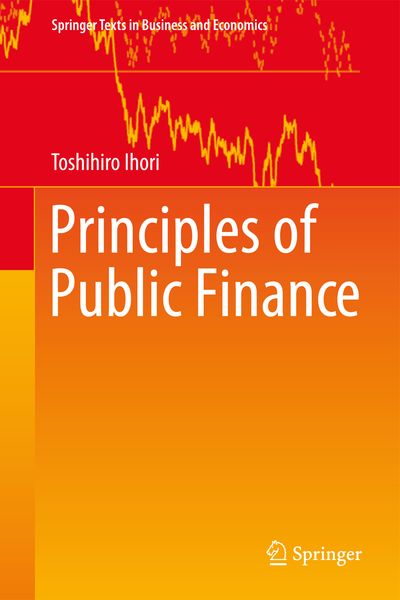
Principles of Public Finance

17% sparen

114,99 € UVP 139,09 €

inkl. gesetzl. MwSt., Versandkostenfrei


Beschreibung

Produktdetails

Einband

Gebundene Ausgabe

Erscheinungsdatum

02.12.2016

Abbildungen

XXVII, 403 p. 94 illus., 93 illus. in color.

Verlag

Springer Singapore

Seitenzahl

403

Maße (L/B/H)

24,1/16/2,9 cm

Gewicht

811 g

Farbe

Mandarine

Auflage

1st ed. 2017

Sprache

Englisch

ISBN

978-981-10-2388-0

Beschreibung

Produktdetails

Einband

Gebundene Ausgabe

Erscheinungsdatum

02.12.2016

Abbildungen

XXVII, 403 p. 94 illus., 93 illus. in color.

Verlag

Springer Singapore

Seitenzahl

403

Maße (L/B/H)

24,1/16/2,9 cm

Gewicht

811 g

Farbe

Mandarine

Auflage

1st ed. 2017

Sprache

Englisch

ISBN

978-981-10-2388-0

Herstelleradresse

Springer-Verlag KG
Sachsenplatz 4-6
1201 Wien
AT

Email: ProductSafety@springernature.com

Ein neues Kapitel für Ihre Bücher

Ein neues Kapitel für Ihre Bücher

Schenken Sie Ihren alten Schätzen ein zweites Leben und erhalten dafür eine Thalia Geschenkkarte.

Jetzt verkaufen
Jetzt verkaufen

Noch keine Bewertungen vorhanden

Verfassen Sie die erste Bewertung zu diesem Artikel

Helfen Sie anderen Kundinnen und Kunden durch Ihre Meinung.

Kundinnen und Kunden meinen

Bewertungen (0)

  • Produktbild: Principles of Public Finance
  • Produktbild: Principles of Public Finance

  • Chapter 1. Public Finance and a Review of Basic Concepts.- 1 The Main Functions of the Public Sector.-  2 A Review of Analytical Basic Concepts.- 3 The Public Sector in Japan.- 4 Organization of the Book.-  Appendix: Japan's Fiscal Management.- References.- Questions.- Part I Macroeconomic Aspects of Public Finance.- Chapter 2 The Macroeconomic Theory of Fiscal Policy I.- 1 The Simple Keynesian Model.- 2 The IS/LM Analysis.- 3 The Open Economy.- 4 The Efficacy of Fiscal Policy and the Policy Maker.- Appendix: Public Investment in Japan.-  References.- Keywords.- Questions.- Chapter 3 The Macroeconomic Theory of Fiscal Policy II.- 1 The Permanent Level of Fiscal Variables.- 2 Consumption and Saving Behavior.- 3 The Labor Market and Supply Function.- 4 Equilibrium in the Goods Market.- 5 The Effect of Fiscal Policy.- 6 Evaluation of the Public Sector.- Appendix: The Size of Government Spending and the Private Sector's Evaluation.-  References.-  Keywords.-  Questions.-  Chapter 4 Public Debt.- 1 Ricard's Neutrality Theorem.- 2 The Shift of the Burden to Future Generations.- 3 Barro's Neutrality.- 4 Policy Implications of the Debt Neutrality Theorem.- 5 The Non-Keynesian Effect.- Appendix: Government Debt in a Overlapping Generations Model.- References.-  Keywords.-  Questions.- Chapter 5 Economic Growth and Fiscal Policy.- 1 A Simple Growth Model.- 2 Optimal Public Investment.- 3 The Solow Model.- 4 The Endogenous Growth Model.- 5 Inequality and Economic Growth.- Appendix A: Taxes on Capital Accumulation and Economic Growth.- Appendix B: Supply-Side Effect of Public Investment in Japan.-  References.- Keywords.- Questions.-  Chapter 6 Fiscal Management.- 1 Understanding Fiscal Management.- 2 Fiscal Bankruptcy.- 3 Fiscal Consolidation.- Appendix: Fiscal Deficits in a Growing Economy.- References.-  Keywords.- Questions.- Chapter 7 The Public Pension.- 1 Justification of the Public Pension.- 2 Economic effect of the Public Pension.- 3 Public Debt and the Public Pension.-  4 Public Pension Reform.- 5 Privatization of the Pay-as-you-go System.- Appendix A: Intergenerational Conflict in an Aging Japan.- Appendix B: Simulation Analysis in an Aging Japan.- Conclusion.- References.- Keywords.- Questions.- Part II Microeconomic Aspects of Public Finance.-  Chapter 8 The Theory of Taxation.- 1 Taxation and Labor Supply.- 2 The Efficiency of Taxation.- 3 Interest Income Tax and Saving.- 4 Investment and Tax.- 5 Consumption Tax.- Appendix: The Savings Elasticity Controversy.-  References.- Keywords.- Questions.- Chapter 9 Tax Reform.- 1 Labor Income Tax and Interest Income Tax.- 2 The Theory of Optimal Taxation.- 3 The Theory of Tax Reform.-  4 General Consumption Tax and Labor Income Tax.- 5 The Timing Effect of Taxation.- 6 Simulation Analysis of Tax Reform.- Appendix A: Optimal Taxation in an Overlapping Generations Economy.- Appendix B: Tax Reform within Lump Sum Taxes.- References.- Keywords.- Questions.- Chapter 10 Income Redistribution.- 1 Progressive Income Tax.- 2 Endogenous Labor Supply.- 3 The Optimal Income Tax.- 4 Nonlinear Income Tax.-  5 Economic Constraint and Redistribution.- Appendix: Optimal Linear Income Tax.-  References.- Keywords.- Questions.- Chapter 11 The Theory of Public Goods.- 1 Public Goods.- 2 Optimal Provision of Public Goods: The Samuelson Rule.- 3 The Theory of Public Good Provision: the Nash Equilibrium Approach.- 4 The Theoretical Analysis of Public Goods: the Lindahl Equilibrium.- 5 The Free Rider Problem.- 6 The Neutrality Theorem of Public Goods.- Appendix: Public Bads, Growth, and Welfare.- References.- Keywords.- Questions.- Chapter 12 Public Spending and the Political Process.- 1 The Failure of Government.- 2 The Voting Model.- 3 The Voting Model and Reality.-  4 Political Parties and Fiscal Policy.- 5 Theoretical Model of the Partisan Business Cycle.- 6 Further Comments.- Appendix A: Fiscal Privileges,Consolidation Attempts and Pigouvian Taxes.- Appendix B: Political Factors and Public Investment Policy in Japan.- References.-  Keywords.- Questions.- Chapter 13 Local Public Finance.- 1 Intergovernmental Finance.- 2 The Supply of Local Public Goods.- 3 Tax Competition.- 4 The Time Consistency of a Tax Policy.- 5 The Principle of Local Tax.- 6 Redistribution among Local Governments.- 7 Further Issues on Intergovernmental Finance.- Appendix: Analytical Model of Central and Local Governments in Japan.- References.- Keywords.- Questions.- Index.