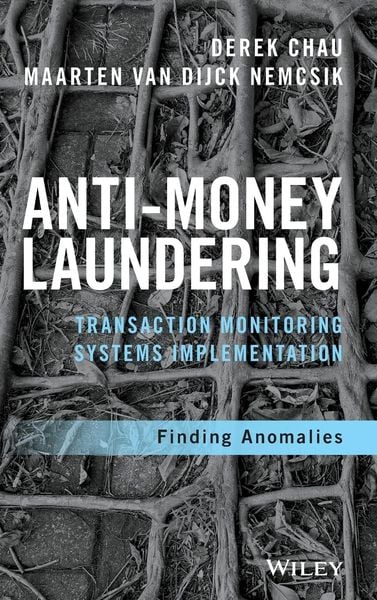
Anti-Money Laundering Transaction Monitoring Systems Implementation Finding Anomalies
58,99 €
inkl. gesetzl. MwSt.,
Beschreibung
Produktdetails
Einband
Gebundene Ausgabe
Erscheinungsdatum
18.02.2021
Verlag
John Wiley & Sons IncSeitenzahl
304
Maße (L/B/H)
23,5/15,7/2,1 cm
Gewicht
598 g
Auflage
1. Auflage
Sprache
Englisch
ISBN
978-1-119-38180-8
Anti-Money Laundering Transaction Monitoring Systems Implementation provides comprehensive guidance for bank compliance and IT personnel tasked with implementing AML transaction monitoring. Written by an authority on data integration and anti-money laundering technology, this book offers both high-level discussion of transaction monitoring concepts and direct clarification of practical implementation techniques. All transaction monitoring scenarios are composed of a few common elements, and a deep understanding of these elements is the critical factor in achieving your goal; without delving into actual code, this guide provides actionable information suitable for any AML platform or solution to help you implement effective strategies and ensure regulatory compliance for your organization.
Transaction monitoring is increasingly critical to banking and business operations, and the effectiveness of any given solution is directly correlated to its implementation. This book provides clear guidance on all facets of AML transaction monitoring, from conception to implementation, to help you:
- Detect anomalies in the data
- Handle known abnormal behavior
- Comply with regulatory requirements
- Monitor transactions using various techniques
Regulators all over the world are requiring banks and other companies to institute automated systems that combat money laundering. With many variables at play on both the transaction side and the solution side of the equation, a solid understanding of AML technology and its implementation is the most critical factor in successful detection. Anti-Money Laundering Transaction Monitoring Systems Implementation is an invaluable resource for those tasked with putting these systems in place, providing clear discussion and practical implementation guidance.
Ein neues Kapitel für Ihre Bücher
Ein neues Kapitel für Ihre Bücher
Schenken Sie Ihren alten Schätzen ein zweites Leben und erhalten dafür eine Thalia Geschenkkarte.
Noch keine Bewertungen vorhanden
Verfassen Sie die erste Bewertung zu diesem Artikel
Helfen Sie anderen Kundinnen und Kunden durch Ihre Meinung.
Kurze Frage zu unserer Seite
Vielen Dank für Ihr Feedback
Wir nutzen Ihr Feedback, um unsere Produktseiten zu verbessern. Bitte haben Sie Verständnis, dass wir Ihnen keine Rückmeldung geben können. Falls Sie Kontakt mit uns aufnehmen möchten, können Sie sich aber gerne an unseren Kund*innenservice wenden.
zum Kundenservice