• Produktbild: OXF DESK REF CLIN GENET & GENOM 2E DRS C
  • Produktbild: OXF DESK REF CLIN GENET & GENOM 2E DRS C

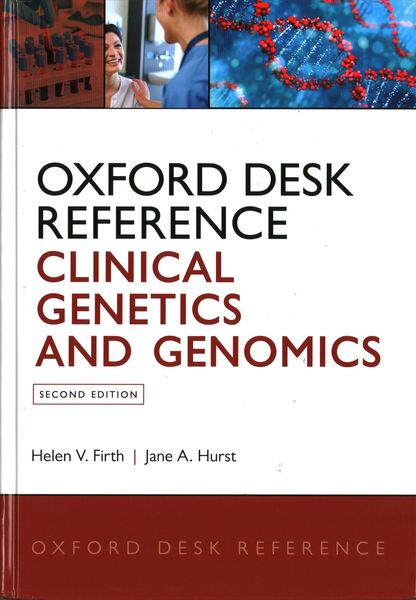
OXF DESK REF CLIN GENET & GENOM 2E DRS C

169,99 €

inkl. gesetzl. MwSt., Versandkostenfrei


Beschreibung

Produktdetails

Einband

Gebundene Ausgabe

Erscheinungsdatum

07.09.2017

Verlag

Oxford University Press

Seitenzahl

934

Maße (L/B/H)

25/17,5/5,4 cm

Gewicht

1757 g

Auflage

2. Auflage

Sprache

Englisch

ISBN

978-0-19-955750-9

Beschreibung

Rezension

Review from previous edition:
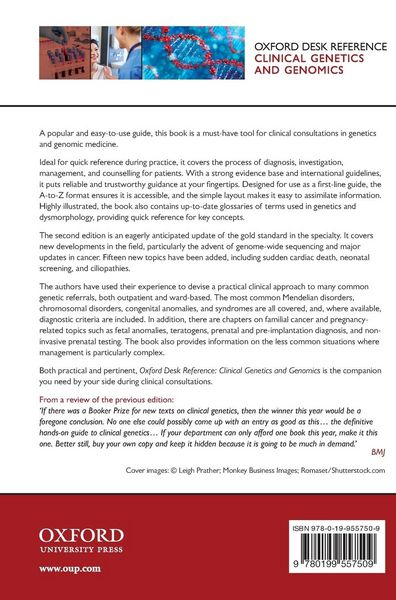
It is very refreshing to review a book written for clinicians by clinicians, which is in a format that reflects situations actually encountered in practice. Information provided by the referring doctor to a clinical geneticist or other specialist before a clinic or ward consultation is usually limited. This new text takes common referral indications and, in a standardized format that manages to be brief and clear without skimping on detail, reminds the clinician of diagnostic possibilities and strategies for investigation and management. This will allow the best possible use to be made of an individual consultation by both the patient and the doctor. Dian Donnai, Professor of Medical Genetics, University of Manchester, Consultant Clinical Geneticist, Regional Genetics Service, St Mary's Hospital, Manchester, UK

Produktdetails

Einband

Gebundene Ausgabe

Erscheinungsdatum

07.09.2017

Verlag

Oxford University Press

Seitenzahl

934

Maße (L/B/H)

25/17,5/5,4 cm

Gewicht

1757 g

Auflage

2. Auflage

Sprache

Englisch

ISBN

978-0-19-955750-9

Herstelleradresse

Libri GmbH
Europaallee 1
36244 Bad Hersfeld
DE

Email: gpsr@libri.de

Ein neues Kapitel für Ihre Bücher

Ein neues Kapitel für Ihre Bücher

Schenken Sie Ihren alten Schätzen ein zweites Leben und erhalten dafür eine Thalia Geschenkkarte.

Jetzt verkaufen
Jetzt verkaufen

Noch keine Bewertungen vorhanden

Verfassen Sie die erste Bewertung zu diesem Artikel

Helfen Sie anderen Kundinnen und Kunden durch Ihre Meinung.

Kundinnen und Kunden meinen

Bewertungen (0)

Weitere Artikel finden Sie in

Die Leseprobe wird geladen.
  • Produktbild: OXF DESK REF CLIN GENET & GENOM 2E DRS C
  • Produktbild: OXF DESK REF CLIN GENET & GENOM 2E DRS C
    • Introduction
    • Adoption
    • Approach to the consultation with a child with dysmorphism, congenital malformation or developmental delay
    • Autosomal dominant (AD) inheritance
    • Autosomal recessive (AR) inheritance
    • Communication skills
    • Complex inheritance
    • Confidentiality
    • Confirmation of diagnosis
    • Consent for genetic testing
    • Genetic basis of cancer
    • Genetic code and mutations
    • Genomes and genomic variation
    • Genomic imprinting
    • Genomic sequencing and interpretation of data from WES or WGS analyses
    • Mitochondrial inheritance
    • Reproductive options
    • Testing for genetic status
    • Timing and origin of new dominant mutations
    • Useful resources
    • X-linked dominant (XLD), semi-dominant, pseudoautosomal and male sparing inheritance
    • X-linked recessive inheritance
    • Clinical Approach
    • Ambiguous genitalia (including sex reversal)
    • Anal anomalies (atresia, stenosis)
    • Anterior segment eye malformations
    • Arthrogryposis
    • Ataxic adult
    • Ataxic child
    • Brachydactyly
    • Broad thumbs
    • Cardiomyopathy in children under 10 years
    • Cataract
    • Cerebellar anomalies
    • Cerebral palsy
    • Chondrodysplasia punctata
    • Cleft lip and palate
    • Coarse facial features
    • Coloboma
    • Congenital heart disease
    • Congenital hypothyroidism
    • Corneal clouding
    • Deafness in early childhood
    • Developmental delay in the child with consanguineous parents
    • Developmental regression
    • Duane retraction syndrome
    • Dysmorphic child
    • Dystonia
    • Ear anomalies
    • Facial asymmetry
    • Failure to thrive
    • Floppy infant
    • Fractures
    • Generalized disorders of skin pigmentation (including albinism)
    • Hemihypertrophy and limb asymmetry
    • Holoprosencephaly
    • Hydrocephalus
    • Hypermobile joints
    • Hypoglycaemia in the neonate and infant
    • Hypospadias
    • Intellectual disability
    • Intellectual disability with apparent X-linked inheritance
    • Increased bone density
    • Intracranial calcification
    • Large fontanelle
    • Laterality disorders including heterotaxy and isomerism
    • Leukodystrophy/leukoencephalopathy
    • Limb reduction defects
    • Lissencephaly, polymicrogyria and neuronal migration disorders
    • Lumps and bumps
    • Macrocephaly
    • Microcephaly
    • Micrognathia and Robin sequence
    • Microphthalmia and anophthalmia
    • Minor congenital anomalies
    • Nasal anomalies
    • Neonatal encephalopathy and intractable seizures
    • Nystagmus
    • Obesity with and without developmental delay
    • Ocular hypertelorism
    • Oedema generalized or puffy extremeties
    • Oesophageal and intestinal atresia (including tracheo-oesophageal fistula)
    • Optic nerve hypoplasia
    • Overgrowth
    • Patchy hypo- or de-pigmented skin lesions
    • Patchy pigmented skin lesions (including café-au-lait spots)
    • Plagiocephaly and abnormalities of skull shape
    • Polydactyly
    • Prolonged neonatal jaundice and jaundice in infants below 6 months
    • Ptosis, blepharophimosis and other eyelid anomalies
    • Radial ray defects and thumb hypoplasia
    • Retinal dysplasia
    • Retinal receptor dystrophies
    • Scalp defects
    • Seizures with developmental delay/intellectual disability
    • Short stature
    • Skeletal dysplasias
    • Structural intracranial anomalies (agenesis of the corpus callosum, septo-optic dysplasia and arachnoid cysts)
    • Sudden cardiac death
    • Suspected non-accidental injury
    • Syndactyly (other than 2-3 toe syndactyly)
    • Unusual hair, teeth, nails and skin
    • Common consultations
    • Achondroplasia
    • Alpha1-antitrypsin deficiency
    • Alport syndrome
    • Androgen insensitivity syndrome (AIS)
    • Angelman syndrome
    • Autism and autism spectrum disorders
    • Autosomal dominant polycystic kidney disease (ADPKD)
    • Beckwith-Wiedemann syndrome (BWS)
    • Charcot-Marie-Tooth disorder (CMT)
    • Ciliopathies
    • Congenital adrenal hyperplasia (CAH)
    • Consanguinity
    • Craniosynostosis
    • Cystic fibrosis (CF)
    • Dementia early onset and familial forms
    • Diabetes mellitus
    • Dilated cardiomyopathy (DCM)
    • DNA repair defects
    • Duchenne and Becker muscular dystrophy (DMD and BMD)
    • Ehlers-Danlos syndrome
    • Epilepsy in infants and children
    • Epilepsy in adults
    • Fascioscapulo-humeral muscular dystrophy (FSHD)
    • Fragile X syndrome (FRAX)
    • Glaucoma
    • Haemochromatosis
    • Haemoglobinopathies
    • Haemophilia and other inherited coagulation disorders
    • Hereditary haemorrhagic telangiectasia (HHT)
    • Herediatry spastic paraplegia (HSP)
    • Hirschprung disease
    • Huntington disease (HD)
    • Hyperlipidaemias
    • Hypertrophic cardiomyopathy (HCM)
    • Immunodeficiency and recurrent infection
    • Incest
    • Leigh encephalopathy
    • Limb-girdle muscular dystrophies
    • Long QT and Brugada syndromes
    • Marfan syndrome
    • Mitochondrial DNA diseases
    • Myotonic dystrophy (DM1)
    • Neural tube defects
    • Neurofibromatosis type 1 (NF1)
    • Noonan syndrome and the RAS-MAPK pathway disorders
    • Parkinson disease
    • Retinitis pigmentosa (RP)
    • Rett syndrome
    • Sensitivity to anaesthetic agents
    • Spinal muscular atrophy (SMA)
    • Stickler syndrome
    • Thrombophilia
    • Tuberous sclerosis (TSC)
    • X-linked adrenoleukodystrophy (X-ALD)
    • Cancer
    • BRCA1 and BRCA2
    • Breast cancer
    • Cancer surveillance methods
    • Colorectal cancer (CRC)
    • Confirmation of diagnosis of cancer
    • Cowden syndrome (CS)
    • Familial Adenomatous Polyposis (FAP) and adenomatous polyposis (due to MUTYH, NTHL1, POLE and POLD1)
    • Gastric cancer
    • Gorlin syndrome
    • Juvenile polyposis syndrome (JPS)
    • Lynch syndrome
    • Lifestyle factors in cancer: smoking, alcohol, obesity, diet and exercise
    • Li-Fraumini syndrome (LFS)
    • Multiple endocrine neoplasia (MEN)
    • Neurofibromatosis type 2 (NF2)
    • Ovarian cancer
    • Peutz-Jeghers syndrome (PJS)
    • Phaeochromocytoma and Paraganglioma
    • Prostate cancer
    • Renal cancer
    • Retinoblastoma
    • von Hippel-Lindau (VHL) disease
    • Wilms tumour
    • Chromosomes
    • 22q11 deletion syndrome
    • 47,XXX
    • 47,XXY
    • 47,XYY
    • Autosomal reciprocal tranlsocations background
    • Autosomal reciprocal translocations familial
    • Autosomal reciprocal translocations postnatal
    • Autosomal reciprocal translocations prenatal
    • Cell division mitosis, meiosis and non-disjunction
    • Chromosomal mosaicism postnatal
    • Chromosomal mosaicism prenatal
    • Deletions and duplications (including microdeletions and microduplications)
    • Down syndrome (trisomy 21)
    • Edwards syndrome (trisomy 18)
    • Inversions
    • Mosaic trisomy 8
    • Mosaic trisomy 16
    • Patau syndrome (trisomy 13)
    • Prenatal diagnosis of sex chromosome aneuploidy
    • Ring chromosomes
    • Robertsonian translocations
    • Sex chromosome mosaicism
    • Supernumerary marker chromosomes (SMCs) postnatal
    • Supernumerary marker chromosomes (SMCs) prenatal
    • Triploidy (69,XXX, 69XXY or 69,XYY)
    • Turner syndrome, 45,X and variants
    • X-autosome translocations
    • Pregnancy and fertility
    • Anterior abdominal wall defects
    • Assisted reproductive technology: in vitro fertilization (IVF), intracytoplasmic sperm injection (ICSI) and pre-implantation genetic diagnosis (PGD)
    • Bowed limbs
    • Congenital cystic lung lesions, Currarino syndrome, and sacrococcygeal teratoma
    • Congenital diaphragmatic hernia
    • Cytomegalovirus (CMV)
    • Drugs in pregnancy
    • Female infertility and amenorrhoea: genetic aspects
    • Fetal alcohol syndrome (FAS)
    • Fetal anticonvulsant syndrome (FACS)
    • Fetal akinesia
    • Fetomaternal alloimmunisation (rhesus D and thrombocytopaenia)
    • Hyperechogenic bowel
    • Hyoplastic left heart
    • Imaging in prenatal diagnosis
    • Invasive techniques and genetic tests in prenatal diagnosis
    • Low maternal serum oestriol
    • Male infertility: genetic aspects
    • Maternal age
    • Maternal diabetes mellitus and diabetic embryopathy
    • Maternal phenylketonuria (PKU)
    • Miscarriage and recurrent miscarriage
    • Neonatal (newborn) screening (NS)
    • Non-invasive prenatal diagnosis/testing (NIPD/T)
    • Oedema increased nuchal translucency, cystic hygroma and hydrops
    • Oligohydramnios (Including Potter/ Oligohydramnios sequence)
    • Paternal age
    • Polyhydramnios
    • Posterior fossa malformations
    • Premature ovarian failure (POF)
    • Radiation exposure, chemotherapy, and landfill site
    • Rubella
    • Short limbs
    • Talipes (Club foot)
    • Toxoplasmosis
    • Twins and twinning
    • Urinary tract and renal anomalies (Congenital anomalies of the kidney and urinary tract - CAKUT)
    • Varicella
    • Ventriculomegaly
    • Appendix
    • Antenatal and neonatal screening timelines
    • Bayes theorem
    • Carrier frequency and carrier testing for autosomal recessive disorders
    • Centile charts for boys height and weight
    • Centile charts for girls height and weight
    • Centile charts for occipital-frontal circumference (OFC)
    • CK (Creatine kinase) levels in carriers of Duchenne muscular dystrophy (DMD)
    • Conversion charts from English to metric units for height and weight
    • Denver Developmental Screening Test
    • Distribution of muscle weakness in different types of muscular dystrophy
    • Dysmorphology examination checklist
    • Embryonic fetal development (overview)
    • Family tree sheet and symbols
    • Haploid autosomal lengths of human chromosomes
    • Investigation of lethal metabolic disorder or skeletal dysplasia
    • ISCN Nomenclature
    • Karyotypes
    • Normal range of aortic root dimensions
    • Paternity testing
    • Patterns of cancer
    • Radiological investigations including magnetic resonance imaging (MRI)
    • Skeletal dysplasia charts
    • Staging of puberty