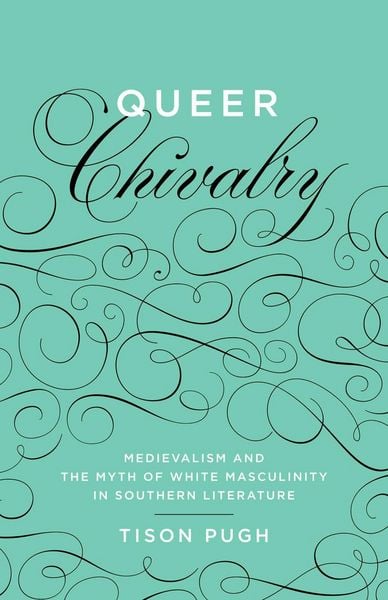
Queer Chivalry Medievalism and the Myth of White Masculinity in Southern Literature
19,49 €
inkl. gesetzl. MwSt.Beschreibung
Produktdetails
Format
ePUB
Kopierschutz
Nein
Family Sharing
Nein
Text-to-Speech
Ja
Erscheinungsdatum
09.12.2013
Verlag
LAPA PublishersSeitenzahl
240 (Printausgabe)
Dateigröße
2253 KB
Sprache
Englisch
EAN
9780807151860
For the U.S. South, the myth of chivalric masculinity dominates the cultural and historical landscape. Visions of white southern men as archetypes of honor and gentility run throughout regional narratives with little regard for the actions and, at times, the atrocities committed by such men. In Queer Chivalry, Tison Pugh exposes the inherent contradictions in these depictions of cavalier manhood, investigating the foundations of southern gallantry as a reincarnated and reauthorized version of medieval masculinity. Pugh argues that the idea of masculinity -- particularly as seen in works by prominent southern authors from Mark Twain to Ellen Gilchrist -- constitutes a cultural myth that queerly demarcates accepted norms of manliness, often by displaying the impossibility of its achievement.
Beginning with Twain's famous critique of "the Sir Walter disease" that pilloried the South, Pugh focuses on authors who questioned the code of chivalry by creating protagonists whose quests for personal knighthood prove quixotic. Through detailed readings of major works -- including Twain's A Connecticut Yankee in King Arthur's Court, Flannery O'Connor's short fiction, John Kennedy Toole's A Confederacy of Dunces, Robert Penn Warren's A Place to Come To, Walker Percy's novels, and Gilchrist's The Annunciation -- Pugh demonstrates that the hypermasculinity of white-knight ideals only draws attention to the ambiguous gender of the literary southern male.
Employing insights from gender and psychoanalytic theory, Queer Chivalry contributes to recent critical discussions of the cloaked anxieties about gender and sexuality in southern literature. Ultimately, Pugh uncovers queer limits in the cavalier mythos, showing how facts and fictions contributed to the ideological formulation of the South.
Noch keine Bewertungen vorhanden
Verfassen Sie die erste Bewertung zu diesem Artikel
Helfen Sie anderen Kundinnen und Kunden durch Ihre Meinung.
Kurze Frage zu unserer Seite
Vielen Dank für Ihr Feedback
Wir nutzen Ihr Feedback, um unsere Produktseiten zu verbessern. Bitte haben Sie Verständnis, dass wir Ihnen keine Rückmeldung geben können. Falls Sie Kontakt mit uns aufnehmen möchten, können Sie sich aber gerne an unseren Kund*innenservice wenden.
zum Kundenservice