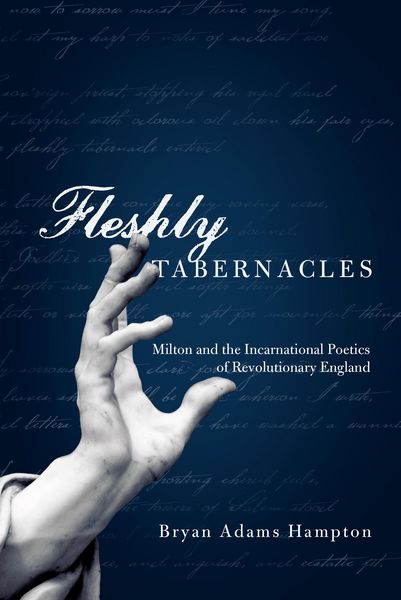
Fleshly Tabernacles Milton and the Incarnational Poetics of Revolutionary England
-
- Hardcover
- Taschenbuch
- eBook ausgewählt
-
Form:Einzelkauf Download
-
Sprache:Englisch
41,49 €
inkl. gesetzl. MwSt.Beschreibung
Produktdetails
Format
ePUB
Kopierschutz
Nein
Family Sharing
Nein
Text-to-Speech
Ja
Erscheinungsdatum
15.11.2012
Verlag
University Of Notre Dame PressSeitenzahl
384 (Printausgabe)
Dateigröße
2502 KB
Sprache
Englisch
EAN
9780268081744
In Fleshly Tabernacles, Bryan Hampton examines John Milton's imaginative engagement with, and theological passion for, the Incarnation. As aesthetic symbol, theological event, and narrative picture of humanity's potential, the Incarnation profoundly governs the way Milton structures his 1645 Poems, ponders the holy office of the pulpit, reflects on the ends of speech and language, interprets sacred scripture or secular texts, and engages in the radical politics of the Civil War and Interregnum. Richly drawing upon the disciplines of historical and postmodern theology, philosophical hermeneutics, theological aesthetics, and literary theory, Fleshly Tabernacles pursues the wide-ranging implications of the heterodox, perfectionist strain in Milton's Christology. Hampton illustrates how vibrant Christologies generated and shaped particular brands of anticlericalism, theories of reading and language, and political commitments of English nonconformist sects during the turbulent decades of the seventeenth century. Ranters and Seekers, Diggers and Quakers, Fifth monarchists and some Anabaptists-many of those identified with these radical groups proclaim that the Incarnation is primarily understood, not as a singular event of antiquity, but as a present eruption and charged manifestation within the life of the individual believer, such that faithful believers become "fleshly tabernacles" housing the Divine.
The perfectionist strain in Milton's theology resonated in the works of the Independent preacher John Everard, the Digger Gerrard Winstanley, and the Quaker James Nayler. Fleshly Tabernacles intriguingly demonstrates how ideas of the incarnated Christ flourished in the world of revolutionary England, expressed in the notion that the regenerated human self could repair the ruins of church and state.
Noch keine Bewertungen vorhanden
Verfassen Sie die erste Bewertung zu diesem Artikel
Helfen Sie anderen Kundinnen und Kunden durch Ihre Meinung.
Kurze Frage zu unserer Seite
Vielen Dank für Ihr Feedback
Wir nutzen Ihr Feedback, um unsere Produktseiten zu verbessern. Bitte haben Sie Verständnis, dass wir Ihnen keine Rückmeldung geben können. Falls Sie Kontakt mit uns aufnehmen möchten, können Sie sich aber gerne an unseren Kund*innenservice wenden.
zum Kundenservice