• Produktbild: Cognitive Behavioural Therapy for Adolescents and Young Adults
  • Produktbild: Cognitive Behavioural Therapy for Adolescents and Young Adults
- 26%

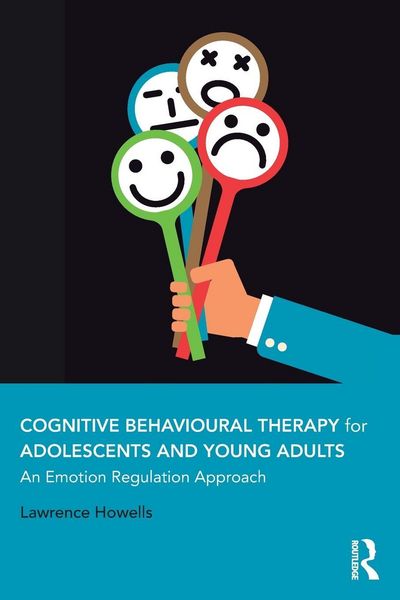
Cognitive Behavioural Therapy for Adolescents and Young Adults An Emotion Regulation Approach

26% sparen

39,99 € UVP 54,20 €

inkl. gesetzl. MwSt., Versandkostenfrei


Beschreibung

Produktdetails

Einband

Taschenbuch

Erscheinungsdatum

03.05.2018

Abbildungen

1 schwarzweisse Fotos, 22 schwarzweisse Zeichnungen, 5 Tabellen

Verlag

Taylor & Francis

Seitenzahl

266

Maße (L/B/H)

23,4/15,6/1,5 cm

Gewicht

490 g

Sprache

Englisch

ISBN

978-1-138-70747-4

Beschreibung

Rezension

"Dr Howells's new book, and method, reimagines CBT for the next generation. Grounded in fine-grain, intelligent clinical practice and expertise, the innovative techniques described here focus on developing a can-do mentality in young people  - crucially, helping them reframe their 'symptoms' as normal responses to the developmental challenges of life. On the basis of cutting-edge psychological science, and with many clear case examples, Dr Howells tilts CBT on its axis to show how young people can understand their feelings, harness their latent abilities, and take back control of their futures. At a time when young people are facing unprecedented emotional challenges, Dr Howells's powerful new re-reading of CBT is a priceless gift to give them, their families, and the professionals with whom they work."

Dr Roger Kingerlee, Consultant Clinical Psychologist, Norfolk and Suffolk Foundation Trust


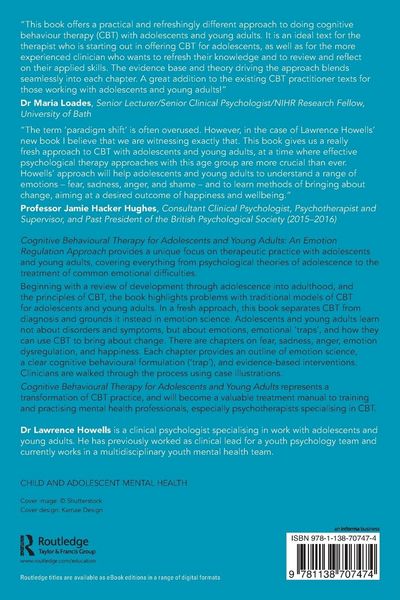
"This book offers a practical and refreshingly different approach to doing cognitive behaviour therapy (CBT) with adolescents and young adults. It is an ideal text for the therapist who is starting out in offering CBT for adolescents, as well as for the more experienced clinician who wants to refresh their knowledge and to review and reflect on their applied skills. The evidence base and theory driving the approach blends seamlessly into each chapter. A great addition to the existing CBT practitioner texts for those working with adolescents and young adults!"

Dr Maria Loades, Senior Lecturer/Senior Clinical Psychologist/NIHR Research Fellow, University of Bath

"As health care restructures to respond in a more timely way to the mental health needs of young people in transition from childhood to adulthood, we urgently need psychosocial interventions that are fit for purpose and transcend our artificial diagnostic frameworks. ER-CBT offers a developmentally attuned approach which is transdiagnostic and, with its primary focus on emotions, is better targeted than traditional CBT for young people. Novel therapies like this are needed as the new 12 -25 system of youth mental health care takes shape in many countries. They can be enhanced through new technologies like virtual reality and on-line platforms but the theoretical and practical building blocks mesh well with the experience and needs of young people. This approach is likely to evolve further with feedback from young people themselves and experienced therapists."

Prof Patrick McGorry, Professor of Youth Mental Health at the University of Melbourne, and President of the International Association for Youth Mental Health

"The term 'paradigm shift' is often overused. However, in the case of Lawrence Howells' new book I believe that we are witnessing exactly that.

This book gives us a really fresh approach to CBT with adolescents and young adults, at a time where effective psychological therapy approaches with this age group are more crucial than ever. Howells' approach will help adolescents and young adults to understand a range of emotions - fear, sadness, anger, and shame - and to learn methods of bringing about change, aiming at a desired outcome of happiness and wellbeing."

Professor Jamie Hacker Hughes, Consultant Clinical Psychologist, Psychotherapist and Supervisor, and Past President of the British Psychological Society (2015-2016)

"An excellent, stimulating and at times challenging addition to the literature, this book is highly recommended for both novice and experienced therapists or indeed anyone working with young people who feel that simple yet powerful models would be useful in helping them to connect with and help young people experiencing a variety of emotional issues. Highly recommended."

Dr Jon Wilson, Consultant Psychiatrist and Medical Psychotherapist at teh Norfolk Youth Service. Clinical Senior Lecturer at the University of East Anglia

Produktdetails

Einband

Taschenbuch

Erscheinungsdatum

03.05.2018

Abbildungen

1 schwarzweisse Fotos, 22 schwarzweisse Zeichnungen, 5 Tabellen

Verlag

Taylor & Francis

Seitenzahl

266

Maße (L/B/H)

23,4/15,6/1,5 cm

Gewicht

490 g

Sprache

Englisch

ISBN

978-1-138-70747-4

Herstelleradresse

Libri GmbH
Europaallee 1
36244 Bad Hersfeld
DE

Email: gpsr@libri.de

Ein neues Kapitel für Ihre Bücher

Ein neues Kapitel für Ihre Bücher

Schenken Sie Ihren alten Schätzen ein zweites Leben: Einfach Barcode scannen, Versandetikett ausdrucken, Bücher verschicken und Thalia Geschenkkarte erhalten.

Jetzt verkaufen
Jetzt verkaufen

Kundinnen und Kunden meinen

0 Bewertungen

Informationen zu Bewertungen

Zur Abgabe einer Bewertung ist eine Anmeldung im Konto notwendig. Die Authentizität der Bewertungen wird von uns nicht überprüft. Wir behalten uns vor, Bewertungstexte, die unseren Richtlinien widersprechen, entsprechend zu kürzen oder zu löschen.

Die Bewertungen sind nach Format, Anzahl Sterne und Datum sortiert.

Verfassen Sie die erste Bewertung zu diesem Artikel

Helfen Sie anderen Kund*innen durch Ihre Meinung

Kundinnen und Kunden meinen

0 Bewertungen filtern

Die Leseprobe wird geladen.
  • Produktbild: Cognitive Behavioural Therapy for Adolescents and Young Adults
  • Produktbild: Cognitive Behavioural Therapy for Adolescents and Young Adults
  • Table of Contents

    Acknowledgements

    Chapter 1: Introduction

    Chapter 2: Adolescent development

    What and when is adolescence?

    Physical development

    Brain development

    Cognitive development

    Social cognitive development

    Identity development

    Emotion and emotion regulation development

    Relations with families and peers

    Bringing it all together: theories of adolescent development

    Chapter 3: Principles of cognitive behavioural therapy (CBT)

    History of CBT

    Theoretical principles of cognitive behavioural therapy

    Practical constructs of CBT

    Evidence base

    Chapter 4: Problems with diagnosis-based CBT in adolescents and young adults

    Problems with Diagnosis

    Problems with CBT in Routine Clinical Practice

    Chapter 5: A Fresh Approach

    Theoretical approach of this book

    Five pillars of the approach

    Chapter 6: Fear

    What causes fear?

    What is fear?

    What is the function of fear?

    Fear and the hand brain

    Adolescent development and fear

    Fear trap

    Drawing the fear trap

    Breaking the fear trap: intervention

    Specific presentations

    Evidence base

    Chapter 7: Sadness

    What causes sadness?

    What is sadness?

    What is the function of sadness?

    Adolescent development and sadness

    Sadness trap

    Drawing the sadness trap

    Breaking the sadness trap: intervention

    Evidence base

    Chapter 8: Anger

    What causes anger?

    What is anger?

    What is the function of anger?

    Adolescent development and anger

    Anger trap

    Drawing the anger trap

    Breaking the anger trap: intervention

    Evidence base

    Chapter 9: Emotion dysregulation

    What is emotion dysregulation?

    What causes emotion dysregulation?

    What is the relationship between emotion dysregulation and interpersonal dfficulty?

    Adolescent development and emotion dysregulation

    Emotion dysregulation trap

    Drawing the emotion dysregulation trap

    Breaking the emotion dysregulation trap: intervention

    Evidence base

    Chapter 10: Disgust

    What causes disgust?

    What is disgust?

    What is the function of disgust?

    When disgust becomes a problem

    Interventions for disgust and fear

    Evidence base

    Chapter 11: Guilt and shame

    What causes guilt and shame?

    What are guilt and shame?

    What are the functions of guilt and shame?

    Difficulties with guilt

    Difficulties with shame

    Evidence base

    Chapter 12: Happiness

    What causes happiness?

    What is happiness?

    What is the function of happiness?

    Happiness, wellbeing, and flourishing

    Adolescent development and happiness

    Happiness wheel

    Happiness wheel: intervention

    Evidence base