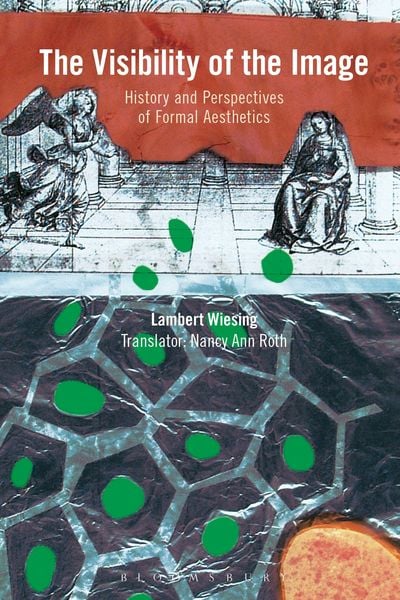
The Visibility of the Image History and Perspectives of Formal Aesthetics
-
- Englisch ausgewählt
44,99 €
inkl. gesetzl. MwSt.,
Beschreibung
Produktdetails
Einband
Taschenbuch
Erscheinungsdatum
22.03.2018
Abbildungen
4 colour illustrations
Verlag
Bloomsbury AcademicSeitenzahl
280
Maße (L/B/H)
23,4/15,6/1,5 cm
Gewicht
397 g
Übersetzt von
Nancy Ann Roth
Sprache
Englisch
ISBN
978-1-350-06402-7
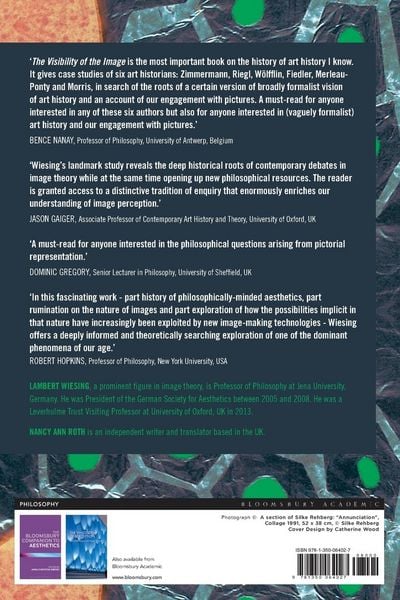
Now available in English for the first time, The Visibility of the Image explores the development of an influential aesthetic tradition through the work of six figures. Analysing their contribution to the progress of formal aesthetics, from its origins in Germany in the 1880s to semiotic interpretations in America a century later, the six chapters cover: Robert Zimmermann (1824-1898), the first to separate aesthetics and metaphysics and approach aesthetics along the lines of formal logic, providing a purely syntactic way of using signs, regardless of objective content; Alois Riegl (1858-1905), who went on to further develop aesthetics on the model of formal logic, creating a theory of style in response to Zimmermann's call for an aesthetics oriented toward formal logic; Heinrich Wölfflin (1864-1945), who represents a step toward an understanding of consciousness by using pictures as cognitive tools; Konrad Fiedler (1841-1895), the Saxon philosopher who considered the possibility that some kinds of images are made and viewed not for what they show, but for their visibility's sake alone; Maurice Merleau-Ponty (1908-1961), responsible for taking up the connections between the problems of reducing the range of potential meanings and contexts of a given image down to just the picture surface; Charles William Morris (1901-1979), who set out to establish whether a picture with no objective reference, such as an abstract painting, still counts as a sign, and if so, in what sense. Bringing these thinkers together and interlinking their ideas, Lambert Wiesing presents an engaging history of formal aesthetics, while reconstructing the philosophical foundations for the appearance of new image forms in the 20th century, including the video-clip, abstract collage, digital simulation and virtual reality. Using this original approach, The Visibility of the Image introduces the rise of modern image theory and provides a valuable account of our engagement with pictures in the 21st century.
Ein neues Kapitel für Ihre Bücher
Ein neues Kapitel für Ihre Bücher
Schenken Sie Ihren alten Schätzen ein zweites Leben und erhalten dafür eine Thalia Geschenkkarte.
Noch keine Bewertungen vorhanden
Verfassen Sie die erste Bewertung zu diesem Artikel
Helfen Sie anderen Kundinnen und Kunden durch Ihre Meinung.
Kurze Frage zu unserer Seite
Vielen Dank für Ihr Feedback
Wir nutzen Ihr Feedback, um unsere Produktseiten zu verbessern. Bitte haben Sie Verständnis, dass wir Ihnen keine Rückmeldung geben können. Falls Sie Kontakt mit uns aufnehmen möchten, können Sie sich aber gerne an unseren Kund*innenservice wenden.
zum Kundenservice