Beschreibung
Produktdetails
Einband
Gebundene Ausgabe
Erscheinungsdatum
17.08.2018
Abbildungen
500 color and b/w photos throughout
Verlag
Casemate PublishersSeitenzahl
192
Maße (L/B/H)
30,4/21,5/2,2 cm
Gewicht
1128 g
Sprache
Englisch
ISBN
978-1-61200-586-7
The battle of Normandy ended as the Allied armies crossed the Seine at the end of August 1944, a month after Operation Cobra had broken the stalemate. The Allies harried the retreating Germans, who left their tanks and heavy weapons south of the Seine, and by mid-September the Allies were coming up against the defenses of Germany itself, the impressive Westwall.
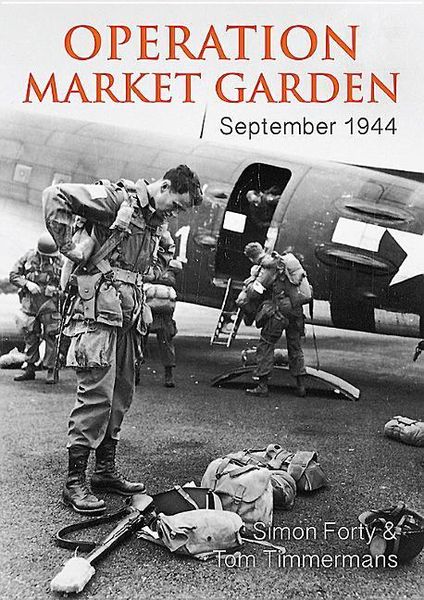
As far as the Allies were concerned, the Germans were beaten. The scent of immediate victory was in the air, the only question was where to apply the coup de grace. Logistics demanded that this should be a single thrust rather than Eisenhower's broad front approach. Montgomery--the architect of victory in Normandy--proposed a daring plan to circumvent the Westwall, thrust towards Berlin, and make use of the newly created 1st Allied Airborne Army. The plan was simple: use the Paratroopers to hold key bridges along a single route along which British XXX Corps would make an advance that would be "rapid and violent, and without regard to what is happening on the flanks." US 101st Airborne would land north of Eindhoven; 82nd Airborne at Nijmegen; British 1st Airborne at Arnhem--the so-called "bridge too far." Unfortunately, the plan was flawed, the execution imperfect, and the Germans far from beaten. In spite of the audacious actions of the Paratroopers who would cover themselves with glory, Operation Market Garden showed that the German ground forces would still provide the Allies with stiff opposition in the West. And then, in 1977, A Bridge Too Far came out. With levels of realism that wouldn't be approached for twenty years, the movie produced a view of the battle that subverted reality and permeated public perception. Just as George C. Scott produced the definitive Patton, so A Bridge Too Far provided an unnuanced view of the battles that historians have battled to correct ever since. As with its companion volumes on D-Day, the Bocage, and the Ardennes battlefields, this book provides a balanced, up-to-date view of the operation making full use of modern research. With over 500 illustrations including many maps, aerial and then-and-now photography, it will provide the reader with an easy-to-read, up-to-date examination of each part of the operation, benefitting from on-the-ground research by Tom Timmermans, who lives in Eindhoven.Ein neues Kapitel für Ihre Bücher
Ein neues Kapitel für Ihre Bücher
Schenken Sie Ihren alten Schätzen ein zweites Leben und erhalten dafür eine Thalia Geschenkkarte.
Noch keine Bewertungen vorhanden
Verfassen Sie die erste Bewertung zu diesem Artikel
Helfen Sie anderen Kundinnen und Kunden durch Ihre Meinung.
Kurze Frage zu unserer Seite
Vielen Dank für Ihr Feedback
Wir nutzen Ihr Feedback, um unsere Produktseiten zu verbessern. Bitte haben Sie Verständnis, dass wir Ihnen keine Rückmeldung geben können. Falls Sie Kontakt mit uns aufnehmen möchten, können Sie sich aber gerne an unseren Kund*innenservice wenden.
zum Kundenservice