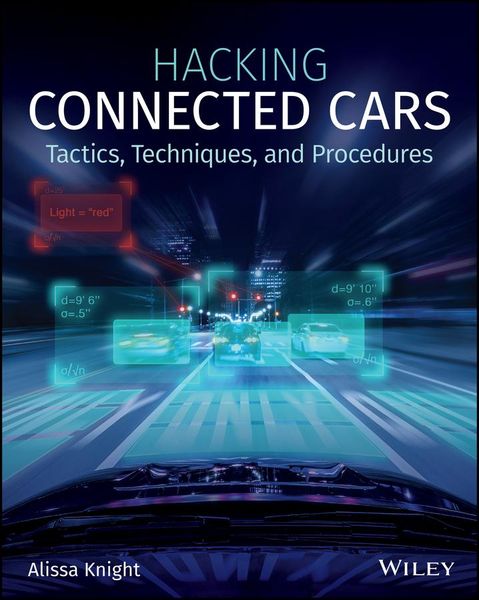
Hacking Connected Cars Tactics, Techniques, and Procedures
-
- Taschenbuch ausgewählt
- eBook
-
Sprache:Englisch
48,99 €
inkl. gesetzl. MwSt.,
Beschreibung
Produktdetails
Einband
Taschenbuch
Erscheinungsdatum
28.02.2020
Verlag
John Wiley & SonsSeitenzahl
272
Maße (L/B/H)
23,2/18,9/1,8 cm
Gewicht
508 g
Farbe
Dunkellila / Silbergrau
Auflage
1. Auflage
Sprache
Englisch
ISBN
978-1-119-49180-4
A field manual on contextualizing cyber threats, vulnerabilities, and risks to connected cars through penetration testing and risk assessment Hacking Connected Cars deconstructs the tactics, techniques, and procedures (TTPs) used to hack into connected cars and autonomous vehicles to help you identify and mitigate vulnerabilities affecting cyber-physical vehicles. Written by a veteran of risk management and penetration testing of IoT devices and connected cars, this book provides a detailed account of how to perform penetration testing, threat modeling, and risk assessments of telematics control units and infotainment systems. This book demonstrates how vulnerabilities in wireless networking, Bluetooth, and GSM can be exploited to affect confidentiality, integrity, and availability of connected cars. Passenger vehicles have experienced a massive increase in connectivity over the past five years, and the trend will only continue to grow with the expansion of The Internet of Things and increasing consumer demand for always-on connectivity. Manufacturers and OEMs need the ability to push updates without requiring service visits, but this leaves the vehicle's systems open to attack. This book examines the issues in depth, providing cutting-edge preventative tactics that security practitioners, researchers, and vendors can use to keep connected cars safe without sacrificing connectivity. * Perform penetration testing of infotainment systems and telematics control units through a step-by-step methodical guide * Analyze risk levels surrounding vulnerabilities and threats that impact confidentiality, integrity, and availability * Conduct penetration testing using the same tactics, techniques, and procedures used by hackers From relatively small features such as automatic parallel parking, to completely autonomous self-driving cars--all connected systems are vulnerable to attack. As connectivity becomes a way of life, the need for security expertise for in-vehicle systems is becoming increasingly urgent. Hacking Connected Cars provides practical, comprehensive guidance for keeping these vehicles secure.
Ein neues Kapitel für Ihre Bücher
Ein neues Kapitel für Ihre Bücher
Schenken Sie Ihren alten Schätzen ein zweites Leben und erhalten dafür eine Thalia Geschenkkarte.
Noch keine Bewertungen vorhanden
Verfassen Sie die erste Bewertung zu diesem Artikel
Helfen Sie anderen Kundinnen und Kunden durch Ihre Meinung.
Kurze Frage zu unserer Seite
Vielen Dank für Ihr Feedback
Wir nutzen Ihr Feedback, um unsere Produktseiten zu verbessern. Bitte haben Sie Verständnis, dass wir Ihnen keine Rückmeldung geben können. Falls Sie Kontakt mit uns aufnehmen möchten, können Sie sich aber gerne an unseren Kund*innenservice wenden.
zum Kundenservice