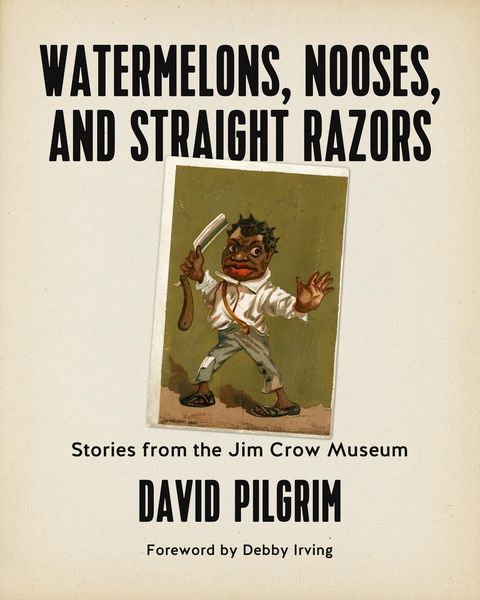
Watermelons, Nooses, and Straight Razors Stories from the Jim Crow Museum
-
- Taschenbuch
- eBook ausgewählt
-
Form:Einzelkauf Download
-
Sprache:Englisch
9,49 €
inkl. gesetzl. MwSt.Beschreibung
Produktdetails
Format
ePUB
Kopierschutz
Nein
Family Sharing
Nein
Text-to-Speech
Ja
Erscheinungsdatum
30.12.2017
Verlag
PM PressSeitenzahl
272 (Printausgabe)
Dateigröße
15080 KB
Sprache
Englisch
EAN
9781629634593
All groups tell stories, but some groups have the power to impose their stories on others, to label others, stigmatize others, paint others as undesirables-and to have these stories presented as scientific fact, God's will, or wholesome entertainment. Watermelons, Nooses, and Straight Razors examines the origins and significance of several longstanding antiblack stories and the caricatures and stereotypes that support them. Here readers will find representations of the lazy, childlike Sambo, the watermelon-obsessed pickaninny, the buffoonish minstrel, the subhuman savage, the loyal and contented mammy and Tom, and the menacing, razor-toting coon and brute.
Malcolm X and James Baldwin both refused to eat watermelon in front of white people. They were aware of the jokes and other stories about African Americans stealing watermelons, fighting over watermelons, even being transformed into watermelons. Did racial stories influence the actions of white fraternities and sororities who dressed in blackface and mocked black culture, or employees who hung nooses in their workplaces? What stories did the people who refer to Serena Williams and other dark-skinned athletes as apes or baboons hear? Is it possible that a white South Carolina police officer who shot a fleeing black man had never heard stories about scary black men with straight razors or other weapons? Antiblack stories still matter.
Watermelons, Nooses, and Straight Razors uses images from the Jim Crow Museum, the nation's largest publicly accessible collection of racist objects. These images are evidence of the social injustice that Martin Luther King Jr. referred to as "a boil that can never be cured so long as it is covered up but must be exposed to the light of human conscience and the air of national opinion before it can be cured." Each chapter concludes with a story from the author's journey, challenging the integrity of racial narratives.
Kundinnen und Kunden meinen
Verfassen Sie die erste Bewertung zu diesem Artikel
Helfen Sie anderen Kund*innen durch Ihre Meinung
Kurze Frage zu unserer Seite
Vielen Dank für Ihr Feedback
Wir nutzen Ihr Feedback, um unsere Produktseiten zu verbessern. Bitte haben Sie Verständnis, dass wir Ihnen keine Rückmeldung geben können. Falls Sie Kontakt mit uns aufnehmen möchten, können Sie sich aber gerne an unseren Kund*innenservice wenden.
zum Kundenservice