• Produktbild: The New Handbook of Political Sociology
  • Produktbild: The New Handbook of Political Sociology

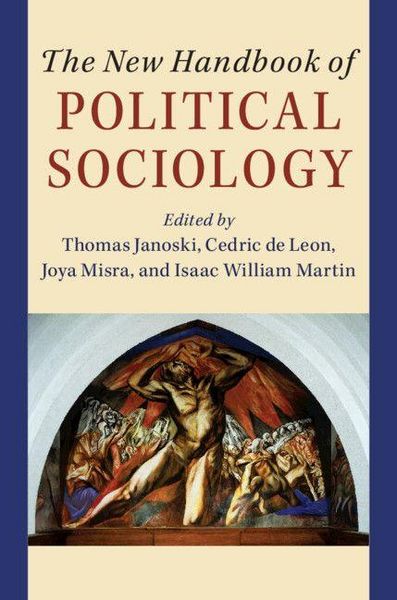
The New Handbook of Political Sociology

311,99 €

inkl. gesetzl. MwSt., Versandkostenfrei


Beschreibung

Produktdetails

Einband

Gebundene Ausgabe

Erscheinungsdatum

10.06.2021

Herausgeber

Thomas Janoski + weitere

Verlag

Cambridge Academic

Seitenzahl

1146

Maße (L/B/H)

22,9/15,2/5,9 cm

Gewicht

1686 g

Sprache

Englisch

ISBN

978-1-107-19349-9

Beschreibung

Produktdetails

Einband

Gebundene Ausgabe

Erscheinungsdatum

10.06.2021

Herausgeber

Verlag

Cambridge Academic

Seitenzahl

1146

Maße (L/B/H)

22,9/15,2/5,9 cm

Gewicht

1686 g

Sprache

Englisch

ISBN

978-1-107-19349-9

Herstelleradresse

Libri GmbH
Europaallee 1
36244 Bad Hersfeld
DE

Email: gpsr@libri.de

Ein neues Kapitel für Ihre Bücher

Ein neues Kapitel für Ihre Bücher

Schenken Sie Ihren alten Schätzen ein zweites Leben: Einfach Barcode scannen, Versandetikett ausdrucken, Bücher verschicken und Thalia Geschenkkarte erhalten.

Jetzt verkaufen
Jetzt verkaufen

Noch keine Bewertungen vorhanden

Verfassen Sie die erste Bewertung zu diesem Artikel

Helfen Sie anderen Kundinnen und Kunden durch Ihre Meinung.

Kundinnen und Kunden meinen

Bewertungen (0)

Die Leseprobe wird geladen.
  • Produktbild: The New Handbook of Political Sociology
  • Produktbild: The New Handbook of Political Sociology
  • Introduction. New directions in political sociology; Part I. Theories of Political Sociology: 1. Power; 2. Class, elite and conflict theories; 3. The promise of field theory for the study of political institutions; 4. Culture in politics and politics in culture: institutions, practices and boundaries; 5. Political sociology and the post-colonial perspective; 6. Gender, state, and citizenship: challenges and dilemmas in feminist theorizing; 7. Theories of race, ethnicity, and the racial state; 8. The convergence of culture and political economy? Bourdieu, Mann and institutional theory; 9. Tasks of political sociology in the next ten years; Part II. Media Explosion, Knowledge as Power, and Demographic Reversals: 10. 'Old' media, 'New' media, hybrid media, and the changing character of political participation; 11. Information gathering, quantification, influence, reactivity and power; 12. The light and dark sides of big data, web scraping and data harmonization; 13. States, politics, and expertise; 14. Towards a political sociology of demography; Part III. The State and its Political Organizations: 15. The political economy of the capitalist state; 16. States as institutions; 17. Nation-state formation: power and culture; 18. The political sociology of public finance and the fiscal sociology of politics; 19. Politics, institutions and the carceral state; 20. State transitions to democracy; 21. Revolutions against the state; Part IV. Civil Society: The Roots and Processes of Political Action: 22. The challenges of citizenship in civil society; 23. Social movements; 24. Political parties: from reflection to articulation and beyond; 25. Machine politics and clientelism; 26. The good, the bland and the ugly: volunteering and civic associations in political sociology; 27. The politics of economic crisis: from voter retreat to the rise of new populisms; 28. Public opinion and its impact on politics, voting and civil society; 29. On the move: nationalism between left and right, and spreading into China; Part V. Established and New State Policies and Innovations: 30. The evolution of fiscal and monetary policy; 31. Welfare state policies and their effects; 32. Sexuality, gender, and social policy; 33. Immigration, asylum, integration and citizenship policy; 34. Cosmopolitanism and political sociology: world citizenship, global governance, and human rights; 35. War, terrorism and securitization while preserving democratic rights; Part VI. Globalization and New and Bigger Sources of Power and Resistance: 36. Global political sociology and world-systems; 37. Liberalizing trade and finance: corporate class agency and the neoliberal era; 38. The racial state in and beyond the age of racial formation theory; 39. Democracy and autocracy in the age of populism; 40. Transnational movements.