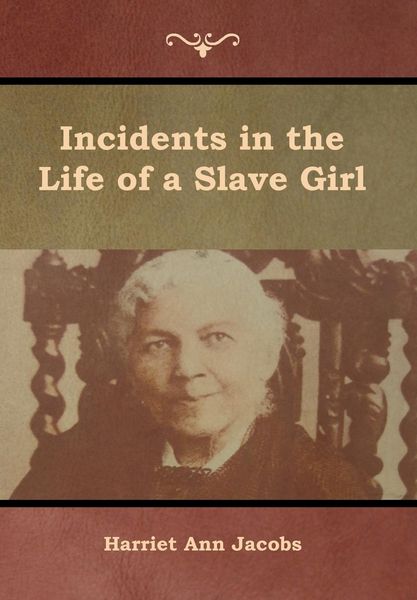
Incidents in the Life of a Slave Girl
-
- Hardcover ausgewählt
- Taschenbuch
- eBook
- Hörbuch
-
Sprache:Englisch
-
Verlag:Bibliotech Pr
- Outlook 42,90 €
- Wilder Publications 29,99 €
- Lushena Books Inc 28,99 €
- Oxford University Press 109,99 €
- Bibliotech Pr 32,99 € ausgewählt
- Cosimo 26,99 €
- Creative Media Partners, LLC 29,99 €
- Start Publishing PD 27,99 €
- Benediction Classics 25,99 €
- Simon & Brown 25,99 €
- Ingram Publishers Services 17,99 €
- Chump Change 21,99 €
- Indoeuropeanpublishing.Com 32,99 €
32,99 €
inkl. gesetzl. MwSt.,
Beschreibung
Produktdetails
Einband
Gebundene Ausgabe
Erscheinungsdatum
20.05.2019
Verlag
Bibliotech PrSeitenzahl
242
Maße (L/B/H)
23,5/15,7/1,9 cm
Gewicht
563 g
Sprache
Englisch
ISBN
978-1-61895-499-2
Harriet Ann Jacobs (February 11, 1813 - March 7, 1897) was an American writer, escaped slave, abolitionist speaker and reformer. Jacobs' single work, Incidents in the Life of a Slave Girl, published in 1861 under the pseudonym "Linda Brent", was one of the first autobiographical narratives about the struggle for freedom by female slaves and an account of the sexual abuse they endured. Incidents in the Life of Slave Girl is considered a slave narrative as well as an example of feminist literature. Harriet Jacobs began composing Incidents in the Life of a Slave Girl while living and working at Idlewild, Willis's home on the Hudson River. Jacobs's autobiographical accounts were first published in serial form in the New York Tribune, a newspaper owned and edited by abolitionist Horace Greeley. Her reports of sexual abuse were considered too shocking for the average newspaper reader of the day, and the paper ceased publishing her account before its completion. The narrative was designed to appeal to middle class white Christian women in the North, focusing on the impact of slavery on women's chastity and sexual virtues. Christian women could perceive how slavery was a temptation to masculine lusts and vice as well as to womanly virtues. Jacobs criticized the religion of the Southern United States as being un-Christian and as emphasizing the value of money ("If I am going to hell, bury my money with me," says a particularly brutal and uneducated slaveholder). She described another slaveholder with, "He boasted the name and standing of a Christian, though Satan never had a truer follower." Jacobs argued that these men were not exceptions to the general rule. Much of Incidents in the Life of a Slave Girl was devoted to the Jacobs's struggle to free her two children after she escaped. Before that, Harriet spent seven years hiding in a tiny space built into her grandmother's barn to see and hear the voices of her children. Jacobs changed the names of all characters in the novel, including her own, to conceal their true identities. The villainous slave owner "Dr. Flint" was based on Jacobs's former master, Dr. James Norcom. Despite the publisher's documents of authenticity, some critics attacked the narrative as based on false accounts.
Ein neues Kapitel für Ihre Bücher
Ein neues Kapitel für Ihre Bücher
Schenken Sie Ihren alten Schätzen ein zweites Leben und erhalten dafür eine Thalia Geschenkkarte.
Noch keine Bewertungen vorhanden
Verfassen Sie die erste Bewertung zu diesem Artikel
Helfen Sie anderen Kundinnen und Kunden durch Ihre Meinung.
Kurze Frage zu unserer Seite
Vielen Dank für Ihr Feedback
Wir nutzen Ihr Feedback, um unsere Produktseiten zu verbessern. Bitte haben Sie Verständnis, dass wir Ihnen keine Rückmeldung geben können. Falls Sie Kontakt mit uns aufnehmen möchten, können Sie sich aber gerne an unseren Kund*innenservice wenden.
zum Kundenservice