• Produktbild: Kant's Notion of a Transcendental Schema
  • Produktbild: Kant's Notion of a Transcendental Schema
Band 32

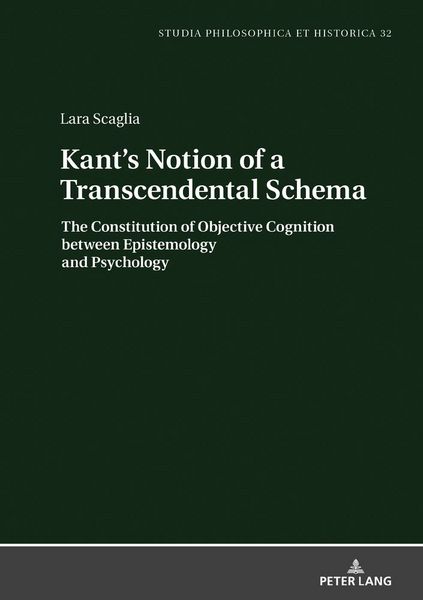
Kant's Notion of a Transcendental Schema The Constitution of Objective Cognition between Epistemology and Psychology

71,30 €

inkl. gesetzl. MwSt., Versandkostenfrei


Beschreibung

Produktdetails

Einband

Gebundene Ausgabe

Erscheinungsdatum

02.04.2020

Abbildungen

7

Herausgeber

Christoph Kann

Verlag

Peter Lang GmbH, Internationaler Verlag der Wissenschaften

Seitenzahl

294

Maße (L/B/H)

21,6/15,3/2,1 cm

Gewicht

451 g

Auflage

1

Sprache

Englisch

ISBN

978-3-631-80438-4

Beschreibung

Produktdetails

Einband

Gebundene Ausgabe

Erscheinungsdatum

02.04.2020

Abbildungen

7

Herausgeber

Christoph Kann

Verlag

Peter Lang GmbH, Internationaler Verlag der Wissenschaften

Seitenzahl

294

Maße (L/B/H)

21,6/15,3/2,1 cm

Gewicht

451 g

Auflage

1

Sprache

Englisch

ISBN

978-3-631-80438-4

EU-Ansprechpartner

Zeitfracht Medien GmbH
Ferdinand-Jühlke-Straße 7
99095 Erfurt
DE
produktsicherheit@zeitfracht.de

Herstelleradresse

Peter Lang
Avenue du Théâtre 7
1005 Lausanne
CH
orders@peterlang.com

Ein neues Kapitel für Ihre Bücher

Ein neues Kapitel für Ihre Bücher

Schenken Sie Ihren alten Schätzen ein zweites Leben und erhalten dafür eine Thalia Geschenkkarte.

Jetzt verkaufen
Jetzt verkaufen

Noch keine Bewertungen vorhanden

Verfassen Sie die erste Bewertung zu diesem Artikel

Helfen Sie anderen Kundinnen und Kunden durch Ihre Meinung.

Kundinnen und Kunden meinen

Bewertungen (0)

  • Produktbild: Kant's Notion of a Transcendental Schema
  • Produktbild: Kant's Notion of a Transcendental Schema
  • Introduction .............................................................................................................. 15
    Main objectives of the study ................................................................................... 15
    Method ...................................................................................................................... 17
    State of the art ........................................................................................................... 18
    Structure .................................................................................................................... 20
    Part I: Kant’s theory of schematism and its context ....................................... 21
    1. The notion of schema before Kant .................................................................... 23
    1.1 Ancient times ................................................................................................ 24
    1.2 Middle Ages .................................................................................................. 26
    1.3 Modern Ages ................................................................................................ 28
    1.3.1 Tetens’s conception of schema ............................................................ 34
    1.4 Conclusion .................................................................................................... 40
    2. Kant’s pre-critical notion of schema ................................................................. 41
    2.1 The metaphysical notion of schema in the Nova Dilucidatio ................. 45
    2.2 The new significance of schema in the Dissertation from 1770.
    A first reference to the problem of objectivity ......................................... 46
    2.2.1 Schema and the forms of the worlds ................................................. 47
    2.2.2 The novelty of the account of space and time as schemata in
    the Dissertation: Comparison with Newton and Leibniz ............... 52
    2.2.3 The limitations of Kant’s Dissertation and the need of a
    further solution to the question of objectivity .................................. 54
    3. The introduction of the transcendental forms in the Critique of Pure
    Reason ................................................................................................................... 57
    3.1 The doctrine of sensibility .......................................................................... 58
    3.2 The doctrine of the understanding ............................................................ 634. Analysis of the schematism chapter ................................................................. 73
    4.1 The Transcendental Doctrine of Judgement ............................................ 74
    4.2 Time-mediation ........................................................................................... 78
    4.3 Schemata and their faculty ......................................................................... 80
    4.4 Schemata: images or concepts? .................................................................. 82
    4.5 The table of schemata .................................................................................. 84
    4.6 Schemata as conditions of the significance of the pure concepts .......... 89
    5. Debates over the schematism chapter in Kantian scholarship ...................... 95
    5.1 Main criticisms of the schematism chapter .............................................. 96
    5.1.1 A redundant addition within the Critique of Pure Reason ............. 96
    a) Zschocke’s focus on the Transcendental Aesthetic ..................... 96
    b) Curtius: the schematism chapter and § 24 .................................. 98
    5.1.2 Schematism’s obscure terminology .................................................. 100
    a) Curtius: difficulties concerning the notion of
    subsumption .................................................................................. 100
    b) Walsh: schemata and concepts .................................................... 103
    c) Guyer: incongruences in the relation between categories
    and schemata ......................................................................... 104
    d) Allison: difficulties concerning the distinctions among
    faculties and the variety of schemata’s definitions ............ 106
    5.1.3 The priority ascribed to time over space ......................................... 109
    a) Zschocke’s criticism of time as being the only mediating
    function .................................................................................. 109
    b) Walsh’s introduction of “organic” schemata .............................. 109
    c) Guyer: Schemata and temporality .............................................. 110
    5.2 In response to the criticisms of the schematism chapter ...................... 113
    5.2.1 The necessity of schematism in the Critique of Pure Reason ........ 113
    a) The distinction between the function of the
    Transcendental Deduction and the task of the
    schematism chapter .............................................................. 113
    b) “Knowing that and knowing how” ............................................. 116 5.2.2 The obscurity of the chapter ............................................................. 122
    a) Subsumption .................................................................................. 122
    b) “To be” and “to do”: defining schemata ..................................... 125
    c) The distinction between categories and forms of intuition ..... 128
    d) Categories and schemata ............................................................. 130
    e) Schemata and principles .............................................................. 132
    f) Schemata and ideas ....................................................................... 134
    g) Judgement and its role between reason and understanding ... 138
    5.2.3 Space and time .................................................................................... 141
    a) Time, at least .................................................................................. 141
    b) Dynamic schemata ....................................................................... 142
    c) Difficulties within Kant’s text ...................................................... 142
    Part II: After Kant ................................................................................................ 147
    1. The philosophical reception and criticism of the schematism chapter ..... 149
    1.1 The earliest receptions of Kant’s schematism chapter ........................... 150
    1.2 Idealism and post-Kantianism ................................................................. 152
    1.3 From the late nineteenth to the early twentieth century ...................... 159
    2. Kant’s distinction between philosophy and psychology .............................. 177
    2.1 Philosophy as a system of concepts ......................................................... 178
    2.2 Psychology: a doctrine of the inner sense .............................................. 186
    2.3 Is Kant a transcendental psychologist? ................................................... 194
    3. Kant’s notion of a schema in twentieth-century psychology ...................... 201
    3.1 Schema theories ......................................................................................... 201
    3.2 Frederic Bartlett ......................................................................................... 206
    3.2.1 A pioneer of applied psychology ...................................................... 207
    3.2.2 Experimental method ........................................................................ 208
    3.2.3 The topics of experiments ................................................................. 209
    3.2.4 Remembering ..................................................................................... 210
    3.2.5 Schematic settings .............................................................................. 2103.2.6 Meaning ............................................................................................... 214
    3.2.7 Conclusion .......................................................................................... 217
    3.3 Jean Piaget’s interpretation of Kant’s notion of a schema ..................... 219
    3.3.1 An interest in both theoretical and empirical studies ................... 220
    3.3.2 A “philosophical shock” .................................................................... 222
    3.3.3 Piaget’s notion of schemata ............................................................... 224
    3.3.4 An example of a schema: the object ................................................ 226
    3.3.5 Experience as an organisation through schemata. Piaget’s
    perspective between empiricism and apriorism ............................. 232
    3.3.6 Piaget’s novelty and difference from Kant’s view ........................... 234
    3.4 Lawrence Barsalou’s reception of Kant’s
    transcendental schematism ...................................................................... 238
    3.4.1 Cognitive psychology ........................................................................ 239
    3.4.2 Categorisation ..................................................................................... 240
    3.4.3 Modal theory versus amodal theory ................................................ 241
    3.4.4 Properties ............................................................................................ 244
    a) Neural representations ................................................................. 244
    b) Schematic perceptual symbols .................................................... 244
    c) Multimodal symbols ..................................................................... 245
    d) Simulators ...................................................................................... 245
    e) Frames ............................................................................................ 247
    f) Linguistic indexing and control .................................................. 248
    3.4.5 Barsalou and Kant .............................................................................. 249
    3.4.6 Psychology and philosophy .............................................................. 250
    Conclusion .............................................................................................................. 253
    Schema: the history of an idea ......................................................................... 253
    The function of schematism ............................................................................. 255
    Schematisms’s legacy between philosophy and psychology ........................ 258
    New perspectives ............................................................................................... 264Bibliography ............................................................................................................ 267
    Lists of abbreviations for classical works ........................................................ 267
    Primary literature .............................................................................................. 267
    Secondary literature .......................................................................................... 273
    Online resources ................................................................................................ 283
    List of figures ........................................................................................................... 285
    List of tables ............................................................................................................ 287
    Index ........................................................................................................................ 289