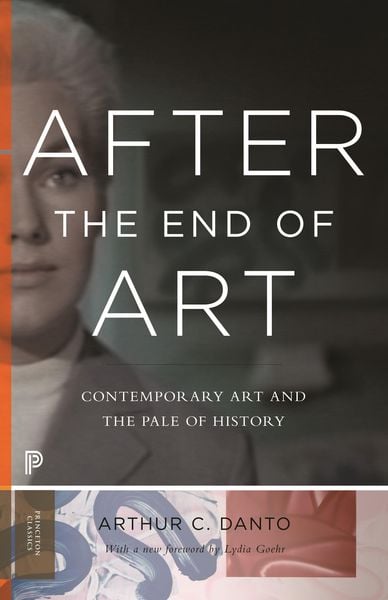
After the End of Art Contemporary Art and the Pale of History - Updated Edition
-
- Taschenbuch
- eBook ausgewählt
-
Form:Einzelkauf Download
-
Sprache:Englisch
19,49 €
inkl. gesetzl. MwSt.Beschreibung
Produktdetails
Format
ePUB
Kopierschutz
Nein
Family Sharing
Nein
Text-to-Speech
Ja
Erscheinungsdatum
08.06.2021
Verlag
University Of Pittsburgh PressSeitenzahl
272 (Printausgabe)
Sprache
Englisch
EAN
9780691209302
The classic and provocative account of how art changed irrevocably with pop art and why traditional aesthetics can't make sense of contemporary art
A classic of art criticism and philosophy, After the End of Art continues to generate heated debate for its radical and famous assertion that art ended in the 1960s. Arthur Danto, a philosopher who was also one of the leading art critics of his time, argues that traditional notions of aesthetics no longer apply to contemporary art and that we need a philosophy of art criticism that can deal with perhaps the most perplexing feature of current art: that everything is possible.
An insightful and entertaining exploration of art's most important aesthetic and philosophical issues conducted by an acute observer of contemporary art, After the End of Art argues that, with the eclipse of abstract expressionism, art deviated irrevocably from the narrative course that Vasari helped define for it in the Renaissance. Moreover, Danto makes the case for a new type of criticism that can help us understand art in a posthistorical age where, for example, an artist can produce a work in the style of Rembrandt to create a visual pun, and where traditional theories cannot explain the difference between Andy Warhol's Brillo Box and the product found in the grocery store.
After the End of Art addresses art history, pop art, "people's art," the future role of museums, and the critical contributions of Clement Greenberg, whose aesthetics-based criticism helped a previous generation make sense of modernism. Tracing art history from a mimetic tradition (the idea that art was a progressively more adequate representation of reality) through the modern era of manifestos (when art was defined by the artist's philosophy), Danto shows that it wasn't until the invention of pop art that the historical understanding of the means and ends of art was nullified. Even modernist art, which tried to break with the past by questioning the ways in which art was produced, hinged on a narrative.
Kundinnen und Kunden meinen
Verfassen Sie die erste Bewertung zu diesem Artikel
Helfen Sie anderen Kund*innen durch Ihre Meinung
Kurze Frage zu unserer Seite
Vielen Dank für Ihr Feedback
Wir nutzen Ihr Feedback, um unsere Produktseiten zu verbessern. Bitte haben Sie Verständnis, dass wir Ihnen keine Rückmeldung geben können. Falls Sie Kontakt mit uns aufnehmen möchten, können Sie sich aber gerne an unseren Kund*innenservice wenden.
zum Kundenservice