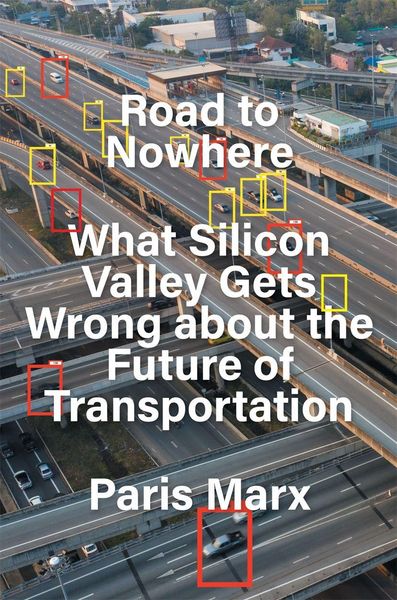
Road to Nowhere What Silicon Valley Gets Wrong about the Future of Transportation
-
- Hardcover ausgewählt
- Taschenbuch
- eBook
-
Sprache:Englisch
19,99 €
inkl. gesetzl. MwSt.,
Beschreibung
Produktdetails
Einband
Gebundene Ausgabe
Erscheinungsdatum
05.07.2022
Verlag
VersoSeitenzahl
272
Maße (L/B/H)
21,3/14,3/2,4 cm
Gewicht
354 g
Sprache
Englisch
ISBN
978-1-83976-588-9
Road to Nowhere exposes the problems with tech's visions of the future and argues that we cannot allow ourselves to be continually distracted by technological fantasies that delay the collective solutions we already know are effective. Technological solutions to social problems and the people who propose them must be challenged if we are to build cities and transportation systems which serve the public good.
In response, Paris Marx offers a vision for a more collective way of organizing transportation systems which considers the needs of poor, marginalized, and vulnerable peoples. The book also argues that rethinking mobility can be the first step in a broader reimagining of how we organize our social, economic, and political systems to serve the many, not the few.
Ein neues Kapitel für Ihre Bücher
Ein neues Kapitel für Ihre Bücher
Schenken Sie Ihren alten Schätzen ein zweites Leben: Einfach Barcode scannen, Versandetikett ausdrucken, Bücher verschicken und Thalia Geschenkkarte erhalten.
Jetzt verkaufenNoch keine Bewertungen vorhanden
Verfassen Sie die erste Bewertung zu diesem Artikel
Helfen Sie anderen Kundinnen und Kunden durch Ihre Meinung.
Kurze Frage zu unserer Seite
Vielen Dank für Ihr Feedback
Wir nutzen Ihr Feedback, um unsere Produktseiten zu verbessern. Bitte haben Sie Verständnis, dass wir Ihnen keine Rückmeldung geben können. Falls Sie Kontakt mit uns aufnehmen möchten, können Sie sich aber gerne an unseren Kund*innenservice wenden.
zum Kundenservice