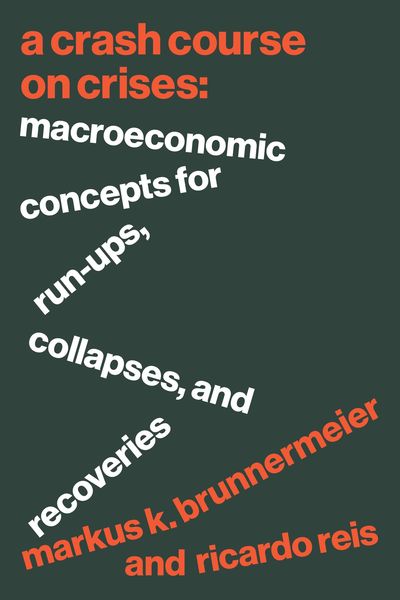
A Crash Course on Crises Macroeconomic Concepts for Run-Ups, Collapses, and Recoveries
-
- Hardcover ausgewählt
- Taschenbuch
-
Sprache:Englisch
37,99 €
inkl. gesetzl. MwSt.,
Beschreibung
Produktdetails
Einband
Gebundene Ausgabe
Erscheinungsdatum
01.08.2023
Abbildungen
32 b/w illus.
Verlag
Princeton Univers. PressSeitenzahl
123
Maße (L/B/H)
23,8/16,1/1,8 cm
Gewicht
408 g
Farbe
Anthrazit
Sprache
Englisch
ISBN
978-0-691-22110-6
An incisive overview of the macroeconomics of financial crises—essential reading for students and policy experts alike
With alarming frequency, modern economies go through macro-financial crashes that arise from the financial sector and spread to the broader economy, inflicting deep and prolonged recessions. A Crash Course on Crises brings together the latest cutting-edge economic research to identify the seeds of these crashes, reveal their triggers and consequences, and explain what policymakers can do about them.
Each of the book’s ten self-contained chapters introduces readers to a key economic force and provides case studies that illustrate how that force was dominant. Markus Brunnermeier and Ricardo Reis show how the run-up phase of a crisis often occurs in ways that are preventable but that may go unnoticed and discuss how debt contracts, banks, and a search for safety can act as triggers and amplifiers that drive the economy to crash. Brunnermeier and Reis then explain how monetary, fiscal, and exchange-rate policies can respond to crises and prevent them from becoming persistent.
With case studies ranging from Chile in the 1970s to the COVID-19 pandemic, A Crash Course on Crises synthesizes a vast literature into ten simple, accessible ideas and illuminates these concepts using novel diagrams and a clear analytical framework.
Ein neues Kapitel für Ihre Bücher
Ein neues Kapitel für Ihre Bücher
Schenken Sie Ihren alten Schätzen ein zweites Leben und erhalten dafür eine Thalia Geschenkkarte.
Noch keine Bewertungen vorhanden
Verfassen Sie die erste Bewertung zu diesem Artikel
Helfen Sie anderen Kundinnen und Kunden durch Ihre Meinung.
Kurze Frage zu unserer Seite
Vielen Dank für Ihr Feedback
Wir nutzen Ihr Feedback, um unsere Produktseiten zu verbessern. Bitte haben Sie Verständnis, dass wir Ihnen keine Rückmeldung geben können. Falls Sie Kontakt mit uns aufnehmen möchten, können Sie sich aber gerne an unseren Kund*innenservice wenden.
zum Kundenservice