• Produktbild: Wastewater Engineering
  • Produktbild: Wastewater Engineering

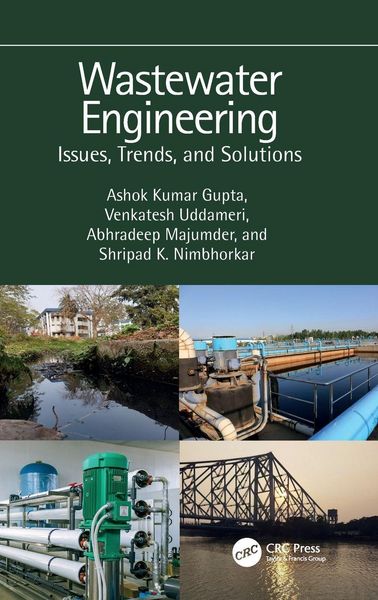
Wastewater Engineering Issues, Trends, and Solutions

209,99 €

inkl. gesetzl. MwSt., Versandkostenfrei


Beschreibung

Produktdetails

Einband

Gebundene Ausgabe

Erscheinungsdatum

24.07.2023

Abbildungen

schwarz-weiss Illustrationen, Raster, schwarz-weiss, Zeichnungen, schwarz-weiss, Tabellen, schwarz-weiss

Verlag

Taylor & Francis

Seitenzahl

330

Maße (L/B/H)

24/16,1/2,3 cm

Gewicht

453 g

Sprache

Englisch

ISBN

978-1-03-239975-1

Beschreibung

Produktdetails

Einband

Gebundene Ausgabe

Erscheinungsdatum

24.07.2023

Abbildungen

schwarz-weiss Illustrationen, Raster, schwarz-weiss, Zeichnungen, schwarz-weiss, Tabellen, schwarz-weiss

Verlag

Taylor & Francis

Seitenzahl

330

Maße (L/B/H)

24/16,1/2,3 cm

Gewicht

453 g

Sprache

Englisch

ISBN

978-1-03-239975-1

Ein neues Kapitel für Ihre Bücher

Ein neues Kapitel für Ihre Bücher

Schenken Sie Ihren alten Schätzen ein zweites Leben: Einfach Barcode scannen, Versandetikett ausdrucken, Bücher verschicken und Thalia Geschenkkarte erhalten.

Jetzt verkaufen
Jetzt verkaufen

Noch keine Bewertungen vorhanden

Verfassen Sie die erste Bewertung zu diesem Artikel

Helfen Sie anderen Kundinnen und Kunden durch Ihre Meinung.

Kundinnen und Kunden meinen

Bewertungen (0)

Die Leseprobe wird geladen.
  • Produktbild: Wastewater Engineering
  • Produktbild: Wastewater Engineering
  • 1. Overview of Wastewater Management  1.1. Background  1.2. Need for Wastewater Management  1.3. Challenges in Wastewater Management  1.4. Current Wastewater Management Scenario  1.5. Approaches to Sustainable Wastewater Management  1.6. Overview of Processes Involved in a Typical Sewage Treatment Plant  1.7. Chapter Summary  1.8. Concluding Remarks  2. Wastewater: Sources, Characterization, and Analysis  2.1. Introduction  2.2. Components of Sewage  2.3. Characteristics of Sewage  2.4. Important Parameters of Wastewater and Their Analysis  2.5. Chapter Summary  2.6. Concluding Remarks  3. Legal Aspects of Municipal Wastewater Management and Standards  3.1. Introduction  3.2. Existing Legislative Mandates for Wastewater Management across the World  3.3. Wastewater Discharge Standards  3.4. Wastewater Reuse Standards  3.5. Sludge Disposal Regulations  3.6. Chapter Summary  3.7. Concluding Remarks  4. Wastewater Treatment System  4.1. Introduction  4.2. Types of Treatment Systems  4.3. Sewerage System  4.4. Chapter Summary  4.5. Concluding Remarks  5. Overview of Conventional Wastewater Treatment Processes: Primary Treatment  5.1. Introduction  5.2. Screening  5.3. Grit Removal  5.4. Sedimentation  5.5. Chapter Summary  5.6. Concluding Remarks  6. Overview of Conventional Wastewater Treatment Processes: Secondary Treatment  6.1. Introduction  6.2. Aerobic Treatment Process  6.3. Anaerobic Wastewater Treatment  6.4. Secondary Settling  6.5. Post-Aeration  6.6. Chapter Summary  6.7. Concluding Remarks  7. Overview of Conventional Wastewater Treatment Processes: Tertiary Treatment  7.1. Introduction  7.2. Chemical Precipitation  7.3. Filtration  7.4. Adsorption  7.5. Disinfection  7.6. Chapter Summary  7.7. Concluding Remarks  8. Sludge Management in Wastewater Treatment Plants  8.1. Introduction  8.2. Classification of Sludge and Their Properties  8.3. Quantification of Sludge Production  8.4. Conventional Procedures for the Management of Wastewater Treatment Plant Residues  8.5. Innovative Technologies for Sludge Management  8.6. Sludge Disposal  8.7. Chapter Summary  8.8. Concluding Remarks  9. Emerging Contaminants in the Aqueous Environment: Detection and Quantification, Ecological Impacts, and Legislations  9.1. Introduction  9.2. Sources and Pathways of Emerging Contaminants into Various Aqueous Environments  9.3. Analysis of Emerging Contaminants  9.4. Ecological Impacts of Emerging Contaminants  9.5. Guidelines and Standards Pertaining to Emerging Contaminants  9.6. Chapter Summary  9.7. Concluding Remarks  10. Emerging Contaminants in the Aqueous Environment: Treatment Technologies for Emerging Contaminants and Its Application  10.1. Introduction  10.2. Biological Processes  10.3. Advanced Oxidation Process  10.4. Adsorption and Membrane-Based Technologies  10.5. Hybrid Processes  10.6. Case Studies on the Treatment of Emerging Contaminants  10.7. Chapter Summary  10.8. Concluding Remarks  11. Sustainable Treatment Technologies for Achieving Circular Economy  11.1. Introduction  11.2. Life Cycle Assessment  11.3. Resource Recovery  11.4. Chapter Summary  11.5. Concluding Remarks