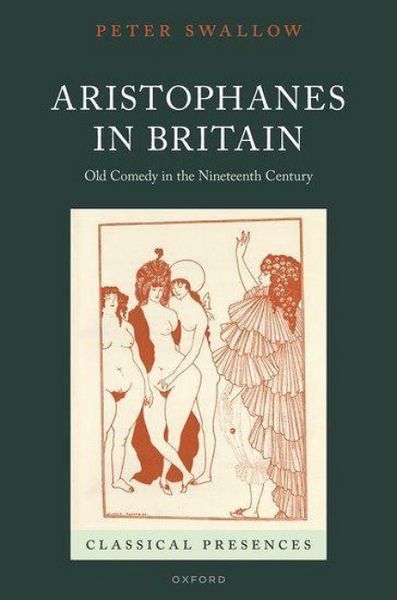
Aristophanes in Britain Old Comedy in the Nineteenth Century
121,99 €
inkl. gesetzl. MwSt.,
Beschreibung
Produktdetails
Einband
Gebundene Ausgabe
Erscheinungsdatum
11.12.2023
Abbildungen
30 black and white images
Verlag
Oxford University PressSeitenzahl
298
Maße (L/B/H)
22,6/16,3/3 cm
Gewicht
635 g
Sprache
Englisch
ISBN
978-0-19-286856-5
In this lively and wide-ranging study, Peter Swallow explores the reception of Aristophanes in Britain throughout the long-nineteenth century, setting it in the broader context of Victorian Classicism and, more specifically, the period's reception of Greek tragedy. Swallow shows the surprising extent to which Aristophanes was repurposed across an array of mediums in Victorian Britain, and demonstrates that Aristophanic reception in the period was always a process of speaking to contemporary issues--making Old Comedy new. The book examines two strands of Aristophanic reception: the political and the aesthetic. From the start of the long-nineteenth century, the British reception of Aristophanes tied into contemporary political debate, as historians, translators and commentators, and even the burlesque writer J.R. Planché activated Aristophanes in support of their own political positions. But each writer's conceptualisation of Aristophanes was as different as their political outlooks. While many writers who appropriated Aristophanes for their cause were Tories, a notable outlier is Percy Shelley, whose Aristophanic drama Swellfoot the Tyrant activated Old Comedy to argue for democratic republicanism--what we would now call a left-wing political revolution. The second strand of Aristophanic reception, which developed from around the middle of the nineteenth century, actively depoliticised Old Comedy and instead received it through an aesthetic lens. The aesthetics of Aristophanes--with an emphasis on the beautiful and the archaeological--also lay behind school and university productions of Old Comedy during this period. These strands of nineteenth-century Aristophanic reception find synthesis towards the book's conclusion. Edwardian women's receptions of Aristophanes show how activists used his plays to argue for equal educational opportunities and the right to vote. In the final chapter, Gilbert Murray and George Bernard Shaw's receptions reveal both the political and artistic potential of Aristophanes.
Ein neues Kapitel für Ihre Bücher
Ein neues Kapitel für Ihre Bücher
Schenken Sie Ihren alten Schätzen ein zweites Leben und erhalten dafür eine Thalia Geschenkkarte.
Noch keine Bewertungen vorhanden
Verfassen Sie die erste Bewertung zu diesem Artikel
Helfen Sie anderen Kundinnen und Kunden durch Ihre Meinung.
Kurze Frage zu unserer Seite
Vielen Dank für Ihr Feedback
Wir nutzen Ihr Feedback, um unsere Produktseiten zu verbessern. Bitte haben Sie Verständnis, dass wir Ihnen keine Rückmeldung geben können. Falls Sie Kontakt mit uns aufnehmen möchten, können Sie sich aber gerne an unseren Kund*innenservice wenden.
zum Kundenservice