Beschreibung
Produktdetails
Einband
Taschenbuch
Erscheinungsdatum
30.09.2024
Verlag
Human Kinetics PublishersSeitenzahl
224
Maße (L/B/H)
17,6/25,3/1,5 cm
Gewicht
478 g
Sprache
Englisch
ISBN
978-1-71821-700-3
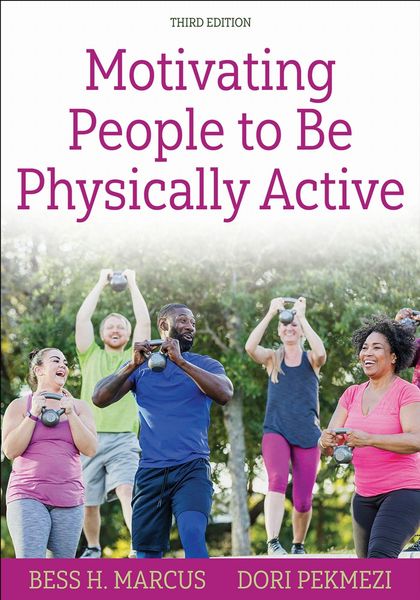
Motivating People to Be Physically Active, Third Edition, is a comprehensive guide to methods that are proven to help people reduce sedentary behavior and incorporate physical activity as a regular part of their everyday lives. Research, theories, and concepts of behavioral science are clearly translated into a practical handbook for health and fitness professionals who work in planning, developing, implementing, or evaluating physical activity programs.
Updated with recent physical activity prevalence data and intervention studies, the text will help readers will understand the research on physical activity behavior and gain perspective on the importance of theory-based interventions for the promotion of a physically active lifestyle. Public health recommendations are presented with updated guidance from Physical Activity Guidelines for Americans, and new content emphasizes socioecological factors and mediators of behavior change, along with examples of inclusive, low-cost activities that can be performed in a variety of settings.
Based on the five-stage model of motivational readiness for behavior change, the text will help readers learn to measure and assess patterns of physical activity and physical fitness, then apply appropriate interventions in individual, group, work site, and community settings. Relevant for healthy adults as well as special populations, including adults with chronic physical or psychological conditions, the book also incorporates the use of technology-supported interventions such as wearable fitness trackers.
Five case studies of successful community and work site programs offer creative starting points for designing interventions and serve as practical examples for putting theory into practice with stage-specific strategies for motivating a variety of participants. Further assisting readers are reproducible questionnaires, worksheets, and logs that can be used as tools to assist clients with their transition to more active living.
Motivating People to Be Physically Active, Third Edition, is the essential resource for learning to assess readiness for change and design effective intervention programs that will educate and encourage others to lead a more active and healthier lifestyle.
Earn continuing education credits/units! A continuing education exam that uses this book is also available. It may be purchased separately or as part of a package that includes both the book and exam.
Ein neues Kapitel für Ihre Bücher
Ein neues Kapitel für Ihre Bücher
Schenken Sie Ihren alten Schätzen ein zweites Leben: Einfach Barcode scannen, Versandetikett ausdrucken, Bücher verschicken und Thalia Geschenkkarte erhalten.
Jetzt verkaufenKundinnen und Kunden meinen
Verfassen Sie die erste Bewertung zu diesem Artikel
Helfen Sie anderen Kund*innen durch Ihre Meinung
Kurze Frage zu unserer Seite
Vielen Dank für Ihr Feedback
Wir nutzen Ihr Feedback, um unsere Produktseiten zu verbessern. Bitte haben Sie Verständnis, dass wir Ihnen keine Rückmeldung geben können. Falls Sie Kontakt mit uns aufnehmen möchten, können Sie sich aber gerne an unseren Kund*innenservice wenden.
zum Kundenservice