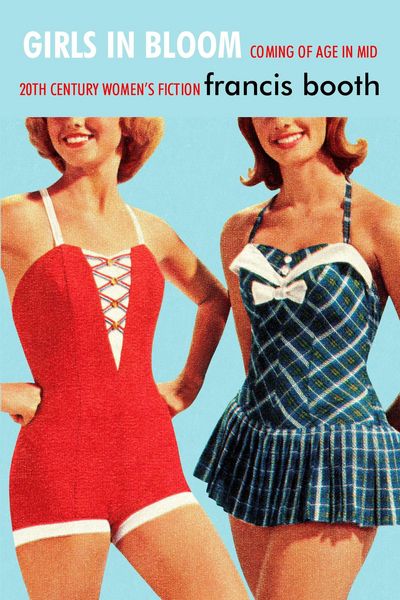
Girls In Bloom: Coming of Age In Mid 20th Century Women's Fiction
-
- Einzelkauf Download ausgewählt
-
Sprache:Englisch
5,99 €
inkl. gesetzl. MwSt.Beschreibung
Produktdetails
Format
ePUB
Kopierschutz
Ja
Family Sharing
Ja
Text-to-Speech
Ja
Erscheinungsdatum
29.06.2024
Verlag
Wu Wei PressSeitenzahl
(Printausgabe)
Dateigröße
703 KB
Sprache
Englisch
EAN
9798227547774
Jane Eyre, by Charlotte Brontë and Agnes Grey by Anne Brontë, both published in 1847, were the first in-depth, psychological portraits in literature of the transition of a strong-willed but troubled, misfit girl into an adult. They are generally said to be the first female versions of the genre known as the bildungsroman: the coming of age novel. They are female in three senses: they were written both by and about a woman and were intended for a female audience. The Brontës may have read Jane Austen's Mansfield Park, 1814, in which Fanny Price, like Jane Eyre, is brought up by relatives and her Northanger Abbey, which, albeit satirically, shows the coming of age of its young heroine. 'No one who had ever seen Catherine Morland in her infancy, would have supposed her born to be a heroine... But from fifteen to seventeen she was in training for a heroine.' The Brontës may also have read two other, earlier eponymous novels of young women growing up: Fanny Burney's Evelina, or the History of a Young Lady's Entrance into the World, 1778, and Maria Edgeworth's Belinda, 1801. Shortly after the appearance of Jane Eyre, Elizabeth Gaskell published another eponymous novel about an orphan girl growing up and going wrong: Ruth, 1853.
Between Jane Eyre in 1847 and Carson McCullers' The Heart is a Lonely Hunter in 1940, my official starting date for Girls in Bloom, there are very few examples of female coming of age novels that were written by women as serious literature for adult readers, though there were many novel series showing girls growing up that were written for a younger female audience: the Anne Of Green Gables series by Lucy Maud Montgomery; her Emily Starr trilogy; Louisa May Alcott's Little Women and its successors; the Pollyanna books of Eleanor H Porter, Kate Douglas Wiggin's Rebecca of Sunnybrook Farm and New Chronicles of Rebecca, and the What Katy Did series by Susan M Coolidge, to name just the best known.
But at the beginning of the 1940s, with the decline of modernism - Virginia Woolf and James Joyce both died in 1941 - and the rise of the teenager there was a rise in popularity of the female bildungsroman which lasted roughly twenty years.
Noch keine Bewertungen vorhanden
Verfassen Sie die erste Bewertung zu diesem Artikel
Helfen Sie anderen Kundinnen und Kunden durch Ihre Meinung.
Kurze Frage zu unserer Seite
Vielen Dank für Ihr Feedback
Wir nutzen Ihr Feedback, um unsere Produktseiten zu verbessern. Bitte haben Sie Verständnis, dass wir Ihnen keine Rückmeldung geben können. Falls Sie Kontakt mit uns aufnehmen möchten, können Sie sich aber gerne an unseren Kund*innenservice wenden.
zum Kundenservice