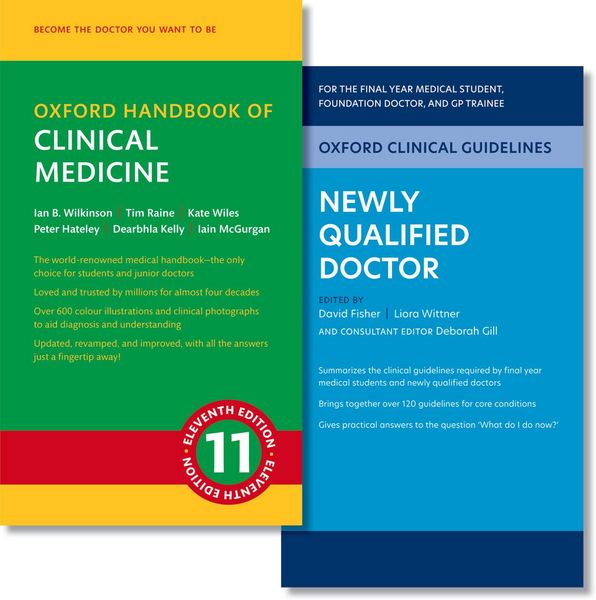
Produktbild: Oxford Clinical Guidelines: Newly Qualified Doctor and Oxford Handbook of Clinical Medicine Pack

Oxford Clinical Guidelines: Newly Qualified Doctor and Oxford Handbook of Clinical Medicine Pack

88,99 €

inkl. gesetzl. MwSt., Versandkostenfrei


Beschreibung

Produktdetails

Einband

Taschenbuch

Erscheinungsdatum

20.01.2025

Abbildungen

over 600 colour illustrations and clinical photographs

Herausgeber

Dan Furmedge + weitere

Verlag

Oxford Academic

Seitenzahl

1944

Maße (L/B/H)

18,3/11,6/6,2 cm

Gewicht

1002 g

Sprache

Englisch

ISBN

978-0-19-894829-2

Beschreibung

Produktdetails

Einband

Taschenbuch

Erscheinungsdatum

20.01.2025

Abbildungen

over 600 colour illustrations and clinical photographs

Herausgeber

Verlag

Oxford Academic

Seitenzahl

1944

Maße (L/B/H)

18,3/11,6/6,2 cm

Gewicht

1002 g

Sprache

Englisch

ISBN

978-0-19-894829-2

Herstelleradresse

Libri GmbH
Europaallee 1
36244 Bad Hersfeld
DE

Email: gpsr@libri.de

Ein neues Kapitel für Ihre Bücher

Ein neues Kapitel für Ihre Bücher

Schenken Sie Ihren alten Schätzen ein zweites Leben und erhalten dafür eine Thalia Geschenkkarte.

Jetzt verkaufen
Jetzt verkaufen

Noch keine Bewertungen vorhanden

Verfassen Sie die erste Bewertung zu diesem Artikel

Helfen Sie anderen Kundinnen und Kunden durch Ihre Meinung.

Kundinnen und Kunden meinen

Bewertungen (0)

  • Produktbild: Oxford Clinical Guidelines: Newly Qualified Doctor and Oxford Handbook of Clinical Medicine Pack

    • Oxford Clinical Guidelines: Newly Qualified Doctor


    • Part 1 Cardiology


    • 1: Acute coronary syndromes


    • 2: Acute heart failure


    • 3: Aortic stenosis and mitral regurgitation


    • 4: Atrial fibrillation


    • 5: Chronic heart failure


    • 6: Hypertension


    • 7: Pericardial diseases


    • 8: Stable angina


    • 9: Transient loss of consciousness


    • Part 2 Care of the Elderly


    • 10: Delirium


    • 11: Dementia


    • 12: Falls


    • 13: Hip fractures


    • Part 3 Endocrinology


    • 14: Adrenal insufficiency


    • 15: Diabetic ketoacidosis


    • 16: Hypercalcaemia


    • 17: Hyperglycaemia


    • 18: Hyperglycaemic hyperosmolar syndrome


    • 19: Hyperthyroidism


    • 20: Hypocalcaemia


    • 21: Hypoglycaemia


    • 22: Hyponatraemia


    • 23: Hypothyroidism


    • 24: Osteoporosis


    • 25: Type 1 diabetes


    • 26: Type 2 diabetes and diabetic foot problems


    • Part 4 Gastroenterology


    • 27: Acute upper gastrointestinal bleeding and variceal bleeding


    • 28: Coeliac disease


    • 29: Crohn s disease


    • 30: Gastro-oesophageal reflux disease and dyspepsia


    • 31: Irritable bowel syndrome


    • 32: Ulcerative colitis


    • Part 5 Hepatobiliary


    • 33: Acute liver failure


    • 34: Alcohol-related liver disease


    • 35: Alcohol use disorders


    • 36: Liver cirrhosis


    • Part 6 Mental health


    • 37: Bipolar disorder


    • 38: Depression


    • 39: Eating disorders


    • 40: Generalized anxiety disorder


    • 41: Panic disorder


    • 42: Post-traumatic stress disorder


    • 43: Psychosis and schizophrenia


    • 44: Self-harm


    • 45: Violence and aggression


    • Part 7 Nephrology


    • 46: Acute kidney injury


    • 47: Chronic kidney disease


    • 48: Hyperkalaemia


    • Part 8 Neurology


    • 49: Acute encephalitis


    • 50: Epilepsy


    • 51: Headache


    • 52: Meningitis


    • 53: Metastatic spinal cord compression


    • 54: Neuropathic pain


    • 55: Parkinson s disease


    • 56: Stroke and transient ischaemic attack


    • Part 9 Obstetrics and gynaecology


    • 57: Antenatal care


    • 58: Antepartum haemorrhage


    • 59: Diabetes in pregnancy


    • 60: Ectopic pregnancy and miscarriage


    • 61: Hypertension in pregnancy


    • 62: Intrapartum care


    • 63: Nausea and vomiting in pregnancy


    • 64: Pelvic organ prolapse in women


    • 65: Postpartum haemorrhage


    • 66: Sepsis in and following pregnancy


    • 67: Thrombosis and embolism during pregnancy and the postnatal period


    • 68: Urinary incontinence in women


    • Part 10 Paediatrics


    • 69: Child maltreatment


    • 70: Fever in under 5s


    • 71: Neonatal infections


    • 72: Paediatric asthma


    • 73: Paediatric bacterial meningitis and meningococcal septicaemia


    • 74: Paediatric bronchiolitis


    • 75: Paediatric diabetic ketoacidosis


    • 76: Paediatric gastroenteritis


    • 77: Paediatric type 1 diabetes


    • 78: Paediatric urinary tract infections


    • 79: Acute oxygen therapy


    • Part 11 Respiratory


    • 80: Asthma


    • 81: Chonic obstructive pulmonary disease


    • 82: Pleural effusion


    • 83: Pneumonia


    • 84: Giant cell arteritis


    • Part 12 Rheumatology and musculoskeletal


    • 85: Gout


    • 86: Hot swollen joint


    • 87: Low back pain and sciatica


    • 88: Osteoarthritis


    • 89: Polymyalgia rheumatica


    • 90: Rheumatoid arthritis


    • 91: Spondyloarthritis


    • Part 13 Surgery


    • 92: Preoperative care


    • 93: Postoperative care


    • 94: Blood transfusion


    • Part 14 Miscellaneous


    • 95: Care of dying patients in the last days of life


    • 96: Intravenous fluid therapy


    • 97: Lower urinary tract symptoms in men


    • 98: Venous thromboembolic diseases


    • 99: Malaria


    • Part 15 Cancer guidelines


    • 100: Brain and central nervous system cancers


    • 101: Breast cancer


    • 102: Childhood cancers


    • 103: Gynaecological cancers


    • 104: Haematological cancers


    • 105: Head and neck cancers


    • 106: Lower gastrointestinal cancers


    • 107: Lung cancer


    • 108: Sarcomas


    • 109: Skin cancers


    • 110: Upper gastrointestinal cancers


    • 111: Urological cancers


    • Part 16 Professional guidelines


    • 112: Capacity and consent


    • 113: Confidentiality:


    • 114: DNACPR


    • 115: Fitness to drive


    • Part 17 Resuscitation


    • 116: Advanced life support


    • 117: Anaphylaxis and drug allergy


    • 118: Bradycardia


    • 119: Choking


    • 120: Major trauma


    • 121: Neutropenic sepsis


    • 122: Sepsis


    • 123: Tachycardia


    • Oxford Handbook of Medicine 11th edition


    • 1: Thinking About Medicine


    • 2: History and Examination


    • 3: Cardiovascular Medicine


    • 4: Chest Medicine


    • 5: Endocrinology


    • 6: Gastroenterology


    • 7: Kidney Medicine


    • 8: Haematology


    • 9: Infectious Diseases


    • 10: Neurology


    • 11: Oncology and Palliative Care


    • 12: Rheumatology


    • 13: Surgery


    • 14: Clinical Chemistry


    • 15: Eponymous Syndromes


    • 16: Radiology


    • 17: Reference intervals


    • 18: Practical procedures


    • 19: Emergencies