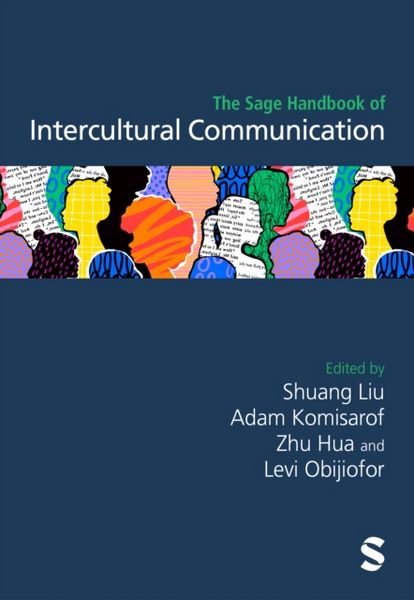
The Sage Handbook of Intercultural Communication
149,99 €
UVP
193,50 €
inkl. gesetzl. MwSt.,
Beschreibung
Produktdetails
Einband
Gebundene Ausgabe
Erscheinungsdatum
22.01.2025
Herausgeber
Liu Shuang + weitereVerlag
Sage PublicationsSeitenzahl
632
Maße (L/B/H)
24,6/17,4/3,6 cm
Gewicht
1228 g
Sprache
Englisch
ISBN
978-1-5296-2639-1
The SAGE Handbook of Intercultural Communication offers a global, interdisciplinary, and contextual approach to understanding the complexities of intercultural communication in our diverse and interconnected world. The handbook brings together established theories, methodologies, and practices and provides a comprehensive exploration of intercultural communication in response to the challenges and opportunities presented by our global society.
Featuring contributions from leading and emerging scholars across multiple disciplines, including communication studies, psychology, applied linguistics, sociology, education, and business, this handbook covers research spanning geographical locations across Europe, Africa, Oceania, North America, South America, and the Asia Pacific. It focuses on specific contexts such as the workplace, education, family, media, crisis, and intergroup interactions. Each chapter takes a contextual approach to examine theories and applications, providing insights into the dynamic interplay between culture, communication, and society.
From managing cultural diversity in the workplace to creating culturally inclusive learning environments in educational settings, from navigating intercultural relationships within families to understanding the role of media in shaping cultural perceptions, this handbook delves into diverse topics with depth and breadth. It addresses contemporary issues such as hate speech, environmental communication, and communication strategies in times of crisis. It also offers theoretical insights and practical recommendations for researchers, practitioners, policymakers, educators, and students.
The handbook is structured into seven parts, beginning with the theoretical and methodological development of the field before delving into specific contexts of intercultural communication. Each part provides a rich exploration of key themes, supported by cutting-edge research and innovative approaches. With its state-of-the-art content and forward-looking perspectives, this SAGE Handbook of Intercultural Communication serves as an indispensable resource for understanding and navigating the complexities of intercultural communication in our increasingly interconnected world.
Part 1: Theoretical and methodological development of the field
Part 2: Intercultural communication in workplace contexts
Part 3: Intercultural communication in educational contexts
Part 4: Intercultural communication in family contexts
Part 5: Intercultural Communication in media contexts
Part 6: Intercultural communication in crisis contexts
Part 7: Intercultural communication in intergroup contexts
Ein neues Kapitel für Ihre Bücher
Ein neues Kapitel für Ihre Bücher
Schenken Sie Ihren alten Schätzen ein zweites Leben: Einfach Barcode scannen, Versandetikett ausdrucken, Bücher verschicken und Thalia Geschenkkarte erhalten.
Jetzt verkaufenNoch keine Bewertungen vorhanden
Verfassen Sie die erste Bewertung zu diesem Artikel
Helfen Sie anderen Kundinnen und Kunden durch Ihre Meinung.
Kurze Frage zu unserer Seite
Vielen Dank für Ihr Feedback
Wir nutzen Ihr Feedback, um unsere Produktseiten zu verbessern. Bitte haben Sie Verständnis, dass wir Ihnen keine Rückmeldung geben können. Falls Sie Kontakt mit uns aufnehmen möchten, können Sie sich aber gerne an unseren Kund*innenservice wenden.
zum Kundenservice